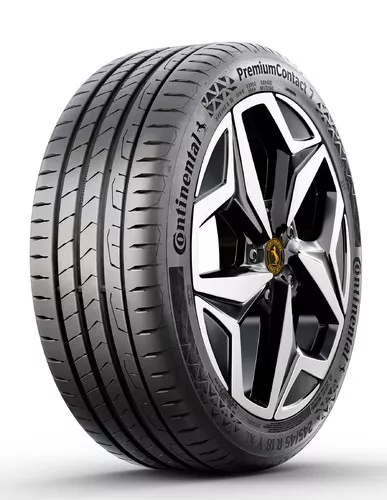
Comparison: Pirelli P ZERO vs. Pirelli P ZERO PZ4 vs. Bridgestone Turanza T005 vs. GoodYear Efficientgrip Performance 2 vs. Continental PremiumContact 7
Also compare with
The Hankook stops 4.5 metres shorter in the wet — a gap that speaks for itself.
On paper, these two summer tyres look like a reasonable contest between a Hankook premium offering and a sporty Yokohama upper-middle contender. The Hankook Ventus Prime3 K125 — now succeeded by the Ventus Prime 4 — is a comfort-leaning, safety-focused tyre that has consistently impressed in independent testing. The Yokohama Advan Fleva V701 is positioned as the sportier, more dynamic choice, carrying a full EU wet grip A-label across its entire range. But when these two met in the same test field, the results told a decisively one-sided story — and real-world owner feedback on the Yokohama adds further complexity to its on-paper credentials.



 Pirelli P ZEROPirelli P ZERO PZ4Bridgestone Turanza T005GoodYear Efficientgrip Performance 2Continental PremiumContact 7Pirelli P ZEROPirelli P ZERO PZ4Bridgestone Turanza T005GoodYear Efficientgrip Performance 2Continental PremiumContact 7Pirelli P ZEROPirelli P ZERO PZ4Bridgestone Turanza T005GoodYear Efficientgrip Performance 2Continental PremiumContact 7Pirelli P ZEROPirelli P ZERO PZ4Bridgestone Turanza T005GoodYear Efficientgrip Performance 2Continental PremiumContact 7Pirelli P ZEROPirelli P ZERO PZ4Bridgestone Turanza T005GoodYear Efficientgrip Performance 2Continental PremiumContact 7Pirelli P ZEROPirelli P ZERO PZ4Bridgestone Turanza T005GoodYear Efficientgrip Performance 2Continental PremiumContact 7Pirelli P ZEROBridgestone Turanza T005GoodYear Efficientgrip Performance 2Continental PremiumContact 7Pirelli P ZEROBridgestone Turanza T005GoodYear Efficientgrip Performance 2Continental PremiumContact 7
This is where the comparison becomes unambiguous. In the only head-to-head test capturing wet braking distances, the Hankook stopped in 35.7 metres against the Yokohama's 40.2 metres — a 4.5-metre gap that represents a meaningful real-world safety difference. That margin is not a rounding error; it reflects a fundamentally stronger wet compound on the Hankook. Its aquaplaning resistance score of 69.8 is admittedly modest, and wet grip ratings on individual EU label dimensions are split between A and B — but in measured braking the Hankook is clearly superior. The Yokohama's full A-rated EU wet grip label looks strong on paper, and its overall wet score of 84 is impressive, but that 40.2-metre stop alongside a tyre that manages 35.7 metres in identical conditions is hard to overlook. Owner feedback on the Yokohama raises additional concern: one reviewer explicitly warned that the tyre feels dangerous above 120 km/h — a red flag for motorway users that no EU label can address.
Pirelli P ZEROPirelli P ZERO PZ4Bridgestone Turanza T005GoodYear Efficientgrip Performance 2Continental PremiumContact 7Pirelli P ZEROPirelli P ZERO PZ4Bridgestone Turanza T005GoodYear Efficientgrip Performance 2Continental PremiumContact 7Pirelli P ZEROPirelli P ZERO PZ4Bridgestone Turanza T005GoodYear Efficientgrip Performance 2Continental PremiumContact 7Pirelli P ZEROPirelli P ZERO PZ4Bridgestone Turanza T005GoodYear Efficientgrip Performance 2Continental PremiumContact 7Pirelli P ZEROPirelli P ZERO PZ4Bridgestone Turanza T005GoodYear Efficientgrip Performance 2Continental PremiumContact 7Pirelli P ZEROBridgestone Turanza T005GoodYear Efficientgrip Performance 2Pirelli P ZEROBridgestone Turanza T005GoodYear Efficientgrip Performance 2Continental PremiumContact 7Dry braking is closely matched between these two: in the one mutual test where both were measured, the Hankook stopped in 34.3 metres against the Yokohama's 34.9 metres — a negligible margin in isolation. The Hankook's measured dry handling scores average exceptionally high at 93.3, and its overall dry score of 90 reflects a tyre with confident, predictable behaviour rather than outright aggression. The Yokohama carries a higher dry performance score of 96, suggesting stronger handling dynamics on a good day, and BRZ owners on Tyre Reviews describe dry and wet grip as confidence-inspiring. However, in the 52-tyre Autobild comparison where both competed, the Hankook finished 2nd overall while the Yokohama placed 15th — a gap that suggests the Yokohama's dry capability is inconsistent across conditions and tyre sizes rather than a reliable advantage.
Pirelli P ZEROPirelli P ZERO PZ4Bridgestone Turanza T005GoodYear Efficientgrip Performance 2Continental PremiumContact 7Pirelli P ZEROPirelli P ZERO PZ4Bridgestone Turanza T005GoodYear Efficientgrip Performance 2Continental PremiumContact 7Pirelli P ZEROPirelli P ZERO PZ4Bridgestone Turanza T005GoodYear Efficientgrip Performance 2Continental PremiumContact 7Pirelli P ZEROBridgestone Turanza T005GoodYear Efficientgrip Performance 2Pirelli P ZEROPirelli P ZERO PZ4Bridgestone Turanza T005Continental PremiumContact 7Pirelli P ZEROPirelli P ZERO PZ4Bridgestone Turanza T005GoodYear Efficientgrip Performance 2Continental PremiumContact 7Pirelli P ZEROPirelli P ZERO PZ4Bridgestone Turanza T005GoodYear Efficientgrip Performance 2Continental PremiumContact 7Pirelli P ZEROPirelli P ZERO PZ4Bridgestone Turanza T005GoodYear Efficientgrip Performance 2Pirelli P ZEROBridgestone Turanza T005GoodYear Efficientgrip Performance 2Continental PremiumContact 7The Yokohama scores significantly higher in comfort (95 vs 78.8) and noise (95 vs 78.9) based on aggregated test data, suggesting a noticeably more refined ride in controlled evaluations. The Hankook's exterior noise score of 85.7 is respectable but the gap is real. Rolling resistance is similarly close, with the Hankook edging slightly ahead (70.2 vs 69) — neither tyre is an efficiency standout, with both primarily rated C on the EU fuel label. Mileage is a weak point for both: the Hankook scores 62.8 and the Yokohama 60, so neither should be chosen for longevity. Where the Yokohama's comfort advantage is partially undermined is in owner satisfaction — its Tyre Reviews average of 41 out of 100 across 64 reviews is unusually low for a tyre with high test scores, hinting at real-world inconsistencies in ride quality, noise, or durability that aggregate scores may not capture.
The Hankook Ventus Prime3 K125 is the safer, more consistent choice. It won both mutual tests convincingly — finishing 2nd and 5th against fields of 52 and 20 tyres respectively — and its wet braking advantage of 4.5 metres over the Yokohama in direct comparison is a compelling safety argument. It suits drivers who want a trustworthy, well-rounded summer tyre without drama. The Yokohama Advan Fleva V701 has an appealing specification on paper and some owners genuinely rate its dry and wet grip highly, but the high-speed stability concerns raised in user feedback and its poor showing in direct comparative testing mean it is hard to recommend over the Hankook without reservation. If you value consistent, verified real-world performance, the Hankook is the clear pick. The Yokohama suits those who prioritise ride refinement in urban and suburban use and stay within sensible speed limits — but for motorway driving or drivers who demand reassurance in wet conditions, look elsewhere.
Compare prices across all available dimensions for these tyres.
VS VSVSVSVS
 VSVSVSVS
 VS
VS Pirelli P ZERO vs Hankook Ventus S1 evo3 K127Pirelli P ZERO vs Bridgestone Turanza 6Pirelli P ZERO vs Bridgestone Potenza SportPirelli P ZERO vs Bridgestone POTENZA SPORT EVOPirelli P ZERO PZ4 vs Bridgestone Potenza SportPirelli P ZERO PZ4 vs Michelin Pilot Sport 4 S
 Bridgestone Turanza T005 vs Kleber Dynaxer HP5Bridgestone Turanza T005 vs Continental Ecocontact 6


