18 shops · 56 ·847+ products

Comparison: Imperial EcoDriver 5 vs. Continental PremiumContact 7 (2026)

1 mutual test(s) with detailed data

Imperial prioritises quiet affordability; Continental buys dramatically shorter stops and confidence in rain.

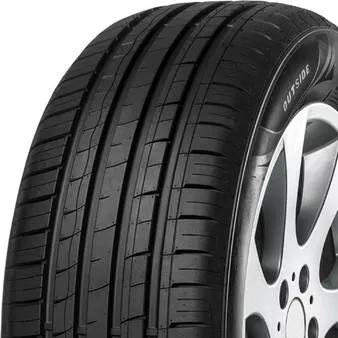
The Imperial EcoDriver 5 is a low-cost summer tyre aimed principally at everyday compact cars. Its 23 listed sizes cover R14 to R16 wheels, so it is pitched at drivers seeking an inexpensive replacement for older hatchbacks, small saloons and straightforward commuter cars. The Dutch Imperial brand’s proposition is value rather than cutting-edge performance, and the tyre’s 15/100 overall rating makes its limitations clear. Its strongest attributes are refinement and price: a comfort score of 85 and noise score of 95 suggest a notably civilised budget tyre, while owners repeatedly praise affordability, reliability and low noise.

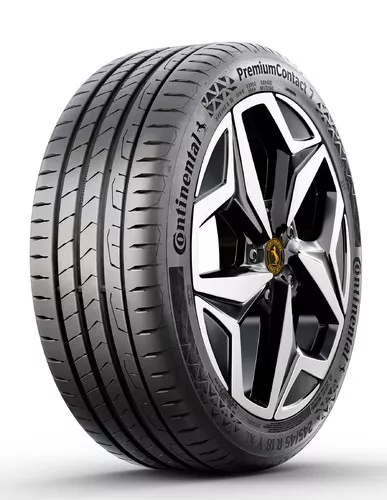
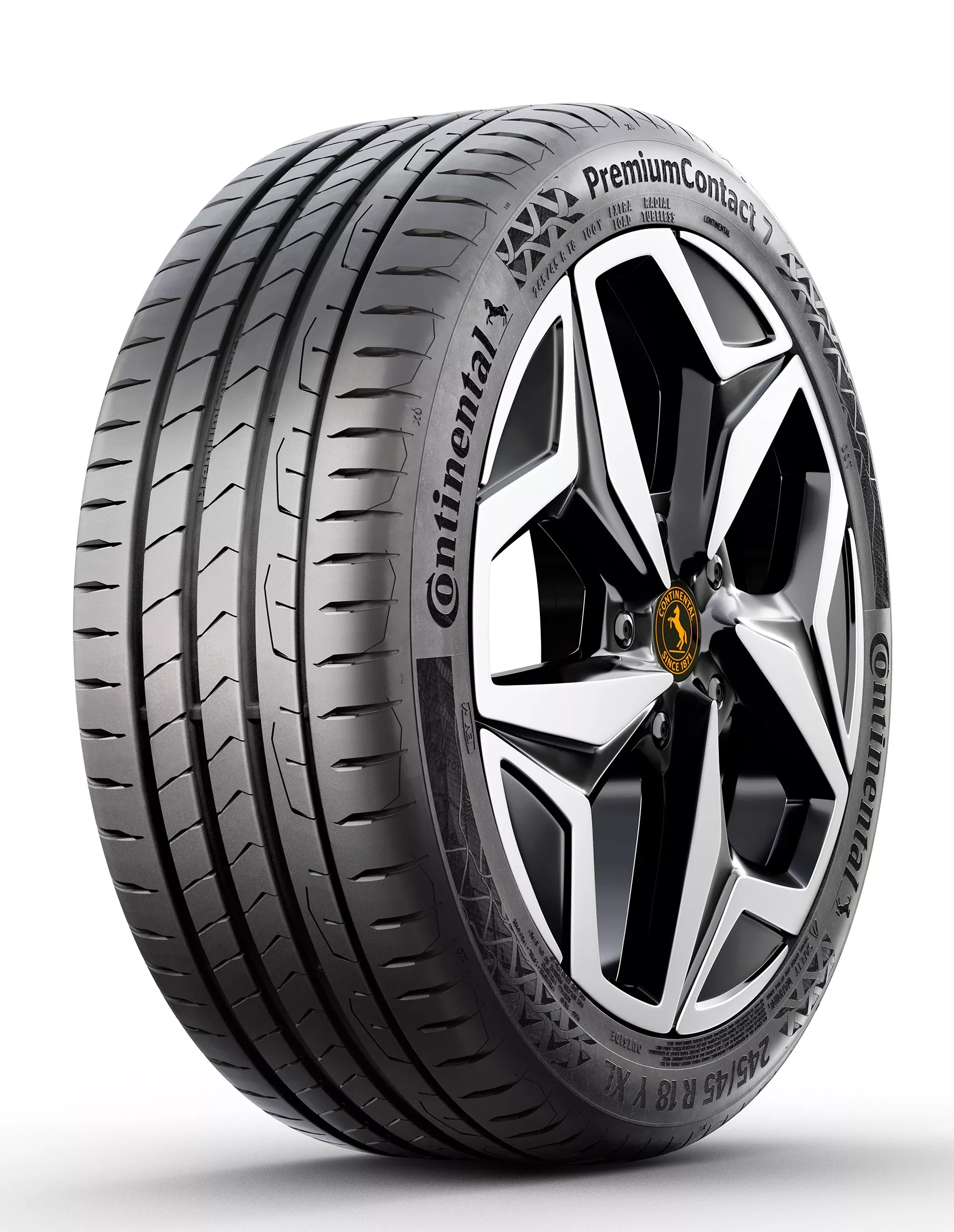
The Continental PremiumContact 7 sits at the opposite end of the market. Offered in 51 sizes from R16 to R21 and manufactured in France, Slovakia, Germany and the Czech Republic, it is a premium summer tyre for family cars, saloons, hot hatchbacks, hybrids and electric vehicles. It replaces the Continental PremiumContact 6, and the evidence identifies it as a genuine advance rather than a cosmetic update: it won both shared tests, achieved a 98/100 overall rating and combines exceptionally short stops with precise, neutral handling. Continental positions it around safety, comfort and improved mileage. Its RedChili compound is intended to work without a warm-up phase, while the adaptive tread pattern targets consistent wet and dry behaviour; the test results strongly validate those safety claims.

The defining difference is confidence under pressure. The Imperial is a quiet, affordable cruiser that can feel acceptable on warm, dry roads, but its safety margin contracts sharply during hard braking or cold, heavy rain. The Continental feels more alert, controlled and dependable, particularly near the limit. That distinction is reflected in their head-to-head record: the PremiumContact 7 finished first in both mutual tests, whereas the EcoDriver 5 placed 38th of 55 and 17th of 19.

Imperial EcoDriver 5
Good for
Budget-conscious low-mileage drivers Gentle warm-weather commuting Quiet small-wheel family cars
Not ideal for
Frequent heavy-rain driving Emergency-safety focused families Fast or demanding drivers
Continental PremiumContact 7
Good for
Wet-climate family motoring Fast motorway commuters Drivers demanding precise steering EV and hybrid applications
Not ideal for
Strictly limited tyre budgets Lowest rolling-resistance seekers Noise-sensitive vehicle combinations

Test Profile

Imperial
EcoDriver 5
Continental
PremiumContact 7
Number of tests
3
31
Best position
#17
#1
Average position
29.0
2.3
Latest test
2024
2026
Available sizes
46
69

Performance comparison

Wet Performance
Confidence
Imperial EcoDriver 5
71%
Imperial
EcoDriver 5
Continental PremiumContact 7
89%
Continental
PremiumContact 7
Wet Braking
Imperial EcoDriver 5
51%
Continental PremiumContact 7
100%
Wet Handling
Imperial EcoDriver 5
92%
Continental PremiumContact 7
100%
Wet Circle Cornering
Imperial EcoDriver 5
77%
Continental PremiumContact 7
96%
Aquaplaning Longitudinal
Imperial EcoDriver 5
82%
Continental PremiumContact 7
84%
Aquaplaning Cross
Imperial EcoDriver 5
53%
Continental PremiumContact 7
67%

Across the single shared test containing measured wet braking, the Imperial averages 32.6 metres and the Continental 25.8 metres. The Continental stops 6.8 metres sooner, roughly one and a half car lengths, an enormous separation when a queue suddenly forms in rain. Their wet-braking scores make the contrast even starker: 51 for the EcoDriver 5 versus 88.4 for the PremiumContact 7. Overall wet scores are 73.2 and 87.4 respectively, but the braking result shows why a broadly adequate wet score should not be mistaken for equivalent emergency safety.

The Imperial’s aquaplaning score of 67.5 suggests some resistance to standing water, yet there is little evidence of the deep reserve provided by premium competitors. Owner feedback describes the tyre as particularly poor when conditions become cold and very wet. That is the critical real-world distinction: it may cope with routine damp roads at sensible speeds, but harder braking, tightening bends and deep motorway water expose its weaker wet compound and reduced ability to maintain a stable contact patch. Drivers are likely to feel the need to slow earlier, leave a larger gap and make gentler steering corrections.

The Continental pairs an aquaplaning score of 78.1 with exceptional wet handling: 98.3 for objective wet handling, 94 for measured wet handling and 88.5 in wet-circle cornering. One evaluation recorded a best longitudinal aquaplaning speed of 83.8km/h, while another found it only sixth in both aquaplaning disciplines and separate feedback identified below-average curved-aquaplaning performance. The precise ranking therefore varies with test design, but its combined braking, cornering and handling package remains outstanding. A 67.70-second wet-handling time was best in one comparison, and owners commonly report rain grip that feels almost dry. Its neutral breakaway and precise responses give the driver time to recognise diminishing grip rather than delivering an abrupt surprise.

Dry Performance
Confidence
Imperial EcoDriver 5
70%
Imperial
EcoDriver 5
Continental PremiumContact 7
99%
Continental
PremiumContact 7
Dry Braking
Imperial EcoDriver 5
69%
Continental PremiumContact 7
100%
Dry Handling
Imperial EcoDriver 5
70%
Continental PremiumContact 7
98%

Across the one shared test with measured dry braking, the Imperial averages 40.1 metres against 35.4 metres for the Continental. That 4.7-metre difference is approximately the length of a family car. In an emergency stop from the test speed, the Continental would therefore already be stationary while the Imperial was still travelling through the space occupied by another vehicle or pedestrian. The corresponding dry-braking scores, 69 for Imperial and 86.4 for Continental, show that this was not merely an isolated ranking anomaly.

The EcoDriver 5 is not devoid of dry-road ability. Its overall dry score is 69.5, and an owner who covered 12,600 miles reported good warm-weather performance in urban and motorway driving, including respectable cornering and acceleration. That makes it serviceable for measured commuting in benign conditions. The same owner, however, specifically identified braking as weaker than on more expensive brands. Its 38th place among 55 tyres in the measured-braking comparison underlines the issue: normal steering inputs may feel competent, but the tyre has less compound and construction capability available when asked to convert grip into maximum deceleration.

The PremiumContact 7 is substantially more complete. Its dry score is 87.5, objective dry-handling score reaches 99, steering-reaction score is 92.3 and measured dry handling scores 87.8. In practice, that means quicker response around centre, cleaner placement during rapid direction changes and a more stable platform at motorway speeds. The adaptive pattern and immediately active RedChili compound help explain why it can combine strong initial bite with a neutral balance instead of requiring heat before delivering confidence. Owners reinforce that picture, describing excellent road feedback and abundant grip. It is not a track-focused tyre, but for fast road use its precision and reserves are in another class.

Comfort & Noise
Confidence
Imperial EcoDriver 5
95%
Imperial
EcoDriver 5
Continental PremiumContact 7
96%
Continental
PremiumContact 7
Noise Exterior
Imperial EcoDriver 5
95%
Continental PremiumContact 7
96%

Comfort is where the EcoDriver 5 mounts its strongest defence. Its comfort score of 85 and noise score of 95 comfortably exceed the Continental’s 70.2 and 71.4. Nineteen Heureka reviewers average 8.8/10, with low noise, reliability and value recurring in their comments. For restrained urban and motorway use, that points to a tyre that suppresses road roar effectively and does not constantly remind the cabin that a budget product is fitted. However, the much lower 25/100 average from four TyreReviews ratings shows that satisfaction is inconsistent. One taxi driver also reported a sidewall tear after hard contact with a kerb or debris, although a single account cannot establish general durability.

The PremiumContact 7’s ride is more nuanced. Testing describes pleasant rolling comfort, and owners praise its ability to absorb bumps, yet measured exterior noise and efficiency are recurring weaknesses. One owner found it excessively loud and replaced it after a month, while others describe it as quiet and comfortable; vehicle, size and road surface clearly matter. Continental’s comfort marketing is therefore credible for impact absorption and composure, but less convincing for noise. The tyre’s rolling-resistance score is 69.9, and one test measured 8.33kg/t, near the bottom of that field. Its EU fuel labels are predominantly C, with 19 percent of listed fitments rated B, so buyers should not expect class-leading energy consumption.

Imperial has an even lower rolling-resistance score of 58, and no EU fuel, wet-label or measured mileage figures are supplied, so a cheap purchase price cannot automatically be translated into lower lifetime cost. Continental supplies stronger evidence: its mileage score is 74.6, assessments describe good or above-average mileage, and owners report substantial use, including 10,000 and 20,000 miles, although those reports do not establish final tread life. All listed Continental fitments carry an A wet-grip label, and some versions can include ContiSeal, designed to seal 80 percent of tread-area punctures. The Continental was the most expensive candidate in one test at €317 per set, but its longer safety envelope and credible mileage make it the stronger whole-life value for drivers who can afford the initial premium. Imperial remains the cash-flow choice, not the evidence-led economy champion.

Economy
Confidence
Imperial EcoDriver 5
58%
Imperial
EcoDriver 5
Continental PremiumContact 7
63%
Continental
PremiumContact 7
Rolling Resistance
Imperial EcoDriver 5
58%
Continental PremiumContact 7
63%

Performance spider chart

Verdict

The Continental PremiumContact 7 is the clear recommendation. It wins both direct encounters, stops 4.7 metres sooner in the measured dry test and 6.8 metres sooner in the wet, while delivering dramatically stronger steering, handling and limit behaviour. It suits family cars, EVs, high-mileage motorway vehicles and enthusiastic road drivers, especially in climates where summer rain is frequent. Its wet grip is not merely a sporting advantage; it can determine whether an emergency becomes a near miss or a collision. The main compromises are premium pricing, unexceptional rolling resistance and noise that varies noticeably by vehicle and surface.

Choose the Imperial EcoDriver 5 only when purchase price, low cabin noise and small-wheel availability dominate, and driving is mostly gentle, local and undertaken in warm, predictable weather. Its dry behaviour can be perfectly usable below the limit, and many Heureka customers regard it as good value. Nevertheless, the weak braking evidence, deteriorating owner confidence in cold heavy rain and absence of verified mileage or label data prevent a broader endorsement. Drivers carrying family regularly, covering fast motorway miles or encountering frequent downpours should spend more on the Continental. The Imperial saves money at the till; the Continental buys measurable stopping distance, control and far greater safety reserve.

Tests used in comparison

OrganizationSeasonYearDimension
Autoklub ČRAutoklub ČR
Summer
2023205/55 R16View

Dimensions and prices

Compare prices across all available dimensions for these tyres.

View general comparison

Add to comparison

Popular brands
New comparison

TheTyreLab.com

GET

TheTyreLab.com

Compare tyres, read test results and find the best prices — all in one app.