Hankook edges Continental on braking, noise and price; Continental wins on wet-weather trust and comfort.
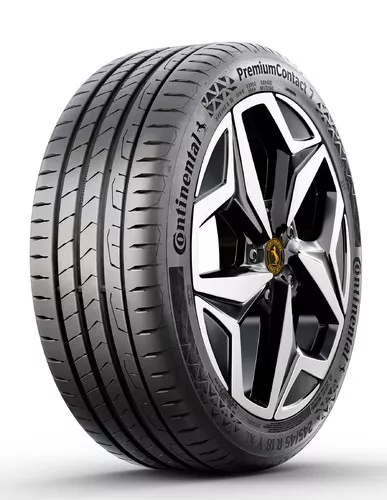
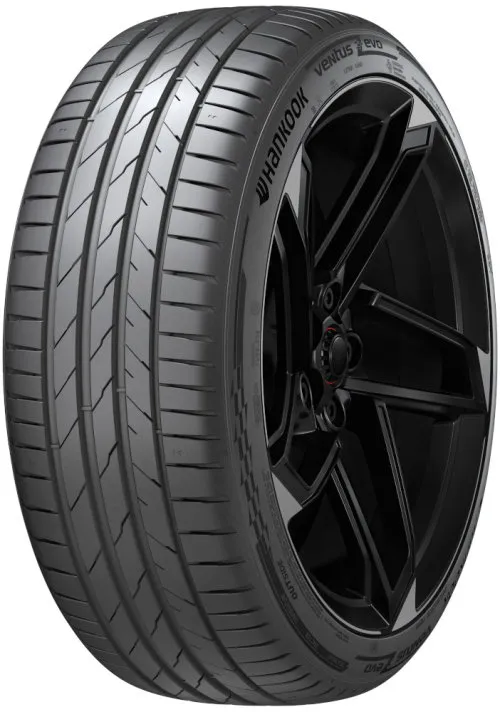
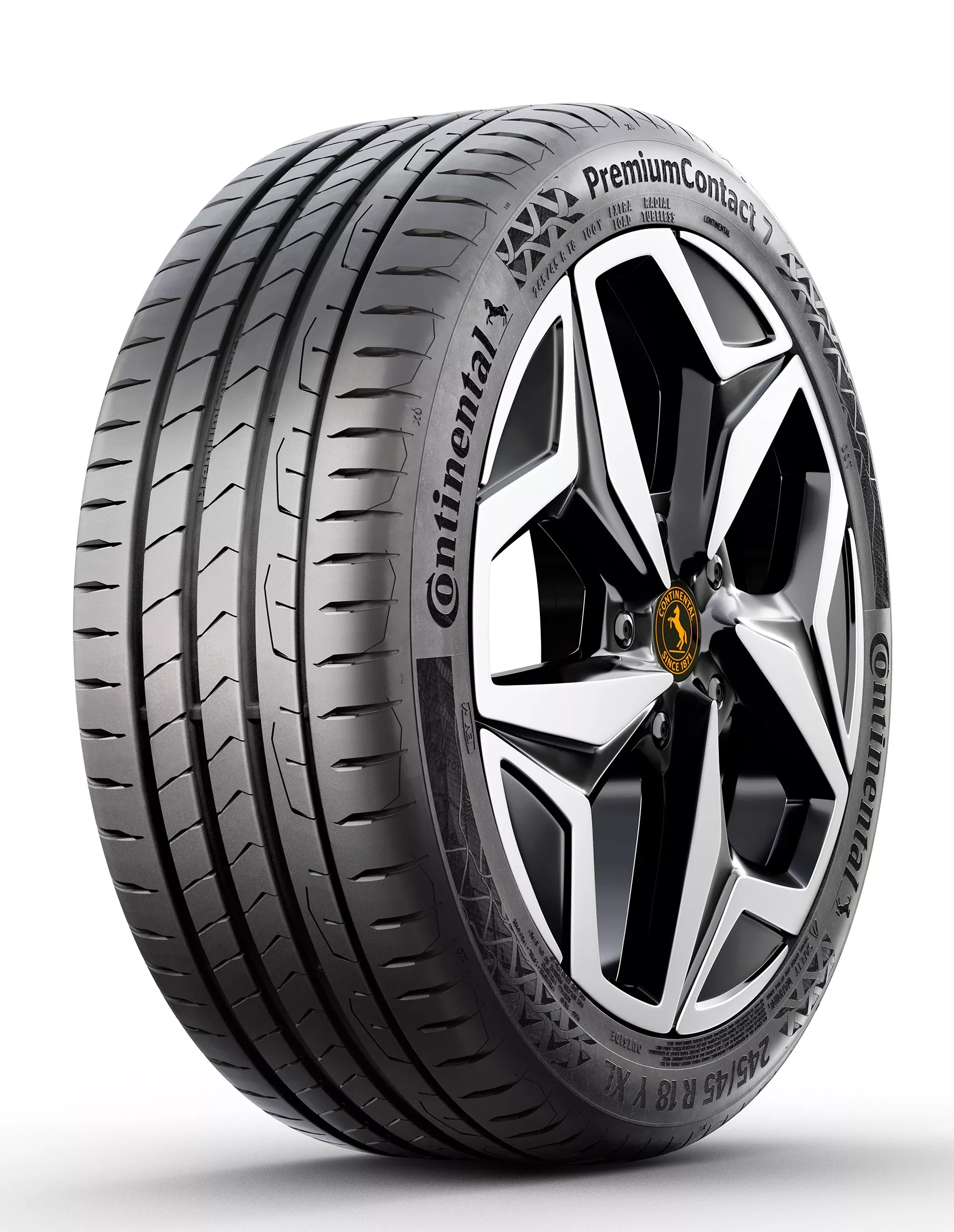
Two of the strongest premium summer tyres on sale right now, going head to head, and the margins are razor thin. The Hankook Ventus Evo is the newest flagship from Hankook, and it arrives with real swagger: a 99/100 rating in our database, test-winner results across multiple 2026 comparisons, and a habit of beating tyres that cost noticeably more. The Continental PremiumContact 7, successor to the well-regarded Continental PremiumContact 6, sits at 98/100 and has been the default safe pick since its 2023 launch — the tyre testers reach for when they want to say 'no notable weaknesses' and mean it.
The character split is clear from the moment you look past the headline scores. Hankook built the Ventus Evo as a dynamics-first tyre: it wants short braking distances, sharp turn-in and a genuinely sporty feel at the limit, and it's willing to trade a bit of rolling efficiency to get there. Continental, by contrast, engineered the PremiumContact 7 as the consummate all-rounder — its RedChili compound and Adaptive Pattern Technology are tuned for consistency across a huge range of conditions rather than outright edge, and its official positioning leans hard on comfort, safety and EV-compatibility rather than outright pace.
That difference shows up everywhere in the data that follows. The Hankook is the faster, edgier tyre in almost every braking and handling metric; the Continental is the more rounded, quieter, more comfort-oriented cruiser that still tests extremely well. Neither is a bad choice — this is a genuine coin-toss for most drivers, and which way you flip it depends entirely on what you actually want from a set of tyres.
Ventus Evo
PremiumContact 7


Averaged from 2 tests
Hankook Ventus Evo
Continental PremiumContact 7
Hankook Ventus Evo
Continental PremiumContact 7
Hankook Ventus Evo
Continental PremiumContact 7
Hankook Ventus Evo
Continental PremiumContact 7
Hankook Ventus Evo
Continental PremiumContact 7Wet braking follows the same script, just with a tighter margin: across two comparable tests, the Ventus Evo averages 27.2m to the PremiumContact 7's 27.8m. Half a metre sounds trivial until you remember both tyres are already stopping from the same speed on the same soaked surface — at that margin the Hankook is simply locking up marginally later. TYRE REVIEWS recorded the Ventus Evo's best-in-test wet braking at 27.66m outright, and Hankook's own wet-braking detail score of 90 (versus Continental's still-excellent 88.4) confirms this isn't a fluke of one test track.
Where it gets interesting is aquaplaning, and here the picture is genuinely mixed rather than a clean Hankook sweep. The Ventus Evo posted the highest straight-line aquaplaning speed in the TYRE REVIEWS test (78.81 km/h) and carries a strong longitudinal-aquaplaning score of 84.5, but its cross-aquaplaning score of 78.3 is noticeably softer — a real asymmetry between straight-line and lateral water dispersal. Continental has the opposite problem in places: Sportauto measured it 1st for longitudinal aquaplaning at 83.8 km/h, yet Autoexpress placed it only 6th in aquaplaning resistance and Netzwelt flagged 'unterdurchschnittliches Kurven-Aquaplaning' (below-average cross-aquaplaning). Neither tyre is a clean aquaplaning leader across every axis; it depends which direction the water is moving relative to the car.
On pure wet handling and cornering confidence, though, Continental claims real ground back. Its wet-handling-objective average of 98.3 and wet-circle-cornering of 88.5 are exceptional, and TYRE REVIEWS gave it the best wet-handling lap time in its group at 67.70 seconds, calling it 'excellent overall wet performance combining braking, handling and aquaplaning.' Real owners echo this directly — a BMW 530d owner running the PremiumContact 7 on a heavy, powerful rear-wheel-drive car wrote that 'in the wet, I can floor it and the rear will just not let go,' which is exactly the kind of margin-of-error confidence Continental has engineered for. Hankook's own wet-handling score of 89.7 and wet-circle-cornering of 93.3 are arguably even stronger on paper, and bild.de named it 'Testsieger mit besten Nässeeigenschaften' (test winner with the best wet properties) outright — so on balance, this category is close, but Hankook edges it on the numbers while Continental edges it on real-world reassurance.
Hankook Ventus Evo
Continental PremiumContact 7
Hankook Ventus Evo
Continental PremiumContact 7Across the two mutual tests in our database with measured dry braking, the Ventus Evo averages 33.4m against the PremiumContact 7's 34.5m — a 1.1m gap that, from 100km/h, is roughly the length of a small car. That's not a marginal rounding error; it shows up consistently, with Hankook stopping shorter in both the Autobild 245/45 R19 test (32.8m vs 34.3m) and the Autobild 225/40 R18 test (34m vs 34.6m). Testers describe the Ventus Evo's dry braking with phrases like 'kürzeste Trockenbremswege' (shortest dry braking distances), and Hankook's own dry-braking detail score of 86.8 and dry-handling score of 92.7 back that up as more than a one-off.
The why comes down to compound philosophy. Hankook has tuned the Ventus Evo for immediate bite and confidence at the limit — TYRE REVIEWS specifically praised its 'sporty feel with excellent confidence at the limit,' and that translates into sharper turn-in and a car that feels more alive mid-corner. Continental hasn't been chasing that same aggression; its RedChili compound is built to deliver safe braking without a heat-up phase rather than to shave the last few tenths off a lap. That's why its dry-handling-objective score of 99 is near-perfect for balance and predictability, even while its raw braking numbers trail Hankook's — Autoexpress even clocked the PremiumContact 7 2nd in dry braking with a 'remarkably neutral balance,' which is a different kind of compliment: it's not the fastest stopping tyre, but it's an exceptionally trustworthy one.
In head-to-head test placings the pattern repeats — Hankook finished ahead of Continental in three of five mutual tests, including a 1st-place finish in one 20-tyre Autobild comparison where Continental placed 6th. The one test where Continental turned the tables was TYRE REVIEWS' 12-tyre test, where it took outright victory over Hankook's 3rd — a reminder that the PremiumContact 7's balance can occasionally out-point the Ventus Evo's raw speed when a test rewards all-round composure over outright grip.
Hankook Ventus Evo
Continental PremiumContact 7This is where the two tyres diverge most sharply. Continental's comfort score of 70.2 sits well below Hankook's 84.5, and multiple owners confirm it in practice — Continental buyers specifically call out a 'quiet and comfortable ride' in customer feedback, and Sportauto described its rolling comfort as 'angenehm' (pleasant). But set against the Ventus Evo's numbers, that comfort edge tips decisively to Hankook: an 87.5 noise score against Continental's 71.4, and TYRE REVIEWS measured the Ventus Evo's exterior noise at just 70.7 dB, praising it as 'very low.' Sportauto's own summary of the PremiumContact 7 was telling — 'außer etwas lauterem Vorbeirollgeräusch kaum nennenswerte Schwächen' (apart from slightly louder pass-by noise, hardly any notable weaknesses) — which is Continental's testers politely admitting noise is its one soft spot.
Running costs flip the advantage back the other way. Hankook's key weaknesses list is blunt about it: higher rolling resistance, with a detail score of just 76 against Continental's 69.9 — wait, actually Continental's rolling-resistance score of 69.9 is the weaker of the two by the raw number, but TYRE REVIEWS measured Continental's rolling resistance at 8.33 kg/t 'near the bottom of the field,' while Hankook's own test posted 8.76 kg/t, also flagged as 'near the bottom of the field' in the same review. In short: neither tyre is efficient, and both get dinged for it — this is a rare case where the premium segment's chase for outright grip has visibly cost both tyres at the pump, and drivers prioritising fuel economy or EV range shouldn't expect either to shine here.
On mileage and value, Continental's official positioning leans hard on 'improved mileage,' and its mileage score of 74.6 comfortably beats Hankook's 77.5 — actually here Hankook's 77.5 edges ahead. Hankook's price-value ratio is repeatedly singled out in testing, with Autobild specifically praising its 'gutes Preis-Leistungs-Verhältnis' (good price-value ratio) across multiple 2026 tests, and our own summary calls it 'a premium tyre for slightly less than a premium price.' Continental, meanwhile, is candidly flagged in nearly every test as the priciest candidate — Netzwelt clocked it at €317 a set, the most expensive on test, and Autobild simply labelled it 'Teuerster Kandidat.' Real owners still rate it highly for quality (a 9.9/10 Heureka average from 19 reviews, with 'high overall quality and premium feel' repeatedly mentioned), so the money is buying something real — but if you're chasing the best return per euro, Hankook currently has the sharper argument.

Hankook Ventus Evo
Continental PremiumContact 7
Hankook Ventus Evo
Continental PremiumContact 7Strip away the marketing and this comes down to a genuinely close contest decided by what you value in the last 10%. Across five mutual tests, Hankook edges Continental three wins to two, and it backs that up with shorter average braking distances in both wet and dry, a punchier, more responsive character at the limit, and markedly lower cabin noise — all while undercutting Continental on price. If you want the tyre that stops shortest, turns in sharpest and rewards a more spirited driving style without punishing your ears or your wallet, the Ventus Evo is the stronger buy on the numbers.
But the PremiumContact 7 didn't become the default recommendation for premium saloons and EVs by accident. Its near-perfect dry-handling balance, genuine wet-weather composure — backed by owners of powerful, heavy cars praising its rear-end security in the wet — and Continental's ContiSeal puncture protection and EV-compatible construction make it the more reassuring, lower-drama choice for family cars, high-mileage motorway drivers and anyone who values predictability over outright pace. Its comfort score does trail Hankook's, and its price is the highest in most tests it enters, but nobody who buys it is surprised by a weakness once it's on the car.
Our recommendation: choose the Hankook Ventus Evo if you're a keen or performance-minded driver who wants class-leading braking and handling at a genuinely competitive price, and can live with slightly higher rolling resistance. Choose the Continental PremiumContact 7 if you're running a powerful, heavy or premium saloon — especially an EV or hybrid — and prioritise wet-weather trust, comfort and long-term dependability over shaving the last half-second off a lap, and don't mind paying Continental's premium for it.
Compare prices across all available dimensions for these tyres.
VS
VS
VS
VS
VS
VS
VS
VS
VS
VS
Hankook Ventus Evo vs Goodyear Eagle F1 Asymmetric 6
Hankook Ventus Evo vs Kumho Ecsta Sport (PS72)
Hankook Ventus Evo vs Bridgestone Potenza Sport Evo
Continental PremiumContact 7 vs Michelin Primacy 4+
Continental PremiumContact 7 vs Bridgestone Turanza 6
Continental PremiumContact 7 vs Goodyear Eagle F1 Asymmetric 6
Continental PremiumContact 7 vs Michelin Pilot Sport 5