The Hankook Ventus Evo wins on wet grip, noise and value, swept all three head-to-head tests.
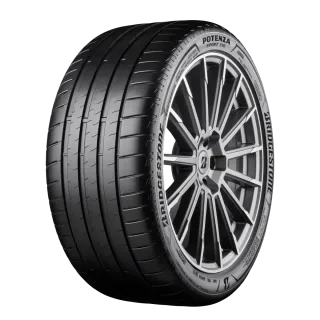
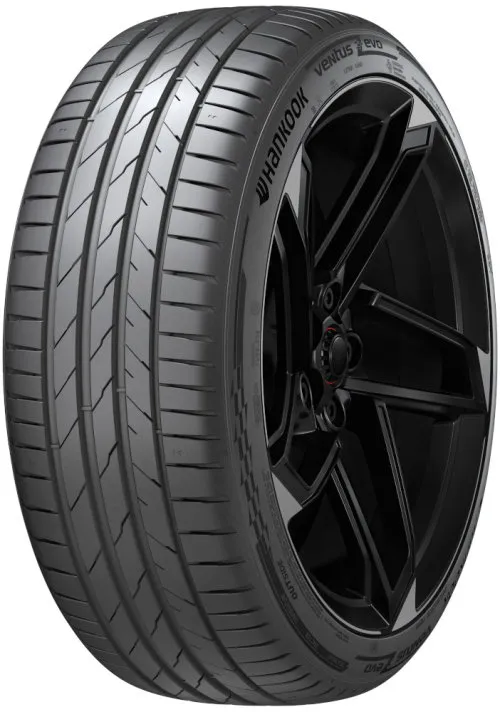
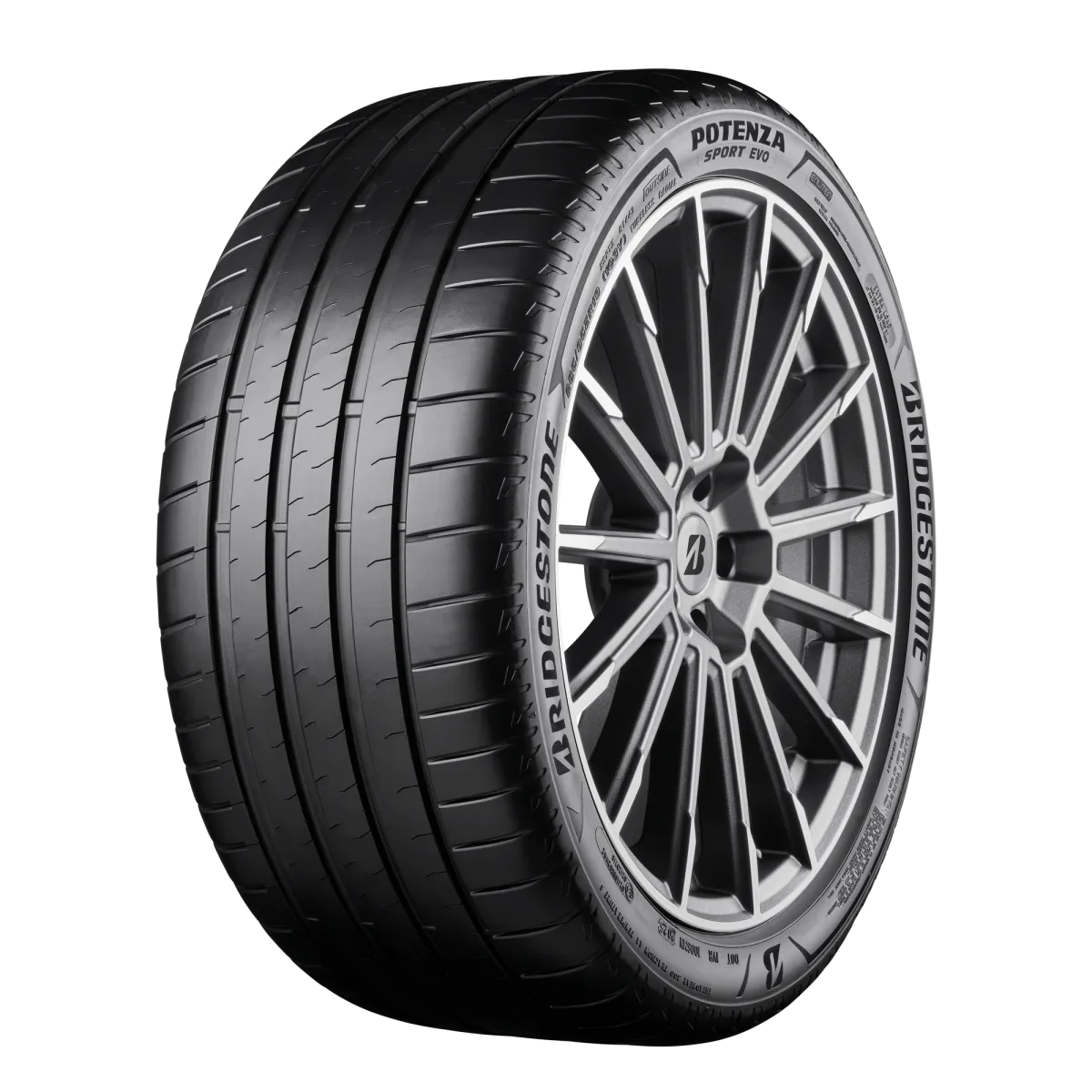
When two premium summer tyres arrive in the same season wearing fresh designations, it pays to look past the marketing and read the test sheets. The Hankook Ventus Evo and the Bridgestone Potenza Sport Evo are both aimed squarely at the ultra-high-performance end of the market, both fit 17 to 22 inch wheels, and both have impressed German testers in 2026. Yet our scoring separates them clearly: the Hankook lands a remarkable 99 out of 100, while the Bridgestone takes a still-strong 93 out of 100. The gap is small in headline terms but meaningful once you dig into the detail.
Hankook, the South Korean brand whose tyres have climbed steadily up the rankings with each generation, positions the Ventus Evo as a genuine premium product at a slightly sub-premium price. Bridgestone, the Japanese giant, builds the Potenza Sport Evo on the bones of its multi-award-winning Potenza Sport predecessor, adding ENLITEN technology to chase efficiency, longevity and even EV range. Both are credible. The question is which deserves your money.
The most telling evidence comes from three head-to-head test appearances in 2026, all of which the Hankook won, two of them outright. In an Auto Bild 255/45 R19 group of nine tyres the Ventus Evo took first and the Potenza Sport Evo second. In two further 245/45 R19 evaluations the Hankook finished first and runner-up while the Bridgestone settled for eleventh. That is a clean three-nil scoreline, and the rest of this comparison explains why.
Ventus Evo
Potenza Sport Evo


Averaged from 2 tests
Hankook Ventus Evo
Bridgestone Potenza Sport Evo
Hankook Ventus Evo
Bridgestone Potenza Sport Evo
Hankook Ventus Evo
Bridgestone Potenza Sport Evo
Hankook Ventus Evo
Bridgestone Potenza Sport Evo
Hankook Ventus Evo
Bridgestone Potenza Sport EvoWet weather is where the Hankook builds its winning margin, and the data is emphatic. Its wet index of 87.6 comfortably beats the Bridgestone's 85.2, and the gap widens in braking: the Ventus Evo scores 90.0 for wet braking versus 85.8 for the Potenza Sport Evo. Tyre Reviews measured the best wet braking in the entire test at 27.66 metres, and the head-to-head Autobild braking figures show the Hankook stopping in 27.0 metres against the Bridgestone's 28.2 metres. Auto Bild named the Ventus Evo overall test winner specifically for its best-in-test wet properties, short braking distances and dynamic handling.
The Hankook's aquaplaning resistance is the other decisive factor. Its aquaplaning index of 81.4 towers over the Bridgestone's 68.8, and Tyre Reviews recorded the highest straight-line aquaplaning speed of the field at 78.81 km/h. Hankook credits optimised lateral shoulder grooves that preserve void volume under braking and load, plus a new wet-grip compound tuned with specialised resins to hold grip across temperatures. The detail scores confirm it: wet-circle cornering of 93.3 and longitudinal aquaplaning of 84.5 are excellent.
The Potenza Sport Evo is no slouch in the wet, and it should not be dismissed. It carries the maximum EU label A wet-grip rating, Bridgestone claims a 5 per cent shorter wet braking distance than the well-regarded predecessor, and ACE placed it second for wet braking. Sportauto recorded a very short 33.1 metre wet stop. But its longitudinal aquaplaning detail score of 75.8 and several panel notes about small deficits in longitudinal aquaplaning reveal the weakness. When standing water appears, the Hankook is simply the safer choice.
Hankook Ventus Evo
Bridgestone Potenza Sport Evo
Hankook Ventus Evo
Bridgestone Potenza Sport EvoOn dry roads these two are closely matched, and it is here that the Bridgestone makes its strongest case. Our dry index gives the Potenza Sport Evo 89.0 against the Hankook's 89.7, while dry-braking scores sit at 87.0 for the Bridgestone and 86.8 for the Hankook. In other words, when it comes to stopping on dry tarmac, the Potenza Sport Evo has a fractional edge, and several test panels noticed it. The ACE 2026 test recorded the shortest dry braking distance of the field at 32.85 metres, and Sportauto crowned the Bridgestone its outright test winner with the highest overall score of 9.2 out of 10, praising a fundamentally understeering but finely throttle-adjustable chassis and very short braking distances of 33.8 metres dry.
The Hankook answers with breadth rather than a single peak. Its dry-handling detail score of 92.7 is one of the best figures in this entire comparison, and testers repeatedly described a sporty, dynamic character with excellent confidence at the limit. Autobild called it a driving dynamicist with excellent handling on both dry and wet surfaces and the shortest dry braking distances in that particular test. The direct head-to-head braking data backs the Hankook strongly: in the Autobild 245/45 R19 braking comparison it stopped from speed in 32.8 metres against the Bridgestone's 34.5 metres, a clear 1.7 metre advantage despite the Bridgestone's slightly higher generic dry-braking score.
The takeaway is nuance. In isolation the Potenza Sport Evo can post the very shortest dry stop on the right day and the right surface, which makes it a favourite of pure performance testers. But across mixed conditions and direct comparisons the Ventus Evo's dry handling and consistency give it the practical edge for most drivers.
Hankook Ventus Evo
Bridgestone Potenza Sport EvoComfort and running costs swing the comparison further toward the Hankook, though with one important caveat. Our comfort index rates the Ventus Evo at 84.5 against the Potenza Sport Evo's 77.5, and the noise gap is dramatic: 87.5 for the Hankook versus just 66.0 for the Bridgestone. Tyre Reviews measured very low 70.7 dB exterior noise for the Hankook, whereas Sportauto noted a louder 71.5 dB pass-by for the Bridgestone, and ACE flagged weaker noise behaviour. If a quiet, refined cabin matters to you, the Ventus Evo is the clear winner here.
On running costs the picture is more even but still tilts to Hankook. Mileage scores are almost identical at 77.5 and 77.0, and both brands claim roughly 15 to 30 per cent longevity gains over their reference models, with Bridgestone quoting around 6,000 extra kilometres. The real differentiator is rolling resistance and the EU label. The Hankook scores 76.0 for rolling resistance against the Bridgestone's 67.2, and its fuel labels are stronger, with 80 per cent of sizes rated C and a useful share of B and even A grades, against the Bridgestone's spread of mostly C and D. Both tyres deliver A or B wet grip on the label, but on fuel economy the Hankook is meaningfully more efficient across the range.
The caveat is that rolling resistance is the Hankook's one genuine weak spot in absolute terms. Tyre Reviews placed it near the bottom of the field at 8.76 kg/t, and it is the only metric where the Ventus Evo trails the pack. Yet because the Bridgestone's rolling resistance is also criticised as below average by ACE and Autobild, and because the Bridgestone is consistently flagged as the most expensive candidate in test after test, the Hankook still represents far stronger value. A premium tyre for slightly less than a premium price is an accurate summary.
Hankook Ventus Evo
Bridgestone Potenza Sport Evo
Hankook Ventus Evo
Bridgestone Potenza Sport EvoThis is a comparison between an outstanding all-rounder and a focused performance specialist. The Hankook Ventus Evo wins on the balance of evidence, and decisively so. It took all three head-to-head meetings, owns the wet weather with best-in-test wet braking and the highest aquaplaning speed, runs much quieter, offers better fuel-label efficiency and undercuts its rival on price. Its only real blemish is higher rolling resistance, and even that is offset by its superior EU fuel ratings across most sizes. A 99 out of 100 score is rare, and the Ventus Evo earns it.
The Bridgestone Potenza Sport Evo is far from beaten, though. For the driver who prioritises pure dry-road precision it has real appeal: the shortest dry braking distance in the ACE test, an outright Sportauto win with a 9.2 score, direct steering response and an agile, throttle-adjustable chassis that enthusiast testers adore. It also carries the maximum EU label A wet grip, ENLITEN-driven efficiency claims and explicit EV compatibility with a wide size range. As a successor to the multi-award-winning Potenza Sport it is a worthy, sporting choice.
For most buyers the recommendation is the Ventus Evo: it is safer in the wet, quieter, cheaper and more efficient, with dry performance close enough to the Bridgestone to lose nothing of consequence. Choose the Potenza Sport Evo only if dry-braking precision and a sharp sporting feel outrank wet safety, noise and value in your priorities, and you are willing to pay the premium it consistently commands.
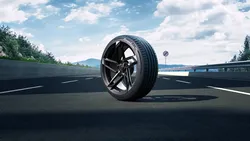
Compare prices across all available dimensions for these tyres.
VS
VS
VS
VS
VS
VS
VS
VS
VS
VS