Goodyear wins on dry grip, comfort and consistency; Pirelli matches it only in wet braking and snow stopping.
This is a duel between a tyre that has become a benchmark and one that is now being overtaken by its own successor. The GoodYear UltraGrip Performance 3 is the flagship of the GoodYear winter range. It comes in 179 sizes from 14 to 23 inches, is built in Poland, and is aimed at cars and SUVs of every kind. Goodyear pitches it as a tyre that dampens noise, brings SnowProtect technology to all winter conditions and suits electric vehicles thanks to its lower noise and rolling resistance. It earned our rating of 92/100, and its record backs that up: ADAC test winner, an Exemplary verdict from Auto Bild, and a place in DriverReviews' recommended winter tyres for 2025/26.
The Pirelli Cinturato Winter 2 is a premium touring winter tyre from Pirelli, in 39 sizes from 16 to 20 inches. It replaced the Cinturato Winter, and a Cinturato Winter 3 is now available, which Autobild itself points out. Pirelli describes it as a premium solution for saloons and crossovers, built around comfort and safety, with an offset V-pattern, 3D interlocking sipes and a compound for high mileage. Our rating is 70/100, and the gap between the two scores tells most of the story.
The biggest difference in character is this. The Goodyear is the confident all-rounder that wins almost every category, led by snow, comfort and noise. The Pirelli is a gentle, quiet tourer whose strengths lie in the wet and on the snow-braking test, but it gives away a lot in dry handling and in overall consistency. In the 14 tests they share, the Goodyear finished ahead 13 times. That is about as one-sided as tyre testing gets.
UltraGrip Performance 3
Cinturato Winter 2


Averaged from 11 tests
GoodYear UltraGrip Performance 3
Pirelli Cinturato Winter 2
GoodYear UltraGrip Performance 3
Pirelli Cinturato Winter 2
GoodYear UltraGrip Performance 3
Pirelli Cinturato Winter 2
GoodYear UltraGrip Performance 3
Pirelli Cinturato Winter 2
GoodYear UltraGrip Performance 3
Pirelli Cinturato Winter 2In the wet the picture is much closer and slightly favours the Pirelli on pure braking. Across 2 measured wet braking tests the Goodyear averages 35.4 m against 35.3 m for the Pirelli. That 0.1 m gap is far less than a car length and means nothing at the wheel. Within the two tests the lead swings: the Pirelli stopped 1.3 m shorter in the 205/55 R16 test (35.6 m against 36.9 m), while the Goodyear was 1.0 m shorter in the 225/45 R18 test (33.9 m against 34.9 m). In practice the two brake equally well on wet roads.
Beyond braking the Goodyear is the stronger tyre. Its wet score is 86.4 against 74.8, and the wet braking score favours it too, at 83.8 against 78.3. Wet handling is the real separator: the Goodyear scores 90.9 on average in wet handling, with a wet circle cornering score of 88.6 and an exceptional objective wet handling score of 99. The Pirelli does well with 83.3 for wet handling and 85.8 for cornering on a wet circle, and testers praise its grip in wet bends. They also report a tendency to lift-off oversteer when the front axle is working hard.
Aquaplaning is a small win for the Goodyear, 79 against 74.6, and one test gave it the best curved aquaplaning in the field. Owners agree, with one running 255/40 R19 and 285/40 R19 sizes and praising how well they handle aquaplaning. The EU label supports the Pirelli on paper, as all 100% of its sizes are rated B for wet grip, against 57 B and 42 C for the Goodyear. That is a point in the Pirelli's favour, but the real tests show the Goodyear matching it.
GoodYear UltraGrip Performance 3
Pirelli Cinturato Winter 2
GoodYear UltraGrip Performance 3
Pirelli Cinturato Winter 2
GoodYear UltraGrip Performance 3
Pirelli Cinturato Winter 2
GoodYear UltraGrip Performance 3
Pirelli Cinturato Winter 2We have no measured dry braking distances for this pair, so we have to lean on scores and tester comments. The numbers are surprisingly close in one place. Dry braking scores 81 for the Goodyear against 82.1 for the Pirelli, which means that when you stamp on the pedal on dry tarmac, there is little to separate them. Everywhere else the Goodyear pulls clear. Its overall dry score is 83 against 64.6, a gap of more than 18 points, and that is the biggest difference between these two tyres on any measure.
The reason is steering response and behaviour at the limit. The Pirelli is repeatedly marked down for imprecise, sluggish dry handling, with ADAC listing clear weaknesses on dry roads and Autobild criticising its precision. One owner who moved from the sportier Sottozero 3 noted that the touring-minded Cinturato feels rougher and less direct, with poorer dry handling. That fits a compound and a pattern designed for snow and comfort, with big blocks that flex under cornering load. The Goodyear has a stronger dry showing, with a measured dry handling detail score of 88.5, and one test credited it with the shortest dry braking distance in the field. An owner described excellent braking on dry surfaces and very good hold in corners, with only a slight tendency to twist when driven hard.
The Goodyear is not perfect, though. Testers note some weakness in precision and limit behaviour on the dry, and one test placed it last for dry handling in a strong field. That is the honest trade-off for a snow-biased tyre. Still, for most drivers it feels clearly more secure and accurate than the Pirelli, especially on fast, winding roads where the Pirelli's soft response is most noticeable.
GoodYear UltraGrip Performance 3
Pirelli Cinturato Winter 2
GoodYear UltraGrip Performance 3
Pirelli Cinturato Winter 2
GoodYear UltraGrip Performance 3
Pirelli Cinturato Winter 2
GoodYear UltraGrip Performance 3
Pirelli Cinturato Winter 2Snow is closer than you might expect, and this is where measured distances help. Across 2 snow braking tests the Goodyear averages 29.8 m against 30.5 m for the Pirelli. The 0.7 m difference is about a sixth of a car length, which is small but consistent, because the Goodyear was ahead in the 225/45 R18 test by 0.6 m (30.1 m against 30.7 m) and the Pirelli only led by 0.8 m in the other, where the Goodyear was 29.4 m against 30.2 m. In reality the lead is the Goodyear's in one and the Pirelli's in neither: the Goodyear was ahead in both. A stop from 50 km/h on snow is almost the same on either tyre.
The scores tell a different story on how the tyres feel. Our snow score is 80.2 for the Goodyear and 80 for the Pirelli, essentially a tie, but the Goodyear's detail scores are strong, with snow safety at 91.5 and ice braking at 90.5. One test named it best for snow handling. The Pirelli does well in the cone-slalom and has praise for lateral grip on snow, with snow handling at 82.5 and snow traction at 83. Yet one test found a relatively low grip level in all snow disciplines, so results depend on the test. Both tyres carry the 3PMSF severe-weather mark.
For drivers who face real winters the Goodyear is the safer choice. Its snow-first design philosophy through SnowProtect is backed by tester comments that call snow its top discipline. If you see snow only occasionally, the Pirelli will do the job without drama.
GoodYear UltraGrip Performance 3
Pirelli Cinturato Winter 2
GoodYear UltraGrip Performance 3
Pirelli Cinturato Winter 2
GoodYear UltraGrip Performance 3
Pirelli Cinturato Winter 2Both tyres are refined, but the Goodyear is the quieter and more comfortable one. Comfort scores are 91.8 against 85.1 and noise scores 93.9 against 88.9. Interior noise detail scores are 97.8 for the Goodyear against 92.8 for the Pirelli. The Pirelli was praised in one test for quiet pass-by noise and high rolling comfort, but another test criticised rough rolling and tread noise, and a Seat Leon owner described it as great in subjective road feedback. A Renault owner found it very quiet despite what tests say. The Goodyear fits Goodyear's claim of damped noise, which suits its suitability for electric vehicles.
Running costs favour the Goodyear on almost every count. Rolling resistance scores 74.7 against 69.6, and mileage scores 82.9 against 78.9. One test mentions the Goodyear's low abrasion and very high predicted mileage, though ADAC rated it satisfactory in one test, and Goodyear's weakness listed in our data is higher rolling resistance. The Pirelli gets credit for low abrasion in ADAC tests, but Autobild called its mileage moderate. One owner reported that it lost almost half its tread after a single winter, though they called last winter weak and loved the grip. On EU labels the fuel ratings are almost identical. The Goodyear has 76 C, 13 B, 11 D and 1 A, while the Pirelli has 75 C, 13 B and 13 D. The Goodyear's lead is therefore a modest one.
On price, the Pirelli is criticised in one test as expensive, although two owners praised good quality for a reasonable price. With a rating of 9.7/10 from 13 Heureka reviews, it satisfies its owners. The Goodyear scores 9.2/10 from 25 reviews and 90/100 on Tyre Reviews against 63/100 for the Pirelli. Over its life the Goodyear should return more value, since it wins on mileage, rolling resistance and test results at a premium price, while the Pirelli's dated design and a successor already available make it harder to justify.
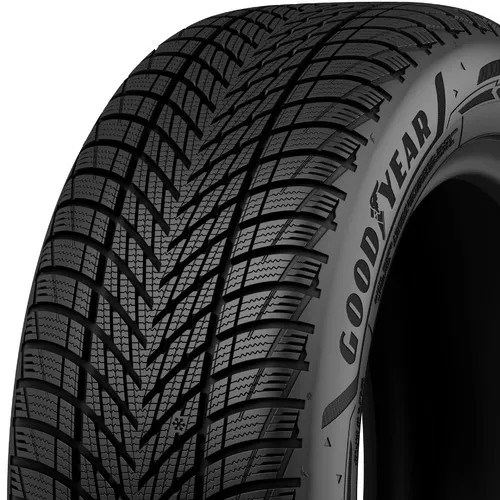
GoodYear UltraGrip Performance 3
Pirelli Cinturato Winter 2
GoodYear UltraGrip Performance 3
Pirelli Cinturato Winter 2For most drivers we would pick the Goodyear UltraGrip Performance 3. It wins the dry, matches or beats the Pirelli in the wet and on snow, is quieter and more comfortable, wears better, and won 13 of the 14 tests the two shared. It suits the widest range of drivers, from family car owners to those with powerful cars, and it is the sensible pick for anyone who lives where winters are properly snowy. Its weak points are slightly vague steering precision at the limit and a higher rolling resistance than ideal, but neither is a serious fault.
Choose the Pirelli Cinturato Winter 2 if you want a calm, quiet touring winter tyre for a saloon or crossover, you drive mostly gently in wet conditions, and you can find it at a good price in a size that suits. Its wet braking is equal to the Goodyear's and its label shows B across all sizes. Accept that dry handling will feel soft and imprecise, that it will wear faster than you hope, and that snow grip is only adequate in some tests.
Keep in mind that the Pirelli now has a successor in the Cinturato Winter 3, which is worth comparing if you are considering the model. The Goodyear has no successor listed, so it remains the current choice. Between these two, the Goodyear is the clear winner.
| Organization | Season | Year | Dimension | |
|---|---|---|---|---|
ADAC | Winter | 2024 | 205/55 R16 | View |
AUTOBILD | Winter | 2024 | 205/55 R16 | View |
ADAC | Winter | 2024 | 215/55 R17 | View |
Autobild | Winter | 2025 | 215/55 R17 | View |
Autozeitung | Winter | 2024 | 215/55 R17 | View |
Die Reifentester | Winter | 2025 | 215/55 R17 | View |
Autobild | Winter | 2023 | 225/40 R18 | View |
Autobild | Winter | 2025 | 225/40 R18 | View |
Sportauto | Winter | 2023 | 225/40 R18 | View |
Autoexpress | Winter | 2023 | 225/45 R17 | View |
Autobild | Winter | 2023 | 225/45 R18 | View |
Compare prices across all available dimensions for these tyres.
VS
VS
VS
VS
VS
VS
VS
VS
VS
VS
GoodYear UltraGrip Performance 3 vs Continental WinterContact TS 870 P
GoodYear UltraGrip Performance 3 vs Hankook Winter i*cept evo3 W330
GoodYear UltraGrip Performance 3 vs Michelin Pilot Alpin 5
Pirelli Cinturato Winter 2 vs Bridgestone Blizzak LM-005
Pirelli Cinturato Winter 2 vs Vredestein Wintrac Pro
Pirelli Cinturato Winter 2 vs Hankook W462 Winter i*cept RS3
Pirelli Cinturato Winter 2 vs Continental WinterContact TS 870 P