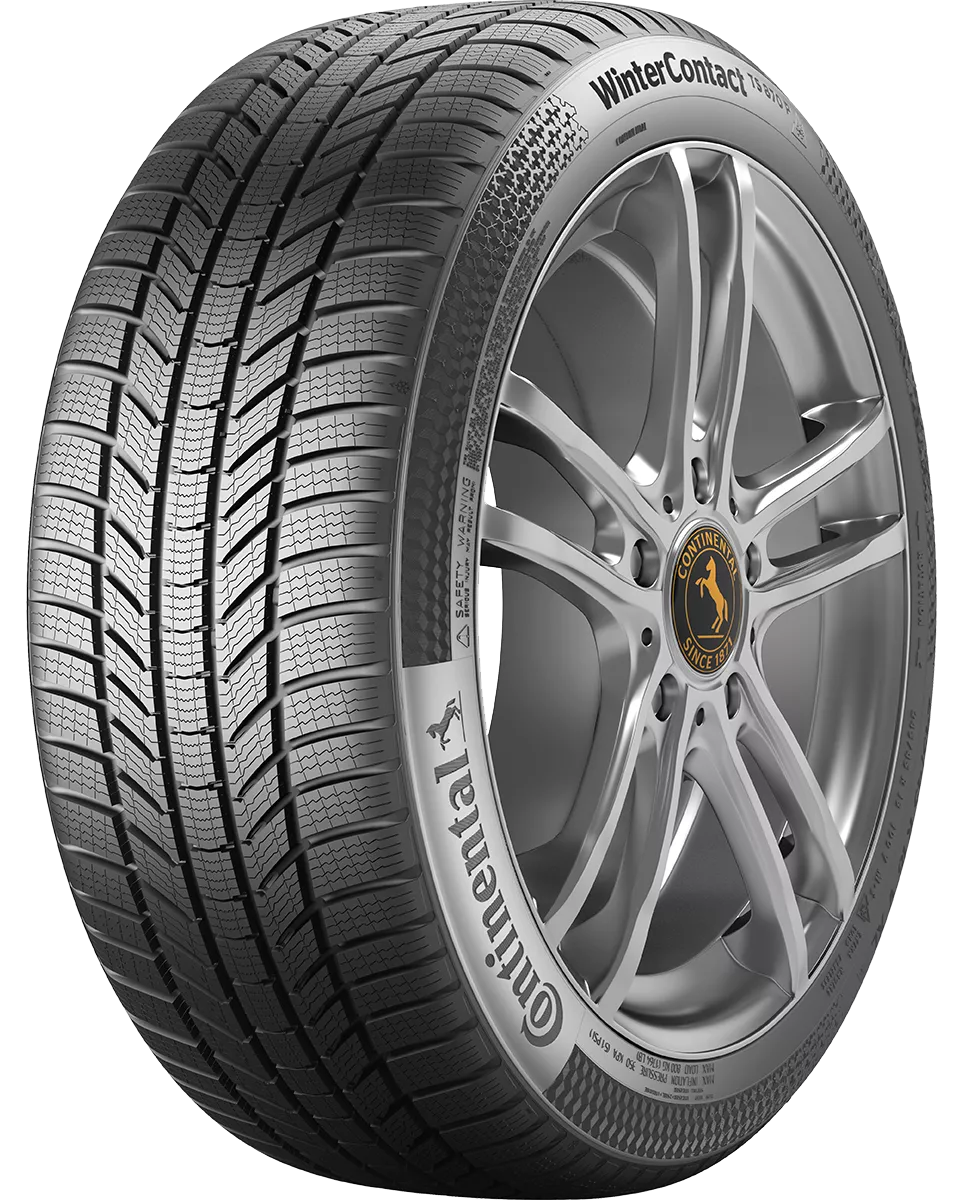
The Continental stops 1.6m shorter on wet roads and wins every shared test.
The Continental WinterContact TS 870 P and the Kumho WinterCraft WP52 represent two very different philosophies in winter tyres. Continental's flagship winter offering is a well-rounded performance tyre that earns its premium price tag through balanced excellence — low rolling resistance, strong dry dynamics and creditable wet safety all in one package, making it particularly attractive for drivers of performance cars and EVs. The Kumho, successor to the WinterCraft WP51, pitches itself as a value-oriented alternative with genuine winter credentials and impressive projected mileage, but it carries meaningful compromises in wet and aquaplaning performance that the data makes hard to ignore. Across seven mutual tests, the Continental finishes ahead every single time — a gap that reflects a real difference in capability rather than just brand prestige.
WinterContact TS 870 P
WinterCraft WP52


Averaged from 4 tests
Continental WinterContact TS 870 P
Kumho WinterCraft WP52
Continental WinterContact TS 870 P
Kumho WinterCraft WP52
Continental WinterContact TS 870 P
Kumho WinterCraft WP52
Continental WinterContact TS 870 P
Kumho WinterCraft WP52
Continental WinterContact TS 870 P
Kumho WinterCraft WP52Wet performance is where the gap between these two becomes most consequential. Averaging 34.8 metres for the Continental against 36.4 metres for the Kumho across two measured wet braking tests, the difference of 1.6 metres is consistent and meaningful at real-world speeds. The Continental's Cool Chili compound and Hydrogrooves technology deliver confident wet grip, with multiple test evaluations praising its short wet stopping distances and secure wet cornering. Its one genuine weakness in the wet is crosswind aquaplaning, where it scores below its overall level — a documented limitation worth noting for drivers who frequently encounter standing water at speed. The Kumho's wet story is less encouraging: aquaplaning resistance is a recurring concern flagged by every major test, wet lateral grip is rated average at best, and the tyre shows understeer tendencies on wet roads. Its EU wet grip label carries some B-rated dimensions, but the real-world test picture paints a tyre that demands more caution in heavy rain than its main rival.
Continental WinterContact TS 870 P
Kumho WinterCraft WP52
Continental WinterContact TS 870 P
Kumho WinterCraft WP52On dry roads the Continental is notably accomplished. Test feedback consistently highlights its sporting dry handling character — it's described as the most dynamically satisfying of its class on dry tarmac, with precise steering response and confident limit behaviour. Real-world owners echo this: a Ford Mondeo driver praised how beautifully it held the car in corners even at 1,800 kg. The Kumho is no embarrassment on dry surfaces — its dry braking score is actually higher in isolation, and early test reports noted balanced, sporty dry dynamics with short stopping distances. However, ADAC flagged notable weaknesses in dry handling at the limit and poor behaviour near the edge, suggesting the Kumho's dry braking competence doesn't extend to full dynamic confidence. For everyday dry stopping, the gap is modest; for committed cornering, the Continental is clearly the more assured tyre.
Continental WinterContact TS 870 P
Kumho WinterCraft WP52
Continental WinterContact TS 870 P
Kumho WinterCraft WP52
Continental WinterContact TS 870 P
Kumho WinterCraft WP52
Continental WinterContact TS 870 P
Kumho WinterCraft WP52Both tyres are competent winter performers, but the Continental's margin on snow is clear and consistent. Averaging 28.0 metres on snow versus 29.4 metres for the Kumho across two measured snow braking tests, that 1.4-metre advantage translates into real-world safety on compacted winter roads. The Continental delivers reliable traction, handling and corner grip in snowy conditions — its Intelligent Sipe Design and water management technology provide the kind of snow-to-snow adhesion that earns confidence in mountain passes and icy commutes. The Kumho handles itself respectably on snow and winter surfaces — ADAC acknowledged its good winter road properties and Autobild noted convincing snow performance — making it a viable choice for drivers facing moderate winter conditions. Where the Continental pulls further ahead is on ice, where the Kumho offers less reassurance.
Continental WinterContact TS 870 P
Kumho WinterCraft WP52
Continental WinterContact TS 870 P
Kumho WinterCraft WP52
Continental WinterContact TS 870 P
Kumho WinterCraft WP52The Continental WinterContact TS 870 P impresses with its low rolling resistance — one of its most praised attributes, translating to fuel savings and extended EV range that owners consistently highlight alongside quiet motorway cruising. The ride is generally refined, with the only noted weakness being mild harshness over transverse road joints. The Kumho's standout data point is mileage: its projected tread life score of 84.3 comfortably outpaces the Continental's 62.9, which is a genuine long-term cost advantage for high-mileage drivers. The Kumho also earns solid marks for low exterior pass-by noise. Rolling resistance, however, is a clear weakness — scoring 64.8 against the Continental's 91.7 — meaning the Kumho will cost more at the pump over the life of the tyre, partially undermining its lower purchase price.
Continental WinterContact TS 870 P
Kumho WinterCraft WP52
Continental WinterContact TS 870 P
Kumho WinterCraft WP52If budget allows, the Continental WinterContact TS 870 P is the straightforward recommendation — it wins every shared test for good reason, delivering a premium blend of wet safety, snow confidence, low rolling resistance and polished dry dynamics that few winter tyres can match. It's particularly compelling for EV drivers and performance car owners who need a tyre that doesn't compromise efficiency or handling feel. The Kumho WinterCraft WP52 earns its place in the market for cost-conscious drivers who prioritise tread longevity and face moderate winter conditions. Its snow competence is genuine and its dry braking is solid, but drivers in wetter climates or those who regularly encounter standing water should think carefully — aquaplaning resistance is a structural weakness that the data confirms across multiple independent evaluations. Buy the Continental if you want the best winter tyre in this pairing; choose the Kumho if the price gap matters and your winters are more snow than rain.
Compare prices across all available dimensions for these tyres.
VS
VS
VS
VS
VS
VS
VS
VS
VS
VS
Continental WinterContact TS 870 P vs Vredestein Wintrac Pro
Continental WinterContact TS 870 P vs Bridgestone Blizzak LM-005
Continental WinterContact TS 870 P vs Hankook Winter i*cept evo3 W330
Continental WinterContact TS 870 P vs Michelin Pilot Alpin 5
Kumho WinterCraft WP52 vs Pirelli Cinturato Winter 2
Kumho WinterCraft WP52 vs Vredestein Wintrac Pro
Kumho WinterCraft WP52 vs Bridgestone Blizzak LM-005