Comparison: Continental PremiumContact 7 vs. Michelin Primacy 4+ vs. Goodyear Efficient Grip Performance vs. GoodYear Efficientgrip Performance 2 vs. Hankook ION Evo
Also compare with
The Continental stops shorter in every condition; the Michelin goes further on every tank.
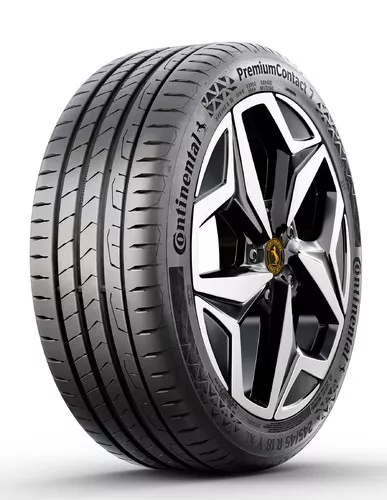
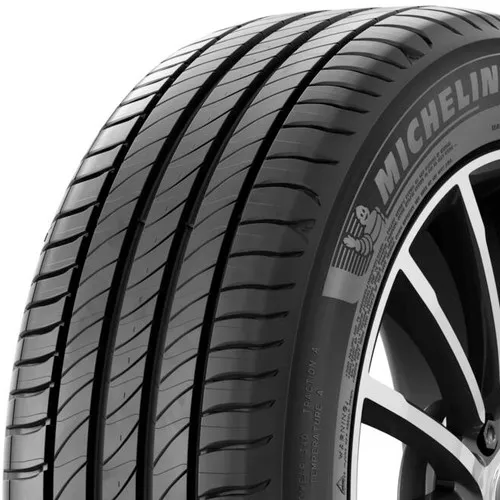
Both are premium summer tyres aimed at family and executive car drivers, but the Continental PremiumContact 7 and the Michelin Primacy 4+ have entirely different personalities. Continental's latest flagship is a grip-focused all-rounder that has dominated the test circuit since its 2023 launch — winning eleven of the twelve direct comparisons these two have shared. The Michelin, succeeding the Michelin Primacy 4 and itself now followed by the Michelin Primacy 5, is built around a different philosophy: longevity, refinement, and safety that endures as the tyre wears, underpinned by Michelin's EverGrip technology. One tyre prioritises what happens in the first few metres of an emergency stop; the other focuses on how well it still performs after 30,000 kilometres.
 PremiumContact 7
 Primacy 4+



 Continental PremiumContact 7Michelin Primacy 4+Goodyear Efficient Grip PerformanceGoodYear Efficientgrip Performance 2Hankook ION EvoContinental PremiumContact 7Michelin Primacy 4+Goodyear Efficient Grip PerformanceGoodYear Efficientgrip Performance 2Hankook ION EvoContinental PremiumContact 7Michelin Primacy 4+Goodyear Efficient Grip PerformanceGoodYear Efficientgrip Performance 2Hankook ION EvoContinental PremiumContact 7Michelin Primacy 4+Goodyear Efficient Grip PerformanceGoodYear Efficientgrip Performance 2Hankook ION EvoContinental PremiumContact 7Michelin Primacy 4+Goodyear Efficient Grip PerformanceGoodYear Efficientgrip Performance 2Hankook ION EvoContinental PremiumContact 7Michelin Primacy 4+Goodyear Efficient Grip PerformanceGoodYear Efficientgrip Performance 2Hankook ION Evo
Wet performance is where the gap between these two tyres is most consequential. The PremiumContact 7 is one of the strongest wet-weather tyres currently on sale — it combines outstanding wet braking with class-leading wet handling lap times and strong aquaplaning resistance, a combination that earned it joint test winner status in Tyre Reviews' 2025 comparative. In the Autobild braking test cited above, it stopped from 100 km/h in 25.8 metres on wet tarmac; the Primacy 4+ needed 27.7 metres — nearly two additional car lengths at typical emergency braking speeds. That gap is the central reason the PremiumContact 7 leads this comparison so decisively. The Primacy 4+ carries wet performance as its most documented limitation: aquaplaning reserves have been flagged as modest across several independent programmes, wet cornering grip is below the level of newer designs, and at least one verified owner reported an aquaplaning incident in normal driving conditions. Michelin's EverGrip technology is designed to preserve wet braking performance as the tread wears — a genuine long-term benefit — but in outright peak wet grip, the Primacy 4+ cannot match the Continental at any tread depth.
Continental PremiumContact 7Michelin Primacy 4+Goodyear Efficient Grip PerformanceGoodYear Efficientgrip Performance 2Hankook ION EvoContinental PremiumContact 7Michelin Primacy 4+Goodyear Efficient Grip PerformanceGoodYear Efficientgrip Performance 2Hankook ION EvoContinental PremiumContact 7Michelin Primacy 4+Goodyear Efficient Grip PerformanceGoodYear Efficientgrip Performance 2Hankook ION EvoContinental PremiumContact 7Michelin Primacy 4+Goodyear Efficient Grip PerformanceGoodYear Efficientgrip Performance 2On dry tarmac both tyres are capable, but the PremiumContact 7 has a noticeably sharper, more immediate character. Its objective dry handling scores are outstanding across multiple independent evaluations, and drivers switching from other premium brands frequently comment on how precisely and confidently it places the car — one Ford Focus owner who moved from a softer Continental model described the difference in cornering behaviour as night and day. In the largest shared braking test available, Autobild's 55-tyre 205/55 R16 comparison, the Continental stopped in 35.4 metres on dry tarmac against 36.3 metres for the Primacy 4+ — a consistent pattern across the test field. The Michelin is not a poor dry-road tyre; its steering feel has been praised as natural and progressive, and it handles confidently under normal driving. But it was flagged in at least one major evaluation for oversteer risk during fast lane changes under load, suggesting its dry limit is narrower and less forgiving than the Continental's.
Continental PremiumContact 7Michelin Primacy 4+Goodyear Efficient Grip PerformanceGoodYear Efficientgrip Performance 2Hankook ION EvoContinental PremiumContact 7Michelin Primacy 4+Goodyear Efficient Grip PerformanceGoodYear Efficientgrip Performance 2Hankook ION EvoContinental PremiumContact 7Michelin Primacy 4+Goodyear Efficient Grip PerformanceGoodYear Efficientgrip Performance 2Hankook ION EvoContinental PremiumContact 7Michelin Primacy 4+Goodyear Efficient Grip PerformanceHankook ION EvoContinental PremiumContact 7Michelin Primacy 4+Goodyear Efficient Grip PerformanceGoodYear Efficientgrip Performance 2Hankook ION EvoContinental PremiumContact 7Michelin Primacy 4+Goodyear Efficient Grip PerformanceGoodYear Efficientgrip Performance 2Hankook ION EvoContinental PremiumContact 7Michelin Primacy 4+Goodyear Efficient Grip PerformanceGoodYear Efficientgrip Performance 2Hankook ION EvoContinental PremiumContact 7Michelin Primacy 4+Goodyear Efficient Grip PerformanceGoodYear Efficientgrip Performance 2This is the Primacy 4+'s strongest suit, and it is genuinely impressive. In Tyre Reviews' 2025 test it recorded the best comfort scores of the entire field and finished as the second quietest tyre tested — an objective result that aligns with what owners consistently report. Refinement, low road noise, and a settled, cushioned ride are the qualities Michelin designed this tyre around, and real-world buyers on Passats, Civics, and executive saloons confirm it delivers. Its rolling resistance is also meaningfully lower than the PremiumContact 7's, translating to better fuel economy over time, and its mileage credentials are strong — ADAC rated predicted tread life as very high. The PremiumContact 7 is not unrefined — a BMW 530d owner noted it was very quiet at motorway speeds — but its rolling resistance sits near the bottom of its test fields, and noise measurements have come in below average in multiple evaluations. It is a composed, comfortable tyre; it simply does not lead in this department the way it leads on grip.
Across twelve shared tests, the PremiumContact 7 has won eleven and the Primacy 4+ one — and that result reflects a genuine, consistent performance advantage rather than a quirk of one particular test. For most drivers, particularly those who encounter wet roads regularly or who simply want the shortest possible stopping distances, the Continental PremiumContact 7 is the more capable and safer choice. Its price is the highest in most test fields it enters, and its fuel economy and noise are merely average rather than class-leading — but for what a tyre is ultimately asked to do in an emergency, it is currently among the best available. The Michelin Primacy 4+ makes a compelling case for a specific kind of buyer: someone who covers high mileage, prioritises running costs and cabin refinement, and drives in a composed, measured style where peak wet grip is rarely tested. If you recognise yourself in that description, the Michelin will serve you well and economically. If you are less certain about the conditions you might face — or simply want the maximum safety margin on wet roads — the Continental is the more reassuring tyre to have beneath you.
Compare prices across all available dimensions for these tyres.
VSVSVSVS VSVS
VSVS VSVSVSVSContinental PremiumContact 7 vs Goodyear Eagle F1 Asymmetric 6Continental PremiumContact 7 vs Bridgestone Turanza T005Continental PremiumContact 7 vs Michelin Primacy 5Continental PremiumContact 7 vs Bridgestone Turanza 6Michelin Primacy 4+ vs Bridgestone Turanza T005
 Michelin Primacy 4+ vs Kleber Dynaxer HP5Michelin Primacy 4+ vs Michelin Primacy 4
 Goodyear Efficient Grip Performance vs Dunlop Sport BluResponse




