Continental maximises efficiency; Michelin delivers the broader wet-safety margin and more complete touring experience.
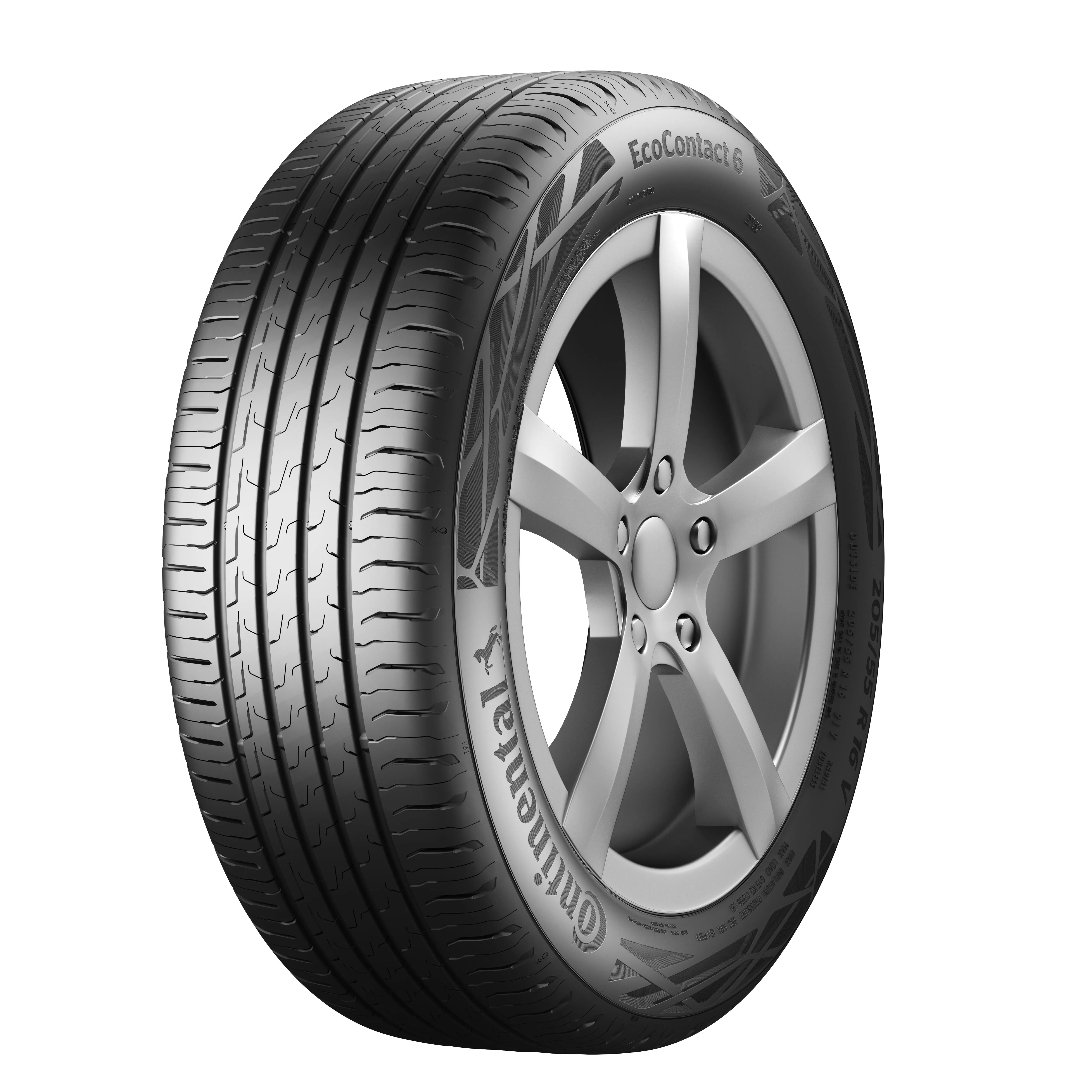
The Continental EcoContact 6 and Michelin Primacy 5 are premium summer tyres built around efficiency, longevity and everyday road manners, but they represent different generations of that idea. The German-made Continental replaced the Continental ContiEcoContact 5 and is itself succeeded by the Continental EcoContact 7. With 178 listed dimensions, it remains broadly available and follows the traditional EcoContact formula: minimise energy losses, deliver substantial mileage and provide secure rather than sporting dry-road behaviour. Its 77/100 rating reflects a specialist whose remarkable efficiency is balanced by important wet-weather limitations.
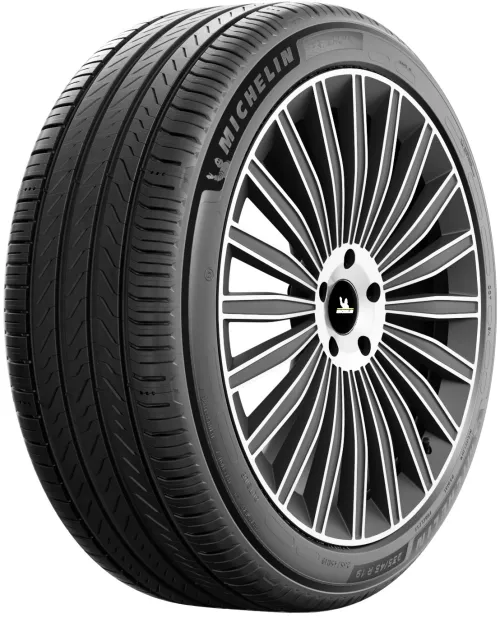
The Primacy 5 replaces the Michelin Primacy 4+ and occupies Michelin's premium touring position for family cars, crossovers and EVs, with 91 listed dimensions spanning R16 to R22. Michelin promotes it around “everyday confidence” and “safety made to last,” claiming four-percent shorter wet braking when new and unchanged worn-state performance versus its predecessor, alongside an expected 18-percent mileage improvement. The available results largely validate its wet-safety positioning: it scores 77.2 for wet performance, 81 for wet braking and 81.3 for aquaplaning, earning 86/100 overall.
The central difference is character. Continental has pursued minimum rolling resistance almost regardless of the compromise in rain, whereas Michelin has produced the more rounded safety tyre, retaining very good efficiency while creating much larger wet-road reserves. The EcoContact feels like a quiet, low-energy tyre optimised for gentle commuting; the Primacy feels more dependable across changing conditions, although neither is a sharp, maximum-grip performance tyre.
EcoContact 6
Primacy 5


Continental EcoContact 6
Michelin Primacy 5
Continental EcoContact 6
Michelin Primacy 5
Continental EcoContact 6
Michelin Primacy 5
Continental EcoContact 6
Michelin Primacy 5No cross-test average wet-braking distance or common test count is present in the supplied data, so claiming one would be misleading. The available evidence is still decisive. Michelin scores 81 for wet braking against Continental's 60.7, while one Primacy 5 wet stop was measured at 34.9 metres. Michelin says the tyre stops four percent shorter when new than the Primacy 4+ and preserves the predecessor's wet performance when worn. Its EU-label distribution strongly supports that claim: 98 percent of listed Primacy 5 specifications carry an A wet-grip grade and the remaining two percent a B. Continental's corresponding mix is 23 percent A, 65 percent B and 12 percent C.
The separation grows in standing water. Michelin's aquaplaning score is 81.3 versus only 49.1 for the EcoContact, with longitudinal and lateral detail scores of 85 and 77.6. It resisted straight-line aquaplaning to 76.97 km/h in one test and was repeatedly characterised as stable, safe and well protected against aquaplaning. Optimised tread geometry and the EverGrip/EverTread concept are intended to maintain drainage as the tread wears; the results confirm that its channels and contact-patch behaviour provide genuinely useful heavy-rain reserves rather than merely a strong label grade.
Continental's weakness is structural to its priorities. Optimising the carcass and compound for exceptionally low hysteresis reduces fuel use, but wet grip depends on the rubber conforming to a cool, lubricated surface and on the tread clearing water effectively. Repeated findings of extended wet stops, restricted aquaplaning reserves and understeer show where the energy-saving calibration has taken its payment. Some owners report excellent wet grip, yet others call it very weak or even alarming, matching the controlled-test trend. Michelin is not flawless: subjective wet handling has sometimes been below average, and its 79.5 wet-handling score indicates safe predictability rather than class-leading pace. Even so, it gives the driver substantially more braking, cornering and standing-water margin when rain becomes serious.
Continental EcoContact 6
Michelin Primacy 5
Continental EcoContact 6
Michelin Primacy 5
Continental EcoContact 6
Michelin Primacy 5
Continental EcoContact 6
Michelin Primacy 5No directly comparable multi-test average dry-braking distances were supplied, so a defensible average and test count cannot be calculated. The scores nevertheless establish a nuanced picture: Continental leads overall dry performance 80.3 to 73.5 and dry braking 76.5 to 70. One measured Primacy 5 result was 37.23 metres, the weakest dry stop in that particular summer-tyre field. Independent feedback also repeatedly identifies longer dry stops as Michelin's principal dynamic weakness. From motorway speed, even a modest additional stopping distance matters because it leaves more residual impact speed when the stronger tyre has already stopped.
The EcoContact 6 is not sporty, despite its numerical dry advantage. Its dry-handling score is 73.5, while delayed turn-in, numb steering and understeer recur in the feedback. Its strength is calm, curve-stable behaviour rather than agility: the 89 dry lane-change score and 81 dry-safety score suggest it remains composed during an avoidance manoeuvre, while owners commonly describe dry grip as good or adequate for daily driving. The trade-off is communication. The rolling-resistance-focused compound and construction reduce energy-consuming deformation, but they also leave less of the eager response and mechanical grip drivers expect from a performance-oriented summer tyre.
Michelin is more contradictory. Its 85 dry-handling detail score reflects tests in which it delivered the best measured and subjective dry handling, yet elsewhere it finished last in dry handling, 1.4 seconds behind the winner, and was criticised for soft steering, understeer and slight instability during rapid direction changes. That variation suggests a tyre sensitive to vehicle, size and test discipline rather than an outright dry specialist. Its progressive, predictable balance can inspire confidence through a flowing bend, but its 70 dry-braking score shows that composure should not be mistaken for abundant ultimate grip. Enthusiastic drivers may enjoy its balance more than the Continental's slower responses, but neither tyre is the natural choice for repeated hard braking or razor-sharp turn-in.
Continental EcoContact 6
Michelin Primacy 5Both tyres target refined daily use, but their strengths differ. Continental scores 78.5 for comfort and 81.5 for noise, with 82.5 for interior noise and 78 for ride comfort. Its low-energy construction produces notably quiet rolling in tests, and quietness is the most frequent owner compliment, mentioned 17 times among the summarised reviews. Reports are not unanimous: two owners found it noisy on particular surfaces, while another described the factory-fitted tyre as numb and not especially quiet. Overall, however, its subdued cruising character suits long commutes better than its modest handling scores might suggest.
Michelin leads with 85.1 for comfort and 89.3 for noise, including an excellent 94 exterior-noise score and 87 for interior noise; one measured result was 70.9 dB. Its even, predictable behaviour also reduces the sense of effort on a long journey. There is one meaningful caveat: limited self-damping was criticised in one test, so the Primacy 5 can transmit sharper impacts despite being quiet. A verified owner also complained that it felt poor below 25°C and preferred the Continental's ride, but one temperature-specific report cannot overturn the broader test pattern. Michelin is the quieter, more polished all-rounder; Continental may still feel pleasantly relaxed on a compatible car and road surface.
Running costs are where the EcoContact 6 fights back. It earns a perfect 100 rolling-resistance score, 99 for fuel efficiency and 88.5 for mileage. Its EU fuel labels are 54 percent A, 20 percent B, 19 percent C and seven percent D. Low consumption and low wear are repeated test strengths, while owners mention fuel economy 12 times and longevity seven times. Yet real-world durability varies sharply: one tyre reportedly wore out around 20,000 km, and several buyers noted a shallow initial tread depth of roughly 6.5–7 mm. Those experiences temper, but do not erase, the strong aggregate mileage result.
Michelin's rolling-resistance score is lower at 86.5, although that remains excellent: measured values include 7.00 kg/t and 6.3 kg/t, and it was the most economical or joint-best tyre in several fields. Its fuel labels are 18 percent A, 73 percent B and nine percent C. The 85 mileage score narrowly trails Continental, but Michelin's claimed 18-percent improvement over the Primacy 4+ and its worn-wet-performance design may make more of that usable life feel safe. Price is the catch: one tested size cost €165, and high pricing was a stated weakness. Continental is the stronger choice for minimising energy consumption; Michelin offers better whole-life value when wet safety and refinement justify paying more.
Continental EcoContact 6
Michelin Primacy 5Michelin Primacy 5 is the clear overall recommendation. It wins the only direct comparison, placing third against Continental's sixth, and its 86/100 rating leads 77/100. More importantly, it spends its performance budget where a touring tyre most needs it: wet braking, aquaplaning protection, predictable balance and low noise. Choose it for a family car, crossover or EV used year-round in a temperate or rainy climate, especially if motorway travel, standing water and maintaining wet confidence as the tread ages matter more than the lowest purchase price.
Choose the EcoContact 6 when efficiency is the overriding requirement. Its perfect rolling-resistance score, 99 fuel-efficiency score, strong mileage assessment and mostly A/B fuel labels make it highly attractive for gentle, high-mileage commuting, fleet operation or an EV where range receives priority. It also has the better aggregate dry and dry-braking scores and can be extremely quiet. The warning is non-negotiable: its 49.1 aquaplaning score, 60.7 wet-braking score and repeated reports of long wet stops leave materially less safety margin in heavy rain.
Drivers seeking sharp steering or maximum dry grip should look beyond both. Michelin can feel soft and takes too long to stop in the dry; Continental turns in slowly and tends toward understeer, with wet shortcomings that are harder to accept. Between these two, Michelin's slightly higher running cost buys the more complete and reassuring tyre. Continental remains a compelling efficiency specialist, but its savings make most sense in dry climates and measured driving, not where sudden summer downpours are routine.
| Organization | Season | Year | Dimension | |
|---|---|---|---|---|
Automotorsport | Summer | 2026 | 195/55 R16 | View |
Compare prices across all available dimensions for these tyres.
VS
VS
VS
VS
VS
VS
VS
VS
VS
VS
Continental EcoContact 6 vs Kleber Dynaxer HP5
Continental EcoContact 6 vs BF Goodrich Advantage 2
Continental EcoContact 6 vs Bridgestone Turanza T005
Michelin Primacy 5 vs Bridgestone Turanza T005
Michelin Primacy 5 vs Bridgestone Turanza 6
Michelin Primacy 5 vs Hankook Ventus Prime 4
Michelin Primacy 5 vs Continental PremiumContact 6