Bridgestone stops 5 metres shorter on wet roads — a gap that defines winter safety.
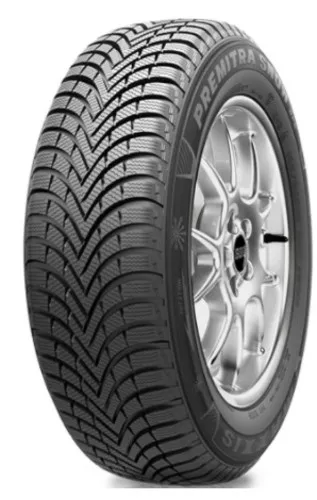
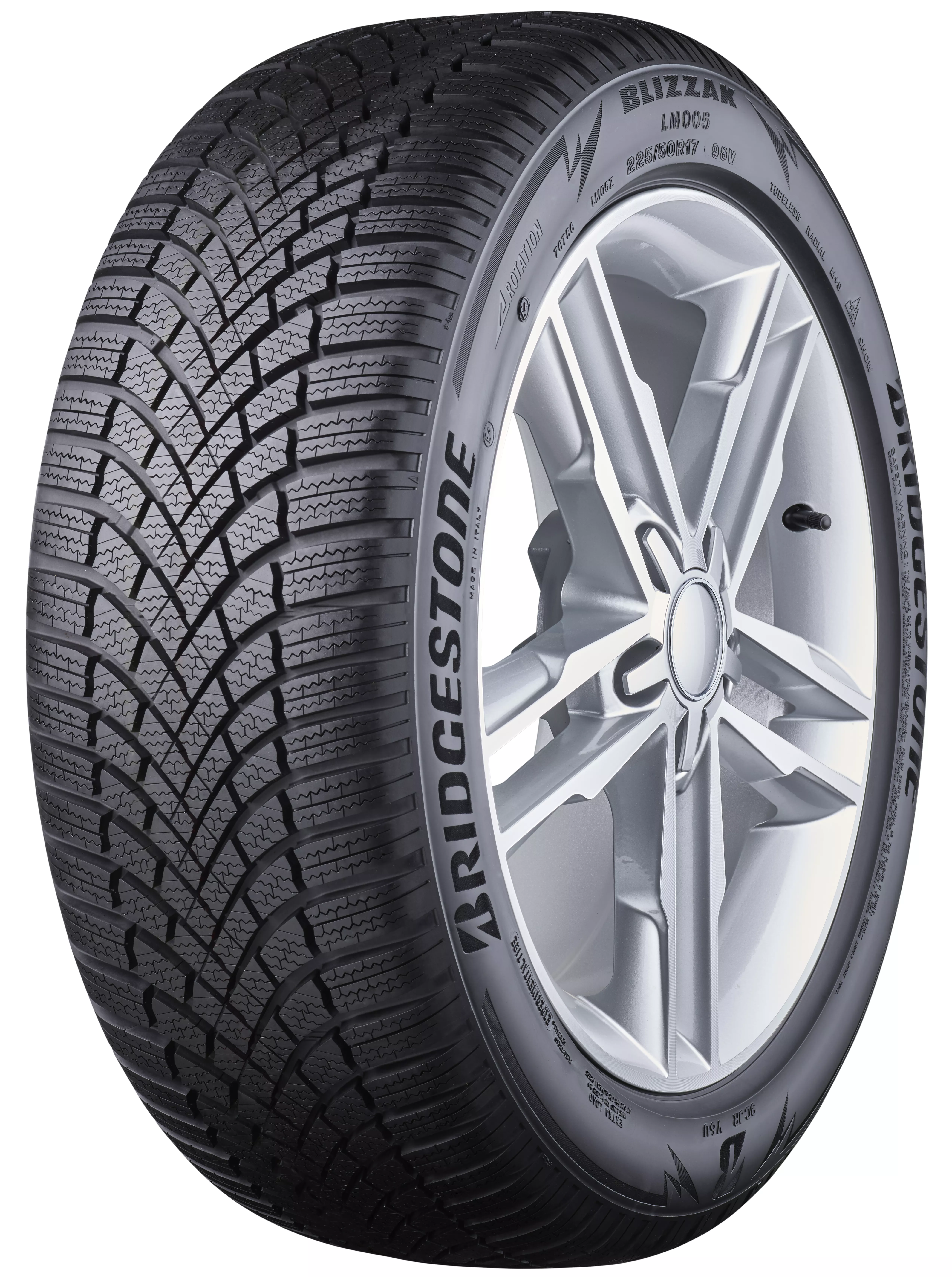
Comparing the Bridgestone Blizzak LM-005 and the Maxxis Premitra Snow WP6 is ultimately a comparison between two fundamentally different philosophies: a premium winter tyre engineered around safety-critical performance, and a budget option that keeps purchase costs low at a measurable cost to grip. Bridgestone's Blizzak LM-005 has accumulated an impressive competition record since its launch — multiple test wins across ADAC, AutoBild, AutoMotorSport and others — and is positioned as a wet-road and aquaplaning specialist with strong all-round winter credentials. The Maxxis Premitra Snow WP6, by contrast, earns its appeal through a low purchase price and surprisingly good predicted tread life, but it consistently struggles in the performance categories that matter most for winter safety. Across fourteen shared comparative tests, the Blizzak LM-005 won every single one.
Blizzak LM-005
Premitra Snow WP6


Averaged from 11 tests
Bridgestone Blizzak LM-005
Maxxis Premitra Snow WP6
Bridgestone Blizzak LM-005
Maxxis Premitra Snow WP6
Bridgestone Blizzak LM-005
Maxxis Premitra Snow WP6
Bridgestone Blizzak LM-005
Maxxis Premitra Snow WP6
Bridgestone Blizzak LM-005
Maxxis Premitra Snow WP6This is where the gap between these two tyres becomes genuinely significant. The Bridgestone Blizzak LM-005 averages 32.1 metres in wet braking across three measured braking tests, against 37.4 metres for the Maxxis Premitra Snow WP6 — a difference of 5.3 metres that represents a full car length at typical urban speeds. In the Autobild 2023 head-to-head across a 54-tyre field, the Blizzak took first place overall while the WP6 finished 34th; the measured braking gap in that test alone was seven metres. Aquaplaning resistance is another Blizzak strength — it consistently earns top marks for both straight-line and crosswind aquaplaning resistance, and this is a pillar of Bridgestone's official positioning for the tyre. The Maxxis shows reasonable aquaplaning scores in individual tests, but wet handling confidence is repeatedly flagged as a weakness, with one test noting significantly extended wet braking distances and limited grip reserves. For winter driving on wet or slushy roads — which describes the majority of European winter conditions — the Bridgestone is in a different league.
Bridgestone Blizzak LM-005
Maxxis Premitra Snow WP6
Bridgestone Blizzak LM-005
Maxxis Premitra Snow WP6
Bridgestone Blizzak LM-005
Maxxis Premitra Snow WP6
Bridgestone Blizzak LM-005
Maxxis Premitra Snow WP6On dry roads the gap is less dramatic than on wet, but the Blizzak LM-005 still holds a clear edge in overall handling balance and precision. Testers consistently describe it as sporting and dynamic, with precise turn-in and good steering feedback — qualities that make it feel composed even in winter conditions. Its one acknowledged weak point is dry braking, where stopping distances are slightly extended compared to the very best in class; this is the trade-off Bridgestone made to optimise wet and snow grip. The Maxxis WP6 has moments of competence on dry surfaces — ADAC awarded it its best category mark in dry conditions in one test cycle — but more recent evaluations flag clear weaknesses in dry road behaviour, with delayed steering response and limited lateral stability noted by multiple test programmes. For drivers who regularly encounter mixed winter conditions, the Blizzak's more complete dry profile represents a meaningful real-world safety margin.
Bridgestone Blizzak LM-005
Maxxis Premitra Snow WP6
Bridgestone Blizzak LM-005
Maxxis Premitra Snow WP6
Bridgestone Blizzak LM-005
Maxxis Premitra Snow WP6
Bridgestone Blizzak LM-005
Maxxis Premitra Snow WP6On snow, the picture is more nuanced. Measured snow braking distances across two shared tests are nearly identical: the Blizzak LM-005 averages 27.2 metres versus the WP6's 27.7 metres — a difference that is effectively negligible. The Maxxis also shows competitive straight-line snow traction figures. However, beyond straight-line braking, the Blizzak is significantly more capable: testers describe it as fast and agile on snow with easily controllable handling, while the Maxxis is repeatedly penalised for understeer on snow, modest cornering grip, and only adequate snow performance in the corners. The WP6 can handle routine winter commuting in snow, but drivers who encounter more demanding winter terrain — packed snow on mountain approaches or less predictable rural winter roads — will find the Blizzak's superior cornering behaviour and stability provides a meaningful confidence advantage.
Bridgestone Blizzak LM-005
Maxxis Premitra Snow WP6
Bridgestone Blizzak LM-005
Maxxis Premitra Snow WP6
Bridgestone Blizzak LM-005
Maxxis Premitra Snow WP6
Bridgestone Blizzak LM-005
Maxxis Premitra Snow WP6
Bridgestone Blizzak LM-005
Maxxis Premitra Snow WP6Comfort is one area where the Maxxis is genuinely competitive. Its predicted tread life is among the better results in budget winter testing — ADAC highlighted very high predicted mileage and low abrasion in both 2024 and 2025 testing cycles, which is particularly notable given the WP6's price point. Interior noise is also reasonably well controlled, and some owners report that it rides acceptably for everyday use. The Blizzak LM-005 is, however, the weaker tyre here by the numbers — mileage is consistently flagged as a weakness across testing, with multiple sources noting elevated wear, and its weight is above average for its class. Rolling resistance on the Bridgestone is efficiently managed, contributing to low fuel consumption scores. Real-world WP6 owners tend to focus on value for money as the primary reason for satisfaction, which tells you something about how the tyre positions itself in practice. If you plan to cover high annual mileage and cost-per-kilometre matters, the Maxxis makes a reasonable case — but only on roads where its grip limitations don't become a liability.
Bridgestone Blizzak LM-005
Maxxis Premitra Snow WP6
Bridgestone Blizzak LM-005
Maxxis Premitra Snow WP6
Bridgestone Blizzak LM-005
Maxxis Premitra Snow WP6The Bridgestone Blizzak LM-005 wins this comparison comprehensively, and the shared test record — fourteen wins from fourteen meetings — says everything. It is a premium winter tyre that earns its higher price through genuinely superior wet braking, aquaplaning resistance, and all-round winter handling confidence. It has since been succeeded by the Bridgestone Blizzak 6, so buyers should check availability in their size; the LM-005 remains an excellent choice where it can still be found. The Maxxis Premitra Snow WP6 is not without merit — its tread life and noise credentials are genuine positives, and it will serve budget-conscious drivers who mainly deal with light winter conditions and prioritise low running costs. But anyone who regularly drives in genuine winter weather, covers motorway miles in rain, or simply wants the safety margin that a premium tyre provides should choose the Bridgestone without hesitation. The 5.3-metre wet braking gap is not an abstract statistic — it is the difference between a near-miss and a collision.
| Organization | Season | Year | Dimension | |
|---|---|---|---|---|
ADAC | Winter | 2022 | 185/65 R15 | View |
ADAC | Winter | 2021 | 195/65 R15 | View |
ADAC | Winter | 2020 | 205/55 R16 | View |
Autoklub ČR | Winter | 2020 | 205/55 R16 | View |
Autobild | Winter | 2022 | 215/55 R17 | View |
Autobild | Winter | 2020 | 225/40 R18 | View |
Autoklub ČR | Winter | 2022 | 225/45 R17 | View |
ADAC | Winter | 2021 | 225/50 R17 | View |
AutoMotorSport | Winter | 2020 | 225/50 R17 | View |
Autobild | Winter | 2020 | 225/55 R17 | View |
Autobild | Winter | 2022 | 245/40 R19 | View |
Compare prices across all available dimensions for these tyres.
VS
VS
VS
VS
VS
VS
VS
VS
VS
VS