18 shops · 56 ·847+ products

Comparison: Nexen N Fera Primus vs. Hankook Ventus Prime 4 (2026)

4 mutual test(s) with detailed data

Seven tests, seven Hankook wins: the Prime 4 is simply the safer, longer-lasting buy.

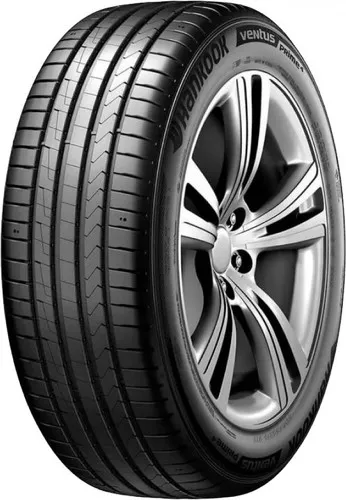
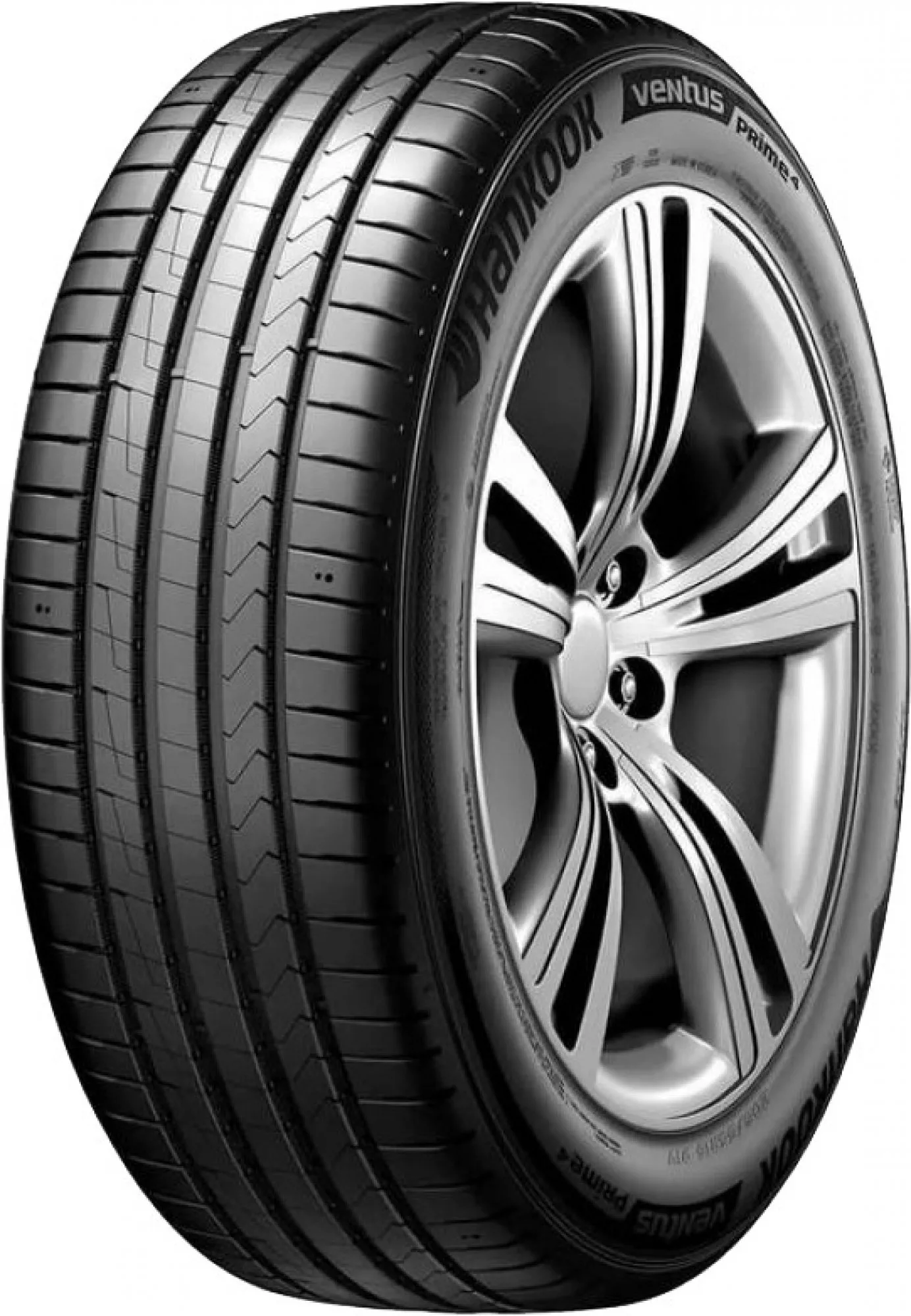
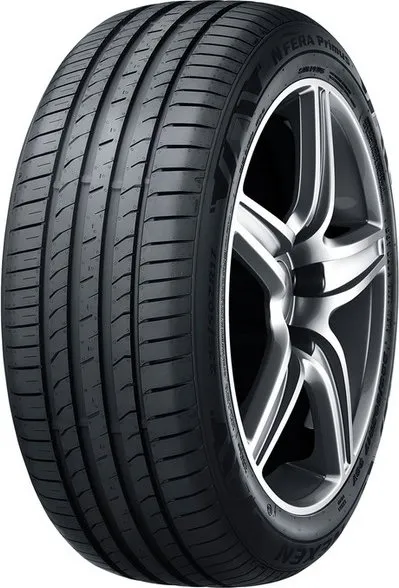
Both the Nexen N Fera Primus and the Hankook Ventus Prime 4 carry South Korean DNA, but they occupy very different rungs on the market ladder. Nexen pitches the N Fera Primus squarely in the value segment — a budget summer tyre manufactured in Europe, available across 40 dimensions from R15 to R19, and priced to attract buyers for whom the sticker price is the deciding factor. Hankook, by contrast, has spent the past decade repositioning itself as a genuine premium contender, and the Ventus Prime 4 — the direct successor to the well-regarded Ventus Prime3 K125 — is the clearest expression of that ambition: 97 dimensions spanning R13 to R22, broad OE fitment coverage, and performance credentials backed by repeated high finishes in independent tests.

The single biggest difference in character is this: the Hankook Ventus Prime 4 is a genuinely well-rounded performer that prioritises safety margins — particularly in dry braking and dynamic handling — alongside real-world longevity and low rolling resistance. The Nexen N Fera Primus is a tyre with a specific talent for wet-road work and aquaplaning resistance, offered at a price that makes it tempting for budget-focused buyers, but one that arrives with notable compromises in dry performance, mileage, and long-term economy. Our own expert summary pulls no punches: the Nexen offers "sufficient grip, but very short life — not sporty." That framing matters.

Across seven shared tests spanning 2022 to 2026, the Hankook won every single time. That verdict is as consistent as it is decisive — and it is the framework through which every other comparison in this article should be read.

Nexen N Fera Primus
Good for
Budget-conscious buyers with low annual mileage Urban drivers on tight tyre budgets Motorway drivers prioritising aquaplaning resistance Short-term car owners minimising upfront costs
Not ideal for
High-mileage drivers expecting long tread life Performance-oriented or sporty driving styles Drivers prioritising fuel economy and running costs Anyone needing confident dry-road dynamics
Hankook Ventus Prime 4
Good for
Everyday family car drivers prioritising safety High-mileage commuters valuing long tread life Drivers wanting premium safety at mid-range prices Spirited drivers needing confident dry handling
Not ideal for
Drivers on the tightest possible tyre budgets Buyers where aquaplaning resistance is the top priority

Test Profile

Nexen
N Fera Primus
Hankook
Ventus Prime 4
Number of tests
7
15
Best position
#6
#2
Average position
11.7
6.1
Latest test
2026
2026
Available sizes
69
176

Performance comparison

Averaged from 4 tests

Wet Performance
Confidence
Nexen N Fera Primus
81%
Nexen
N Fera Primus
Hankook Ventus Prime 4
83%
Hankook
Ventus Prime 4
Wet Braking
Nexen N Fera Primus
85%
Hankook Ventus Prime 4
89%
Wet Handling
Nexen N Fera Primus
84%
Hankook Ventus Prime 4
86%
Wet Circle Cornering
Nexen N Fera Primus
83%
Hankook Ventus Prime 4
87%
Aquaplaning Longitudinal
Nexen N Fera Primus
79%
Hankook Ventus Prime 4
78%
Aquaplaning Cross
Nexen N Fera Primus
74%
Hankook Ventus Prime 4
77%

Wet performance is where the picture becomes more nuanced and, for the Nexen, considerably more flattering. In measured wet braking, averaged across the same two test datasets, the Hankook stops in 27.8 metres against the Nexen's 28.2 metres — a gap of just 0.4 metres, small enough to sit within test variation. In the 2024 Autobild 205/55 R16 braking test specifically, both tyres recorded an identical 27.7 m — a genuine tie on the stopwatch. Only in the older 2022 215/55 R17 test does the Nexen slip back meaningfully, to 28.6 m against the Hankook's 27.8 m. On pure wet stopping power, these two tyres are far closer than their dry braking gulf suggests.

Where the Nexen makes its clearest case is aquaplaning resistance. Its longitudinal aquaplaning speed averages 81.4 km/h — a genuine real-world margin over the Hankook's 78.9 km/h — and the 2022 Autobild test specifically singled out its aquaplaning qualities as a standout strength. A tyre that maintains contact with the road at higher speeds in standing water is a meaningful safety differentiator on a flooded motorway in a summer storm. However, this advantage has a significant caveat: in the Motor 2026 235/55 R18 test, the Nexen posted the single worst longitudinal aquaplaning figure in the entire eight-tyre field. This suggests the Nexen's aquaplaning edge is size- and compound-dependent and cannot be assumed universal — particularly in larger, heavier fitments.

Step outside the pure braking and aquaplaning numbers, and the Hankook reasserts itself across the wet handling and cornering picture. Its wet circle cornering and wet handling objective scores both substantially exceed the Nexen's measured equivalents, indicating better lateral composure and greater confidence when a wet corner demands more than just a straight-line stop. In the 2022 Autobild full wet-performance evaluation, the Hankook placed 2nd overall with an "exemplary" rating for wet character; the Nexen placed 17th with "satisfactory." ADAC 2026 did flag a weaker-than-expected wet performance for the Hankook against premium rivals in that particular test — a reminder that the Ventus Prime 4 isn't flawless in wet conditions — but across the breadth of wet driving scenarios covered by seven years of independent testing, the Hankook is consistently the more capable and confident wet performer of the two.

Dry Performance
Confidence
Nexen N Fera Primus
78%
Nexen
N Fera Primus
Hankook Ventus Prime 4
87%
Hankook
Ventus Prime 4
Dry Braking
Nexen N Fera Primus
79%
Hankook Ventus Prime 4
85%
Dry Handling
Nexen N Fera Primus
77%
Hankook Ventus Prime 4
89%

On dry roads, the Hankook Ventus Prime 4 holds a clear and consistently measured advantage. Averaged across two comparable braking tests — the 2024 Autobild 205/55 R16 and the 2022 Autobild 215/55 R17 datasets — the Hankook stops in 35.9 metres from 100 km/h against the Nexen's 37.2 metres. That 1.3-metre gap might sound modest on paper, but from motorway speed it equates to roughly a third of a car length — the difference between avoiding an obstacle and clipping it. The test rankings underline this: in the 2024 Autobild braking shoot-out across 55 tyres, the Hankook ranked 4th while the Nexen came 11th. In the 2022 shoot-out across 51 tyres, the Hankook was a remarkable 2nd, rated "exemplary" by the testers, while the Nexen trailed in 10th.

The braking numbers are backed up by handling character, and here the gap between the two tyres becomes even more pronounced. The Hankook's objective dry-handling measurement puts it near the very top of its class — and the subjective confirmation is equally strong, with testers consistently noting precise, neutral responses and confident composure when pushed. One owner upgraded from Continental Sport Contact 2 tyres and reported the Hankook pushed his car's cornering limit nearly 20 km/h higher while actively resisting understeer. The Nexen tells a completely different story. Understeer is consistently noted by multiple independent test organisations across multiple years, steering response is described as delayed, and dry dynamics are characterised as restricted. This is a tyre calibrated for safe, relaxed progress rather than any form of driver engagement.

In Autobild 2024's full 20-tyre ranking — where holistic performance rather than just braking is assessed — the Hankook finished 8th with a "good" verdict, while the Nexen ended up 17th with "satisfactory." In the 2022 equivalent, the gap was even wider: Hankook 2nd and "exemplary", Nexen 17th and "satisfactory" again. For anyone who asks anything of a tyre beyond point-A-to-point-B commuting on dry roads, the Hankook's dry advantage is not marginal — it is structural.

Comfort & Noise
Confidence
Nexen N Fera Primus
78%
Nexen
N Fera Primus
Hankook Ventus Prime 4
81%
Hankook
Ventus Prime 4
Noise Exterior
Nexen N Fera Primus
78%
Hankook Ventus Prime 4
80%
Noise Interior
Nexen N Fera Primus
79%
Hankook Ventus Prime 4
97%
Ride Comfort
Nexen N Fera Primus
76%
Hankook Ventus Prime 4
66%

Ride quality scores are surprisingly close — the Hankook posts 80.0 against the Nexen's 78.5 — and owner feedback reflects this near-parity. A Kia Ceed driver who switched to the Nexen N Fera Primus reported it felt noticeably smoother and softer than the Michelin Primacy 3s it replaced, describing a notably quieter cabin. Hankook owners consistently describe a composed, refined ride across varied road surfaces. There is one anomaly worth noting: Motor 2026 recorded the Hankook as the loudest tyre in its eight-tyre test at 75.5 dB — a result that sits uncomfortably against Autobild 2024's specific praise for its low exterior noise. The most likely explanation is fitment size; the 235/55 R18 tested by Motor appears to be an outlier, and the Hankook's noise reputation across smaller and more common sizes remains solid.

Running costs and longevity are where the Nexen's budget positioning backfires most severely. Its rolling resistance is substantially poorer than the Hankook's — a gap large enough to produce a meaningful fuel cost difference over a year of typical driving. The Hankook's EU label reflects this, with the majority of its range carrying B or better fuel efficiency grades. On mileage, the divide is even starker: the Nexen's expected longevity score is dramatically lower than the Hankook's, and the evidence base is overwhelming — multiple independent test organisations across multiple years have cited "significantly restricted tread life" as the Nexen's defining weakness. Our own expert summary describes its lifespan as simply very short, an unusually direct warning. The Hankook isn't immune to mileage criticism — Autobild 2024 characterised its tread life as only moderate — but the distance between the two is substantial.

This changes the commercial arithmetic considerably. The Nexen's headline price of approximately 396 PLN per tyre (roughly €90) in the Motor 2026 test is genuinely compelling, and on Heureka 14 buyers rate it 9.8/10, with value for money cited six times as the primary strength. But a tyre with very short tread life needs replacing more frequently, and when combined with the ongoing fuel penalty from elevated rolling resistance, the gap in total cost of ownership over a full ownership cycle closes rapidly. Owner satisfaction over time tells the same story: TyreReviews' 37 Hankook owners average 91/100, with consistent enthusiasm around dry and wet grip, refinement and overall quality. The Nexen's 8 TyreReviews ratings average only 63/100 — a marked drop once drivers have spent meaningful time on the tyre and experienced its real-world wear rate.

Economy
Confidence
Nexen N Fera Primus
62%
Nexen
N Fera Primus
Hankook Ventus Prime 4
76%
Hankook
Ventus Prime 4
Rolling Resistance
Nexen N Fera Primus
65%
Hankook Ventus Prime 4
79%
Mileage
Nexen N Fera Primus
59%
Hankook Ventus Prime 4
73%

Performance spider chart

Verdict

Seven tests, zero Nexen wins. The Hankook Ventus Prime 4's record against the Nexen N Fera Primus is not close — it is comprehensive. It stops an average of 1.3 metres shorter in the dry from 100 km/h, handles with significantly greater precision and composure on both wet and dry surfaces, lasts meaningfully longer, costs less per kilometre to run in fuel, and generates substantially higher owner satisfaction over time. It also comes in more than twice the number of fitments, covering vehicles from R13 city cars to R22 large-format SUVs. For the vast majority of drivers — families, commuters, anyone who values consistent performance and all-round safety — the Ventus Prime 4 is the clear and decisive recommendation, and it delivers genuine premium-segment performance at a price that undercuts many comparable options.

The Nexen N Fera Primus is not without a specific use case. Its wet braking matches the Hankook almost exactly in some tests, and its aquaplaning resistance in many sizes is genuinely better. For a driver covering very low annual mileage — perhaps owning the car for a short period before changing it — where the initial purchase price is a hard ceiling and dynamics are never a priority, the Nexen's wet credentials are functional and its ride quality is more refined than its price bracket suggests. One owner noted it transformed a car that previously ran on hard, crashy Michelin Primacy 3s into something noticeably smoother and quieter. That is a real benefit at the right price point.

But the Nexen's limitations are structural, not incidental. Restricted tread life means replacement costs that erode the headline price advantage. High rolling resistance means a persistent fuel penalty every time the engine runs. Understeering dry dynamics and delayed steering response mean the tyre consistently operates within narrower safety margins when conditions change or a driver needs to react quickly. If the budget genuinely cannot stretch further, buy the Nexen with clear eyes about what you are trading away. If there is room in the budget for a tyre that is demonstrably safer to stop, demonstrably better to drive and demonstrably cheaper to own over its life, the Hankook Ventus Prime 4 earns every extra penny.

Tests used in comparison

OrganizationSeasonYearDimension
AutobildAutobild
Summer
2024205/55 R16View
ADACADAC
Summer
2024215/55 R17View
AutobildAutobild
Summer
2022215/55 R17View
MotorMotor
Summer
2026235/55 R18View

Dimensions and prices

Compare prices across all available dimensions for these tyres.

View general comparison

Add to comparison

Popular brands
New comparison

TheTyreLab.com

GET

TheTyreLab.com

Compare tyres, read test results and find the best prices — all in one app.