18 shops · 56 ·847+ products

Comparison: Hankook ION Evo vs. Continental PremiumContact 7 (2026)

1 mutual test(s) with detailed data

Continental maximises proven safety; Hankook preserves EV range without surrendering serious grip.

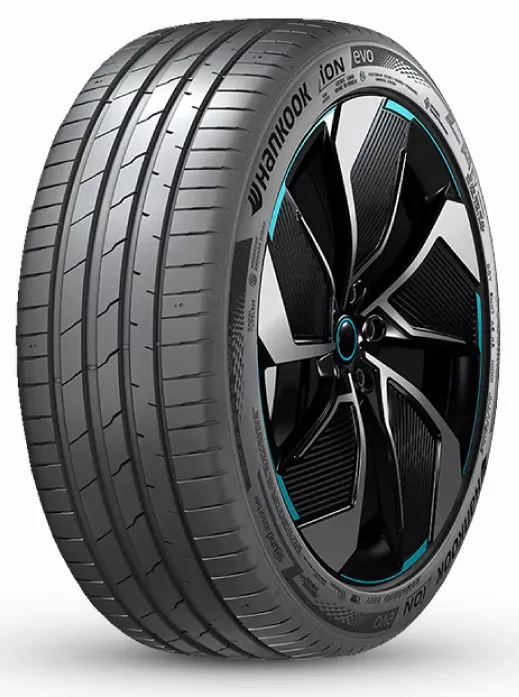
The Hankook ION Evo is a premium summer UHP tyre designed specifically around electric-car demands: immediate torque, greater vehicle mass, near-silent powertrains and the need to preserve battery range. Available in 55 dimensions from R17 to R22, it uses an aramid-reinforced belt and extended outer shoulder blocks to control deformation under acceleration and at speed. Hankook also claims its ProDurable compound and even-pressure contact design counter the roughly 20% faster uneven wear associated with EVs, while internal acoustic foam and pitch optimisation address the noise an engine would otherwise mask.

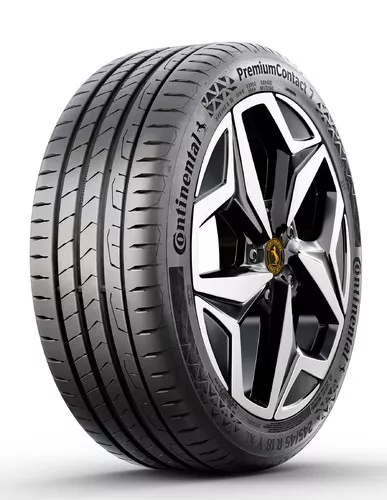
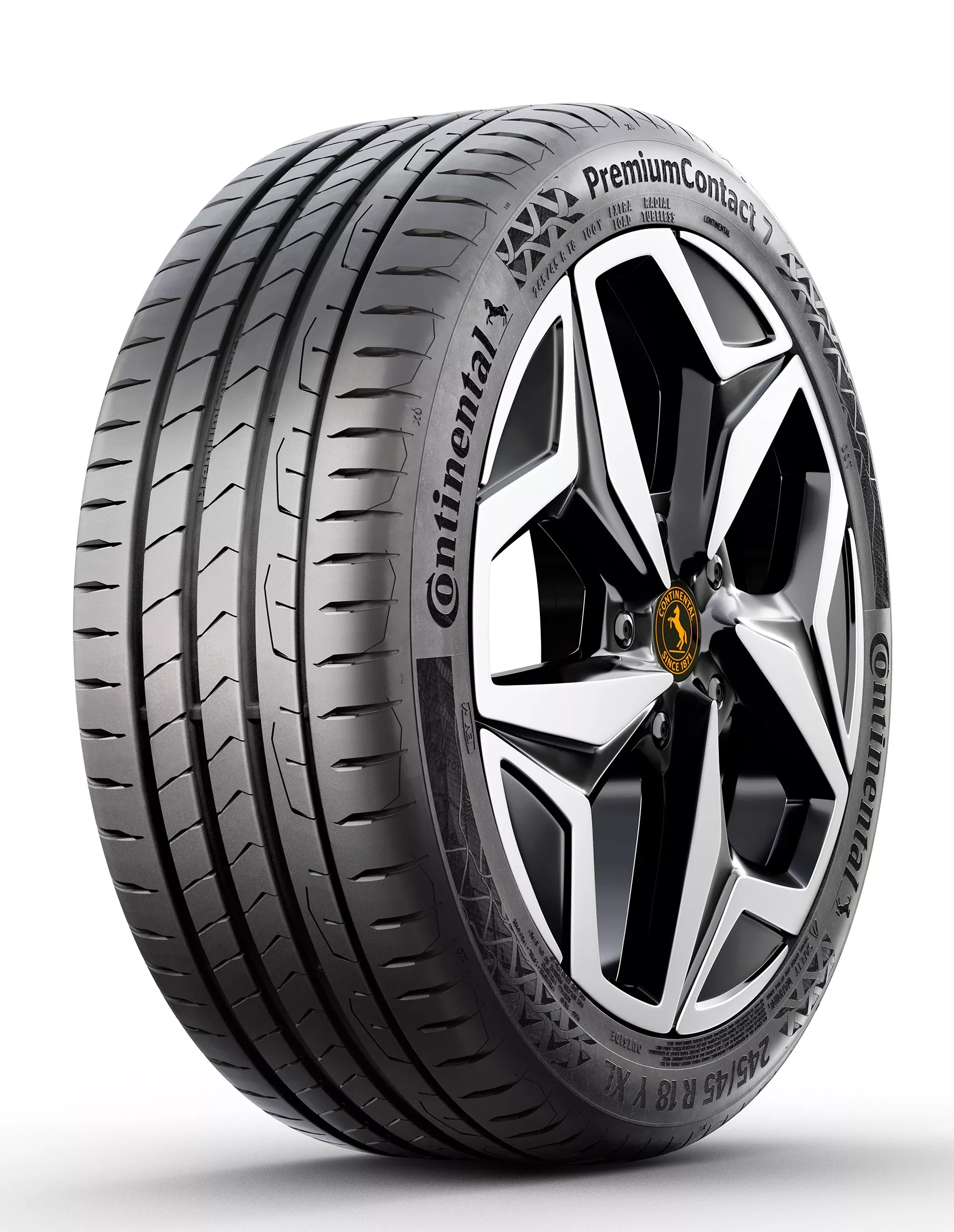
The Continental PremiumContact 7 is a broader premium all-rounder for family cars, saloons, hot hatches, hybrids and EVs. Offered in 51 dimensions from R16 to R21, it replaces the Continental PremiumContact 6 and uses a RedChili compound intended to generate braking grip without a warm-up phase. Its adaptive tread is designed to remain predictable as road and weather conditions change. Continental therefore pitches it as a safety-and-comfort tyre rather than an EV-efficiency specialist.

The central difference is character. The Hankook blends strong grip with range, mileage and EV-specific refinement; the Continental puts maximum emphasis on immediate, easily accessed control in wet and dry conditions. Their 96/100 and 98/100 ratings show that both are elite products, while their only direct comparison ended with the Hankook first and Continental second among eight tyres, both receiving the same exemplary verdict.

Hankook ION Evo
Good for
High-mileage electric-car drivers EV owners protecting battery range Quiet, comfortable motorway cruising Heavy cars with instant torque
Not ideal for
Buyers demanding extensive test evidence Drivers needing proven size-specific results
Continental PremiumContact 7
Good for
Drivers prioritising proven wet safety Family cars in changeable weather Fast-road drivers wanting precise steering Mixed combustion, hybrid and EV fleets
Not ideal for
Range-focused electric-car owners Price-sensitive tyre buyers Drivers highly sensitive to road noise Efficiency-first high-mileage commuters

Test Profile

Hankook
ION Evo
Continental
PremiumContact 7
Number of tests
1
31
Best position
#1
#1
Average position
1.0
2.3
Latest test
2025
2026
Available sizes
66
69

Performance comparison

Wet Performance
Confidence
Hankook ION Evo
89%
Hankook
ION Evo
Continental PremiumContact 7
81%
Continental
PremiumContact 7
Wet Braking
Hankook ION Evo
97%
Continental PremiumContact 7
97%
Wet Handling
Hankook ION Evo
92%
Continental PremiumContact 7
92%
Wet Circle Cornering
Hankook ION Evo
92%
Continental PremiumContact 7
84%
Aquaplaning Longitudinal
Hankook ION Evo
77%
Continental PremiumContact 7
61%
Aquaplaning Cross
Hankook ION Evo
87%
Continental PremiumContact 7
69%

No comparable average wet-braking-distance dataset is supplied for the pair, so there is no valid head-to-head average or common test count to report. Continental’s individual results include 47.1 metres in one protocol and 25.1 metres in another, the latter 1.2 metres clear of that field; the large numerical difference illustrates why results from different procedures cannot simply be averaged. Hankook has no supplied wet stopping distance, but its wet-braking performance score is an exceptional 97 versus Continental’s 88.4. Continental alone has an all-size EU wet-grip distribution of 100% grade A; Hankook’s database distribution is 95% A, 3% B and 2% C, despite the manufacturer describing all available sizes as A, an inconsistency buyers should check in their exact size.

Continental supplies the richer evidence in wet handling. It records 98.3 for objective wet handling, 94 for measured wet handling and 88.5 for wet-circle cornering, including a best wet-handling time of 67.70 seconds in one test. The tyre’s defining quality is neutrality: steering remains accurate, the limit arrives progressively and the driver retains options if speed is misjudged. Owners reinforce that impression, with wet grip mentioned repeatedly among 58 reviews averaging 82/100; one driver described rain performance as feeling almost dry.

Aquaplaning is more nuanced. Hankook scores 82 against Continental’s 78.1 and is consistently credited with good safety reserves in standing water. Continental has achieved a class-leading 83.8 km/h in straight-line aquaplaning, yet other tests placed it sixth in both aquaplaning disciplines and identified below-average curved-aquaplaning behaviour. That variation suggests strong performance can depend on size and test conditions. In heavy rain, the ION Evo’s combination of drainage security and progressive breakaway is reassuring, while Continental is the stronger choice when braking and cornering on a merely wet surface dominate. A Hankook owner found it better than the original Pirelli P Zero Elect in rain, although another called wet grip merely progressive rather than outstanding.

Dry Performance
Confidence
Hankook ION Evo
92%
Hankook
ION Evo
Continental PremiumContact 7
83%
Continental
PremiumContact 7
Dry Braking
Hankook ION Evo
91%
Continental PremiumContact 7
82%
Dry Handling
Hankook ION Evo
92%
Continental PremiumContact 7
84%

The supplied data does not include comparable average dry-braking distances for these two tyres across mutual measured tests, so a defensible two-tyre average and test count cannot be calculated. Continental nevertheless produced individual 2026 stops of 35.2 metres in one test and second place in another, while its compiled dry-braking score is 86.4. Hankook has no supplied distance but carries the higher dry-braking performance score, 91 against 86.4, and a higher overall dry score, 91.5 versus 87.5. Those score differences favour the ION Evo, but they are not a substitute for a same-size, same-surface stopping-distance comparison.

Continental’s deeper handling record explains why it remains such a convincing driver’s tyre. Its objective dry-handling score is 99, dry steering reaction 92.3 and measured dry handling 87.8. Test feedback repeatedly describes fast initial response, high precision, neutral balance and substantial reserves near the limit. The adaptive pattern and compound make grip available immediately, so the car should respond cleanly to an avoidance manoeuvre without requiring aggressive inputs or tyre temperature. That approachable balance matters more on a fast country road than a tiny difference in ultimate lateral grip.

Hankook’s advantage is how it reconciles dynamics with EV loads. The aramid belt helps the casing retain its intended shape at high speed, while rigid, extended shoulder blocks resist the tread squirm created by heavy batteries and instant torque. That supports stable turn-in and clean power delivery rather than merely inflating peak-grip numbers. Its 91.5 dry score and direct-test victory suggest a genuinely dynamic tyre, although the evidence base is much smaller. Continental is the more thoroughly proven, transparent communicator; Hankook may feel slightly more purpose-built and planted beneath a powerful EV.

Comfort & Noise
Confidence
Hankook ION Evo
66%
Hankook
ION Evo
Continental PremiumContact 7
57%
Continental
PremiumContact 7
Noise Exterior
Hankook ION Evo
66%
Continental PremiumContact 7
57%

Both tyres are credible daily companions, but Hankook’s EV-specific refinement gives it the clearer comfort identity. Its comfort score is 72 against Continental’s 70.2, although Continental leads the database noise score, 71.4 to 66. Hankook’s internal foam is intended to suppress hollow cavity resonance, with pitch sequencing reducing tonal tread noise. A Tesla Model 3 Performance owner replacing Pirelli P Zero Elect tyres reported a quieter, more comfortable ride. Because that report covers only 300 miles and Hankook has just four recorded reviews with a distorted 41/100 average that includes a zero-rated placeholder, the owner dataset should be treated cautiously.

Continental generally absorbs bumps well and has repeatedly been praised for rolling comfort; 19 Heureka customers give it 9.9/10, while other owners describe a premium, composed ride. Noise is less consistent. Several customers call it quiet, but one 20,000-mile user found it intolerably loud, and instrumented feedback ranges from quiet running to below-average measured or pass-by noise. The likely conclusion is that refinement depends heavily on vehicle insulation, road texture and size. Continental’s structure communicates the road more clearly, which benefits steering feel but may also make coarse surfaces more audible.

Running costs separate them more decisively. Hankook’s EU fuel labels are 52% A, 45% B and 3% C, whereas Continental is 19% B and 81% C. For an EV, that makes Hankook the safer choice for preserving range, even though their aggregated rolling-resistance scores are close at 69 and 69.9. Continental recorded 8.33 kg/t in one test and finished near the bottom for efficiency, supporting the label distinction. Hankook also leads the mileage score 82 to 74.6, and its compound and even-contact technology are specifically intended to handle high torque without accelerated, irregular wear. A Tesla owner’s 10,000-mile report described it as an economy-oriented tyre with good range and low resistance.

Continental still offers above-average longevity and optional puncture-sealing technology capable, according to the manufacturer, of sealing 80% of tread-area punctures. Its problem is acquisition cost: it was the most expensive candidate in one test at €317 per set. No equivalent Hankook price is supplied, so an exact cost-per-mile calculation would be invented. Even so, the label mix and mileage scores indicate that Hankook should return better lifetime value for high-mileage EV drivers. Continental earns its premium through broader independent validation and exceptional safety performance, not through class-leading energy economy.

Economy
Confidence
Hankook ION Evo
76%
Hankook
ION Evo
Continental PremiumContact 7
63%
Continental
PremiumContact 7
Rolling Resistance
Hankook ION Evo
69%
Continental PremiumContact 7
51%
Mileage
Hankook ION Evo
82%
Continental PremiumContact 7
75%

Performance spider chart

Tread pattern comparison

Hankook ION Evo
Continental PremiumContact 7
Drag to compare · Scroll to zoom · Double-click for 2×

Verdict

For most drivers seeking the strongest all-round safety recommendation, the Continental PremiumContact 7 wins narrowly. Its 98/100 rating, extensive record of test victories, rapid steering, neutral limit behaviour and repeatedly excellent wet braking make it unusually easy to trust. It is the better fit for family cars, fast saloons and hot hatches driven year-round in changeable summer weather, particularly when emergency stopping and predictable wet-road control outweigh efficiency. Its ability to perform without a warm-up phase also suits ordinary journeys better than a tyre that only comes alive when driven hard.

The Hankook ION Evo is the more intelligent purchase for a heavy, powerful EV covering substantial mileage. It won the only direct eight-tyre comparison, scores higher for dry performance, wet braking, aquaplaning and mileage, and has a dramatically more favourable EU efficiency-label mix. Its casing reinforcement, torque-resistant shoulders, acoustic treatment and wear-management technologies address real EV compromises rather than merely adding an EV-compatible badge. It should deliver more range, calmer cruising and more even long-term performance, with little sacrifice in grip.

The recommendation therefore comes with a precise dividing line: choose Continental for the most thoroughly demonstrated braking and handling assurance; choose Hankook when EV range, refinement and tyre life carry equal weight with dynamic ability. Continental’s trade-offs are price, inconsistent noise reports and mediocre efficiency. Hankook’s weakness is evidential rather than obviously dynamic: only one mutual test and very limited reliable owner data make its impressive scores less comprehensively proven. Overall, Continental is the safer universal choice, but the ION Evo is the better-targeted tyre and better value for the driver it was designed to serve.

Tests used in comparison

OrganizationSeasonYearDimension
AutobildAutobild
Summer
2025215/55 R18View

Dimensions and prices

Compare prices across all available dimensions for these tyres.

View general comparison

Add to comparison

Popular brands
New comparison

TheTyreLab.com

GET

TheTyreLab.com

Compare tyres, read test results and find the best prices — all in one app.