Goodride prioritises price and quietness; Continental delivers the braking, control and longevity that justify premium money.
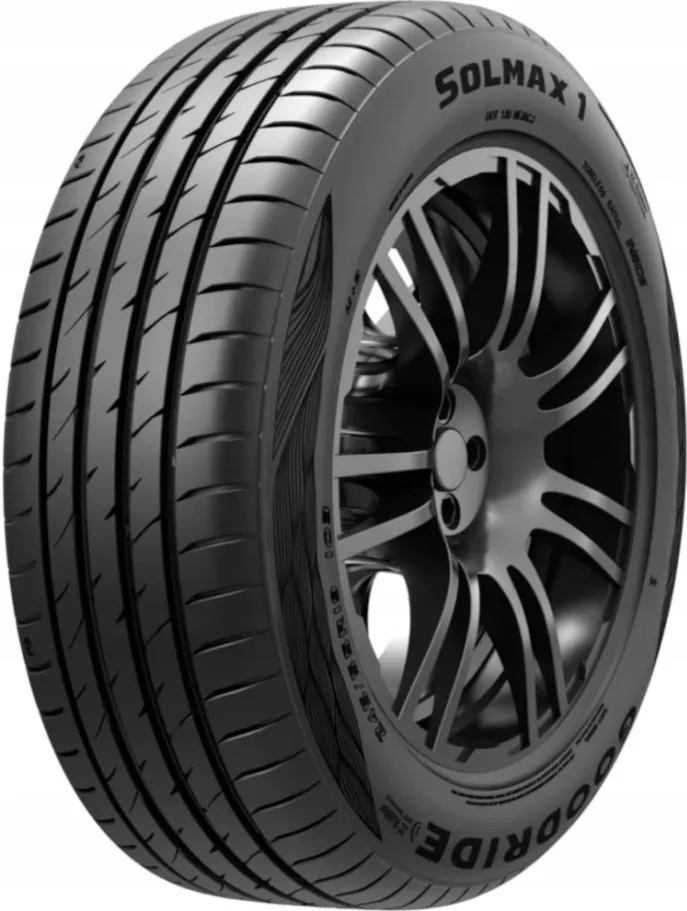
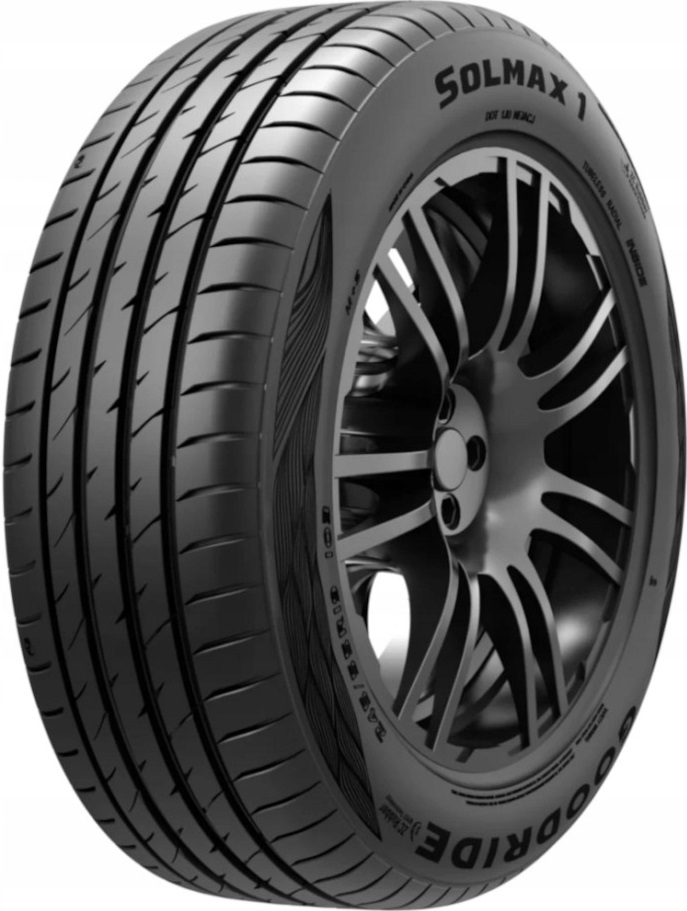
The Goodride Solmax 1 is a low-cost summer tyre and one of the freshest European-market products from Goodride. Available in 79 sizes from R17 to R22, it targets modern crossovers, larger family cars and electric vehicles whose owners want an affordable, quiet replacement tyre. Its 33/100 overall rating, however, reveals the central compromise: refinement is respectable, but dynamic ability and wet-weather safety fall well short of premium standards.
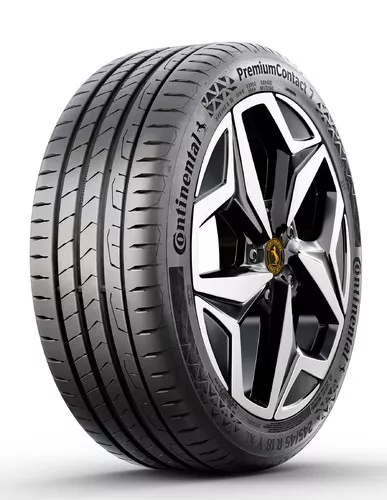
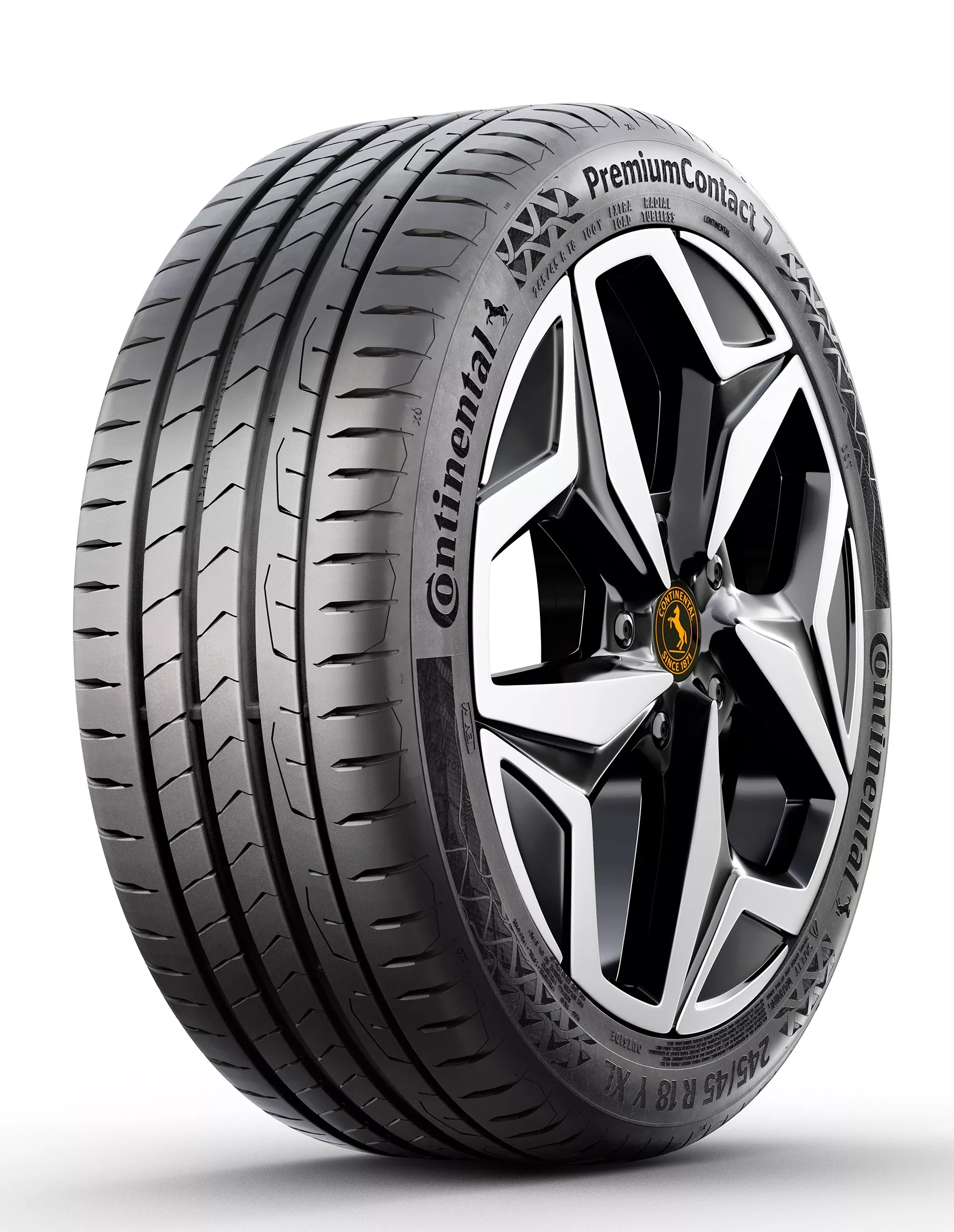
The Continental PremiumContact 7 occupies a very different position. This German-designed premium summer tyre spans 51 sizes from R16 to R21 and replaces the Continental PremiumContact 6. Continental positions it as a safety-and-comfort all-rounder for saloons, family cars, hot hatchbacks, hybrids and EVs. Its RedChili compound is intended to produce grip without a warm-up phase, while its adaptive pattern is designed to maintain precise behaviour as conditions change. A 98/100 rating and two victories from their two shared tests strongly validate that positioning.
The biggest difference is confidence. The Continental communicates clearly, reacts quickly and retains substantial grip at the limit; the Goodride is quieter outside the car but slower to respond and more abrupt when adhesion runs out. One is engineered to make difficult conditions feel routine, while the other is primarily an economical, low-noise way to equip a car with large wheels.
Solmax 1
PremiumContact 7


Goodride Solmax 1
Continental PremiumContact 7
Goodride Solmax 1
Continental PremiumContact 7
Goodride Solmax 1
Continental PremiumContact 7
Goodride Solmax 1
Continental PremiumContact 7
Goodride Solmax 1
Continental PremiumContact 7No average wet braking distance or matched distance-test count is included in the supplied data, so presenting a calculated two-tyre average would be invention. The indexed evidence shows the scale of the difference: Continental scores 88.4 for wet braking, while Goodride manages 60.5. The PremiumContact 7 achieved a best-in-test 25.1-metre stop in one protocol, 1.2 metres clear of the field, and 47.1 metres in another longer stopping test. Goodride, by contrast, was repeatedly penalised for long wet stopping distances. Depending on the test speed, even a few metres represent roughly a car length in which the Continental has stopped while the weaker tyre is still moving.
Wet handling reinforces that advantage. Continental records 98.3 for objective wet handling, 94 for measured wet handling and 88.5 for wet-circle cornering, including a fastest wet lap of 67.70 seconds. Its character is neutral and predictable, giving the driver meaningful steering information before grip is exhausted. The RedChili compound’s claimed ability to work without warming up is particularly relevant during a cold morning downpour, when the first emergency stop matters more than performance after several energetic corners. Owner reports align with the tests: wet grip is the most frequently praised attribute, with one driver saying rain made little apparent difference to confidence.
Aquaplaning requires more nuance. Continental’s overall aquaplaning score is 78.1 versus Goodride’s 73.5, and it reached a class-leading 83.8 km/h in one longitudinal test. Yet other testing placed it only sixth in both aquaplaning disciplines and identified below-average curved-aquaplaning behaviour. It is strong, not invulnerable. Goodride’s 67.5 longitudinal and 79.5 cross-aquaplaning detail scores show uneven capability, while low reserves were specifically noted in heavy water. Combined with weak braking and abrupt breakaway, that inconsistency makes the Solmax 1 appreciably less reassuring in sustained rain, standing water and wet motorway lane changes.
Goodride Solmax 1
Continental PremiumContact 7
Goodride Solmax 1
Continental PremiumContact 7No average dry braking distance across matched measured tests is supplied for this comparison, so a defensible Goodride-versus-Continental metre average or test count cannot be calculated. The available evidence is nevertheless decisive. The PremiumContact 7 scores 86.4 for dry braking, against 69 for the Solmax 1. In one Continental result it stopped in 35.2 metres, and another test placed it second for dry braking. Goodride has been credited with good dry stopping distances in one assessment, but that isolated strength does not translate into an equally capable dry-performance package.
Handling creates the larger separation. Goodride recorded the slowest dry lap in its 12-tyre 2026 comparison, taking 76.16 seconds. Test feedback describes slow responses, low confidence and abrupt transitions near the limit, consistent with its modest overall dry score of 60. A driver will feel this as delayed turn-in, more correction through a fast bend and less warning as the tyre approaches understeer. Its braking can be adequate in a straight line while the casing, tread support and compound still struggle to generate and communicate consistent lateral force.
The Continental scores 87.5 overall in the dry, with 99 for objective dry handling, 92.3 for steering reaction and 87.8 for measured dry handling. Its adaptive pattern and grip-focused compound appear to keep the contact patch better supported under braking and cornering loads. That produces quicker initial response, greater high-speed stability and a more neutral balance. Owners reinforce the laboratory picture, repeatedly praising steering feel and road feedback. The PremiumContact 7 is not a track tyre, but it gives family cars and hot hatchbacks a much broader, more intelligible safety margin than the Goodride.
Goodride Solmax 1
Continental PremiumContact 7Goodride’s clearest victory is noise. Its 88 noise score comfortably exceeds Continental’s 71.4, and its measured 70.7 dB result tied for second-best in one test. The Solmax 1 is also marketed as EV-suitable, where low powertrain noise makes tyre sound conspicuous. Its comfort score of 79.5 is higher than Continental’s 70.2, although the more specific comfort assessment gives Goodride 71. This suggests a generally quiet, easygoing cruiser rather than an exceptionally sophisticated ride in every circumstance.
The Continental’s refinement is more complicated. It has been praised for high comfort and pleasant bump absorption, and several owners describe it as both quiet and comfortable. Others report intrusive cabin noise, while formal testing found below-average measured or pass-by noise. The disagreement is credible because cabin resonance varies with vehicle, tyre size and road texture. Continental’s official promise of outstanding comfort is supported on impact absorption and general composure, but not consistently on noise. Optional ContiSeal versions can seal approximately 80 percent of punctures in the tread area, adding practical convenience, although availability and cost depend on size.
Running costs do not rescue the Goodride automatically. Its rolling-resistance score is only 52.5 and it recorded the worst result in one field at 8.87 kg/t; Continental was also near the bottom there, but was better at 8.33 kg/t and carries a 69.9 efficiency score. Continental sizes are predominantly EU fuel class C, with a minority class B, and all supplied label records have wet-grip class A. No equivalent label grades are provided for Goodride. The premium tyre therefore combines better safety with slightly lower measured resistance, though neither is the obvious efficiency champion.
Goodride’s low purchase price is offset by a mileage score of 45, moderate predicted life and criticism for limited wear potential. Continental scores 74.6 for mileage and has above-average longevity, making its higher initial price easier to amortise. One comparison priced it at €317 per set, the most expensive candidate, so budget buyers still face a substantial upfront premium. Yet over a full ownership cycle, longer useful life, better efficiency and dramatically stronger wet performance make Continental the more convincing value. Goodride makes sense principally when immediate purchase cost and exterior noise dominate every other consideration.
Goodride Solmax 1
Continental PremiumContact 7
Goodride Solmax 1
Continental PremiumContact 7The PremiumContact 7 is the clear recommendation. It defeated the Solmax 1 in both shared tests: first versus eleventh in a 12-tyre comparison and second versus eighth in an eight-tyre test. Its advantage is not confined to one spectacular result; it combines shorter braking, faster and more neutral handling, precise steering, useful aquaplaning reserves and stronger expected mileage. That breadth makes it the better choice for family cars, motorway use, powerful vehicles, EVs and anyone who regularly drives through heavy rain.
Buy the Goodride Solmax 1 only with a clear understanding of the compromise. It suits a low annual-mileage driver who travels mainly on dry roads, drives conservatively and values a quiet tyre in a large, potentially expensive size. Its dry braking can be serviceable and its low noise is genuine, but weak wet braking, inconsistent standing-water behaviour, slow dry handling, poor efficiency and moderate wear prevent it from being a strong all-round bargain.
Continental’s trade-offs are price and potentially noticeable road noise, while curved aquaplaning is not uniformly class-leading. Even so, those are easier compromises to accept than Goodride’s reduced emergency margin. For a component responsible for every braking, steering and acceleration force, the PremiumContact 7’s extra cost buys performance that the driver can feel on every demanding journey and may urgently need on one unexpected wet stop.
| Organization | Season | Year | Dimension | |
|---|---|---|---|---|
Autobild | Summer | 2025 | 215/55 R18 | View |
Compare prices across all available dimensions for these tyres.
VS
VS
VS
VS
VS
VS
VS
VS
VS
VS
Goodride Solmax 1 vs Davanti Protoura Sport
Goodride Solmax 1 vs Debica Presto UHP2
Goodride Solmax 1 vs Maxxis Premitra HP6
Continental PremiumContact 7 vs Michelin Primacy 4+
Continental PremiumContact 7 vs Bridgestone Turanza 6
Continental PremiumContact 7 vs Goodyear Eagle F1 Asymmetric 6
Continental PremiumContact 7 vs Michelin Pilot Sport 5