Comparison: Firestone Roadhawk 2 vs. BFGoodrich Advantage (2026)
Also compare with
Firestone masters standing water; BFGoodrich counters with stronger dry manners and longer-wearing value.
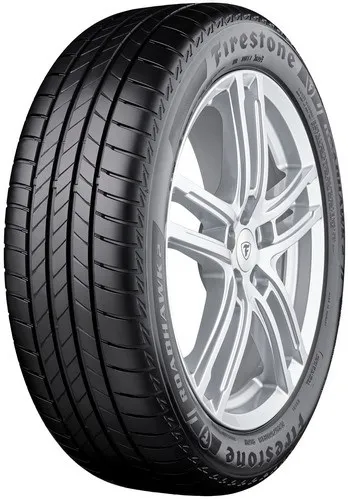
The Firestone Roadhawk 2 is an upper-middle-segment summer tyre aimed at everyday drivers who want strong rain safety, low energy use and broad suitability for conventional cars and EVs. Made in Italy and offered in 108 sizes from R16 to R22, it replaces the Firestone Roadhawk. Firestone presents the second generation as an active-lifestyle and long-distance tyre, using Bridgestone-derived ENLITEN construction, a high-silica NanoPro-Tech compound and a lighter carcass. The claimed gains over the original are 20% more mileage and 12% lower rolling resistance, making this a meaningful technical update rather than a cosmetic relaunch.
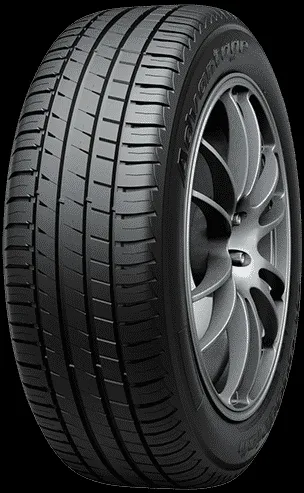
The BFGoodrich Advantage occupies the same upper-middle territory but covers a more traditional range of family cars, with 64 sizes spanning R14 to R20. Michelin-owned BFGoodrich pitches it through affordability, uncomplicated road manners and everyday comfort rather than cutting-edge wet-weather engineering. It has since been succeeded by the BF Goodrich Advantage 2, an important consideration where both generations remain available.
The defining difference is character. The Roadhawk 2 is the rain-resilient, efficiency-focused all-rounder, especially impressive when standing water becomes the main hazard. The Advantage is the calmer value tyre: more convincing on a dry road, generally quiet and comfortable, and supported by stronger mileage evidence, but less capable when wet corners demand grip. Their only shared test reinforces that distinction: in the 2026 ADAC 225/50 R17 comparison, Firestone finished fourth of 16 while BFGoodrich placed tenth, although both received the same broad satisfactory verdict.
 Roadhawk 2
 Advantage


These tyres were not tested together. The comparison below is inferred from separate tests by normalizing both tyres against 9 shared benchmark tyres, so treat it as an estimate.
 Firestone Roadhawk 2BFGoodrich AdvantageFirestone Roadhawk 2BFGoodrich AdvantageFirestone Roadhawk 2BFGoodrich AdvantageFirestone Roadhawk 2BFGoodrich AdvantageFirestone Roadhawk 2BFGoodrich Advantage
A directly comparable average dry-braking distance cannot be calculated from the supplied results because no measured distance is provided for the BFGoodrich. One Firestone test recorded 35.4 metres, where it finished last, while another assessment placed it seventh for dry braking. The normalized evidence points the same way: Roadhawk 2 scores 66.5 for dry braking and 61.5 overall in the dry, against 75.9 and 72 respectively for the Advantage. Those figures make BFGoodrich the more dependable choice when the road is dry and stopping performance is the priority, even though the source data does not support inventing a metre-based average or a car-length gap.
The Advantage’s strength is not merely braking. Its 83-point average dry score and 79.8 dry-handling score are backed by repeated observations of dynamic handling, stable behaviour and short dry stops. The driver should feel a more natural willingness to follow the chosen line, with enough response for brisk road driving without turning the tyre into a hard-edged sports product. Its 77-point lane-change result is respectable rather than exceptional, and an owner’s description of it as “not sporty” is revealing: this is secure, accessible grip, not razor-sharp steering or track-oriented feedback.
Firestone is more uneven. Its 73.8 dry-handling and 80 lane-change scores show that it can change direction safely and generate good cornering security, yet testers also found delayed steering response, weak feedback and limited grip reserves. Connected shoulder blocks and broad shoulder lugs should stabilize the footprint, but the compound and lightweight, efficiency-led construction appear tuned more toward balance and water management than maximum dry adhesion. At motorway speeds it remains sufficiently composed for touring, but the longer recorded braking distance means the Advantage offers the more convincing emergency margin on dry asphalt.
Firestone Roadhawk 2BFGoodrich AdvantageFirestone Roadhawk 2BFGoodrich AdvantageFirestone Roadhawk 2BFGoodrich AdvantageFirestone Roadhawk 2BFGoodrich AdvantageFirestone Roadhawk 2BFGoodrich AdvantageFirestone Roadhawk 2BFGoodrich AdvantageFirestone Roadhawk 2BFGoodrich AdvantageNo valid head-to-head average wet-braking distance is available because the supplied data contains measured distances only for Firestone. Roadhawk 2 recorded 51.1 metres in one test and 38.3 metres in another, so even its two-result average of 44.7 metres should not be compared with a nonexistent BFGoodrich average; the different test protocols may also prevent a clean like-for-like interpretation. Interestingly, normalized wet-braking scores favour BFGoodrich, 77.4 versus 66.7, showing that Firestone’s wet advantage does not come primarily from stopping distance. Indeed, one assessment put the Roadhawk 2.1 metres behind the best wet-braking result.
Firestone earns its wet-weather recommendation through exceptional aquaplaning resistance. Its overall aquaplaning score is 92.6, with 91.2 longitudinally and 94 laterally. It won both aquaplaning disciplines in one comparison and produced the best curved-water result in another, generating 2.44 m/s². That aligns closely with the design: optimized void-to-rib proportions, chamfered sipes and wide shoulder lugs provide clear escape routes for water, while the high-silica compound helps preserve adhesion. In heavy rain, that means the tyre is less likely to climb onto the water film when crossing ruts or encountering a flooded bend.
There is an important qualification. Firestone’s 79.7 wet-handling score and 76 wet-circle score indicate useful pace, but feedback can become vague and lift-off load changes less stable near the limit. BFGoodrich’s 61.2 overall wet score, 69.4 wet-circle result and repeated tendency to understeer describe a more fundamental weakness: as cornering load rises, the front tyres surrender the line and push wide. Some owners report smooth wet handling and impressive braking, including experiences over 8,000 miles, so it is not intrinsically poor in ordinary rain. Nevertheless, controlled testing consistently exposes reduced wet reserves. For standing water and storm conditions, Roadhawk 2 is decisively safer; for braking on merely wet asphalt, the supplied normalized scores prevent claiming an across-the-board Firestone victory.
Firestone Roadhawk 2BFGoodrich AdvantageFirestone Roadhawk 2BFGoodrich AdvantageFirestone Roadhawk 2BFGoodrich AdvantageBoth tyres are credible touring companions. Roadhawk 2 scores 79.8 for comfort and an excellent 83.2 for noise, and it was the quietest tyre in one complete comparison. Another test did record slightly louder exterior pass-by noise and small ride-comfort deficits, suggesting its refinement is more apparent inside the cabin than at the roadside or over sharp surface joints. Its steering can feel slightly filtered, but on a long motorway trip that softness is less troublesome than it would be during enthusiastic driving.
The Advantage scores a nearly identical 79.1 for comfort and 76.8 for noise, with a measured ride-comfort average of 72.3 and exterior-noise score of 68.3. Owners strengthen the subjective case: quietness was mentioned repeatedly among six Heureka reviews, which average 8.5/10, while 12 TyreReviews ratings average 86/100. A Ford C-Max driver reported very good comfort after 5,000 miles, and other owners describe smooth progress. The combined evidence makes BFGoodrich a convincing relaxed cruiser, although Firestone holds the stronger laboratory-style noise score.
Running costs create a genuine trade-off. Firestone’s fuel labels are predominantly B at 70%, with 27% C and 3% A; BFGoodrich is 82% C, 12% B and 6% E. Roadhawk 2 also achieved a class-leading 8.0 kg/t rolling resistance in one test and carries a 74.8 efficiency score, versus 65.7 for the Advantage. That supports Firestone’s ENLITEN and lightweight-carcass claims, especially for EV drivers seeking range, although one test contradicted the broader pattern by finding high resistance and consumption. Mileage reverses the comparison: BFGoodrich scores 63, while Firestone manages only 38 and has been criticized for distinctly limited life. Firestone claims 20% more mileage than its predecessor, but improvement over the old model does not make it the longer-lived tyre here. Both carry predominantly A wet-grip labels—Firestone 99% A and 1% B, BFGoodrich 100% A—but labels cannot reveal their large aquaplaning difference. Firestone may save energy per kilometre; the cheaper Advantage is more likely to deliver value through purchase price and tread life.
Firestone Roadhawk 2BFGoodrich AdvantageFirestone Roadhawk 2BFGoodrich AdvantageRoadhawk 2 is the stronger overall recommendation. Its 83/100 rating against BFGoodrich’s 70/100, fourth place versus tenth in their shared test, outstanding aquaplaning scores and generally better efficiency make it the more complete modern summer tyre. Choose it for frequent motorway travel, an EV, a wet climate or roads prone to standing water. It is especially persuasive for a driver who values calm storm behaviour and low cabin noise more than crisp steering.
That recommendation comes with two real costs: Firestone’s dry braking is mediocre, and its mileage score is substantially weaker. Drivers covering very high annual distances on mainly dry roads should therefore consider the Advantage, particularly when it is meaningfully cheaper. BFGoodrich supplies better dry scores, comfortable manners and stronger longevity evidence; it suits family cars and measured driving, not someone who habitually attacks wet bends. Its progressive understeer may be understandable, but the low aquaplaning score means it has less protection when rain becomes deep water.
In short, buy Firestone for weather capability, energy efficiency and broader safety balance; buy BFGoodrich for dry-road composure, comfort and cost per usable mile. The Advantage is a rational bargain for moderate climates, but its successor should also be priced before committing to the older design. If prices are close, Roadhawk 2 wins because its special strength—maintaining contact through standing water—is difficult for driving technique to replace, whereas its slower dry responses can be managed by leaving a larger following distance.
Compare prices across all available dimensions for these tyres.
| Organization | Season | Year | Dimension | |
|---|---|---|---|---|
 ADAC ADAC | Summer | 2026 | 225/50 R17 | View |
 VS
VS
 VSVSVS
 VSVSVS
 VSVSVS
 Firestone Roadhawk 2 vs Kumho Ecsta PS71
 Firestone Roadhawk 2 vs Uniroyal RainSport 5
 Firestone Roadhawk 2 vs BF Goodrich Advantage 2
 BFGoodrich Advantage vs Falken ZIEX ZE310 ECORUNBFGoodrich Advantage vs BF Goodrich Advantage 2
 BFGoodrich Advantage vs Kleber Dynaxer HP5
 BFGoodrich Advantage vs Cooper Summer





