Comparison: Falken ZIEX ZE320 vs. Michelin Primacy 4+ (2026)
Also compare with
Falken brings sharper grip and pace; Michelin answers with longer life, lower consumption and steadier touring manners.
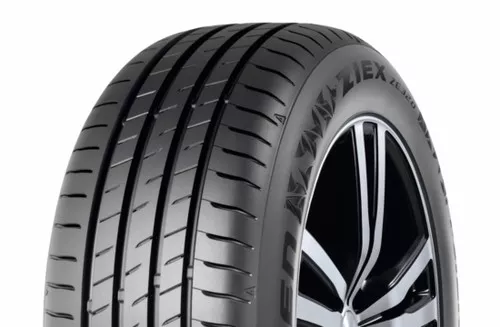
The Falken ZIEX ZE320 is an upper-middle-segment summer tyre from Japanese manufacturer Falken, produced in Turkey and offered here in 47 dimensions spanning R15 to R18. It replaces the Falken ZIEX ZE310 Ecorun and drops the Ecorun suffix, although Falken still presents efficiency and sustainability as central themes. Its rice-husk-derived silica, lightweight casing and noise-reduced tread are intended to combine environmental progress with low rolling resistance, long life and balanced wet grip. The independent evidence only partly supports that pitch: the ZE320 is demonstrably quiet, comfortable and exceptionally capable in dry braking and handling, but its rolling-resistance, mileage and some wet-safety results are considerably less convincing.
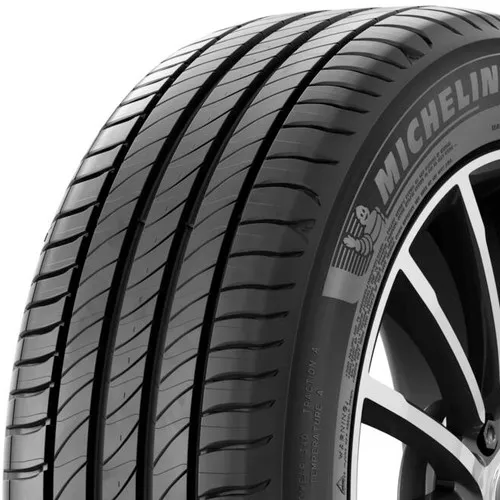
The premium Michelin Primacy 4+, made in Spain by French brand Michelin, occupies a more comfort- and longevity-focused position. It succeeded the Michelin Primacy 4 and has itself now been replaced by the Michelin Primacy 5. Its 64-dimension range from R16 to R21 reaches larger modern cars than the Falken range, while EV suitability reinforces its everyday-touring brief. Michelin's EverGrip concept uses two compound rigidities and a self-rejuvenating tread to preserve wet braking as the tyre wears. The biggest character difference is clear: the Falken is the sharper, faster and more overtly sporting tyre when grip is available, whereas the Michelin is the mature long-distance choice, sacrificing ultimate pace for durability, economy and easygoing refinement.
 ZIEX ZE320
 Primacy 4+


These tyres were not tested together in the same test. The scores below are aggregated from different independent tests, so direct comparison should be taken with caution.
 Falken ZIEX ZE320Michelin Primacy 4+Falken ZIEX ZE320Michelin Primacy 4+Falken ZIEX ZE320Michelin Primacy 4+Falken ZIEX ZE320Michelin Primacy 4+
No measured dry-braking distances in metres are supplied for the mutual comparison, so a defensible average distance or test count cannot be calculated without inventing data. The available normalized evidence nevertheless gives the ZE320 a decisive advantage: 93.2 for dry braking against 86.2 for the Primacy 4+, with overall dry scores of 88.9 versus 79. In one measured test the Falken stopped in 33.6 metres and ranked best, while another placed it almost half a metre ahead of the field. That is meaningful emergency-braking separation: even half a metre can determine whether a car stops short or reaches an obstacle with residual speed. Because no corresponding Michelin distance from the same tests is supplied, 33.6 metres must not be treated as a direct head-to-head gap.
The Falken's advantage extends beyond a single stop. It recorded the fastest dry-handling laps in two separate assessments, earned an 88.5 dry-handling detail score and was repeatedly characterized as sporty yet comfortable. Its strong front-end bite, balance and usable grip should make a car feel eager to turn without demanding constant correction. That coherence explains why it can convert braking traction into circuit speed: the tread and compound retain grip when longitudinal braking loads become lateral cornering loads. High-speed drivers also have access to versions rated up to 270 km/h, although the precise rating remains size-dependent.
The Michelin is not dull. Its 95.7 objective dry-handling score, direct turn-in, natural steering and good feedback show that it can be precise and reassuring on ordinary roads, and owners report planted behaviour, excellent dry grip and impressive emergency stopping. The distinction appears near the limit. Its broader dry-handling score is only 81.4, and one assessment identified increased oversteer risk during rapid lane changes and abrupt load transfers. In practice, the Primacy is easy and accurate at sensible touring speeds, while the Falken offers the stronger ultimate braking reserve and the more consistent sporting character. The Falken also won their sole mutual test, finishing third of seven against the Michelin's fifth.
Falken ZIEX ZE320Michelin Primacy 4+Falken ZIEX ZE320Michelin Primacy 4+Falken ZIEX ZE320Michelin Primacy 4+Falken ZIEX ZE320Michelin Primacy 4+Falken ZIEX ZE320Michelin Primacy 4+Falken ZIEX ZE320Michelin Primacy 4+Falken ZIEX ZE320Michelin Primacy 4+The supplied data again contains no wet-braking distances in metres for both tyres, so neither a valid average nor a measured-test count can be stated. The score evidence reverses part of the dry-braking picture: Michelin leads wet braking by 80.0 to 71.2, despite its older design showing weaknesses elsewhere. Falken has produced excellent wet stops in some conditions, including a joint-leading result, but it was also sixth and 2.2 metres behind the best in another test and repeatedly finished behind the wet-braking leaders. Reports of particularly weak cool-weather wet braking make that inconsistency more important than the occasional headline result.
Curiously, the ZE320 is often the quicker wet-handling tyre. Its 93.0 wet-handling detail score exceeds Michelin's 80.2, and it set the fastest wet laps in two assessments. It also scores 84.0 for wet-circle cornering and feels well balanced once loaded into a bend. This creates a distinctive split personality: plenty of lateral grip and adjustability on a wet circuit, but less dependable straight-line stopping and poor resistance when standing water is encountered during cornering. Longitudinal aquaplaning can be excellent—the Falken reached 80.8 km/h and scores 84.5 in that discipline—but its 72.2 cross-aquaplaning score was weakest in one field. Heavy rain on a straight road may therefore feel secure, while a flooded bend is its critical scenario.
Michelin's wet behaviour is calmer but no longer class-leading. It has an A wet-grip label across the supplied range and has delivered short wet stops, safe handling and satisfactory aquaplaning control, supporting the brand's safety-over-time positioning. Yet several results identify restricted wet grip, weak traction, modest cornering grip and limited aquaplaning reserves; its overall wet and aquaplaning scores are 76.2 and 76.9, against Falken's 82.2 and 78.4. Owners echo the contradiction: some describe secure long-distance wet performance, while another calls dry grip excellent but wet grip disappointing. The Michelin is preferable when braking consistency matters most; the Falken is faster and more engaging on merely damp roads, but neither is the obvious choice for routinely flooded routes.
Falken ZIEX ZE320Michelin Primacy 4+Falken ZIEX ZE320Michelin Primacy 4+Falken ZIEX ZE320Michelin Primacy 4+Falken ZIEX ZE320Michelin Primacy 4+Both tyres understand refinement, but they achieve it differently. Falken's offset-sipe tread is designed to reduce running noise, and the evidence strongly confirms that claim: it scores 87.7 for noise and 88.3 for comfort, compared with Michelin's 84.1 and 86.6. It was third-quietest in one test, near the top in another and best for ride comfort in a third. Its interior-noise detail score of 89.3 narrowly exceeds Michelin's 88.5. For a driver, that means subdued tread hum and a casing capable of absorbing sharp imperfections without making the steering feel remote—a particularly attractive combination on smaller R15-to-R18 family cars.
The Michelin remains a superb cruiser. It achieved best-in-test comfort and second-place quietness in one comparison, while owner reports repeatedly praise its smooth ride, reduced noise and high-speed stability. A perfect-looking 99.5 noise detail result and strong comfort feedback explain its relaxed motorway personality, although rough asphalt can make it noticeably vocal. Its most substantial advantage emerges over thousands of kilometres: mileage scores 83.8 against only 59.0 for Falken, while rolling resistance scores 82.4 versus 70.8. Michelin's available EU fuel labels are split between B and C, and its low weight and low fuel consumption have been independently recognized.
This is where Falken's official story conflicts most sharply with testing. The lightweight casing is claimed to lower rolling resistance and fuel use, while the new formulation supposedly delivers low wear and extended life; in practice, higher rolling resistance, slow rolling and below-average predicted mileage recur among its weaknesses. Its purchase price can be attractive—the supplied example is €129—and it sits below Michelin's premium price level, but faster wear and greater energy demand can erase part of that initial saving. Michelin costs more upfront, yet its much higher mileage and efficiency scores make it the stronger whole-life-value proposition for high-mileage drivers. Its owner evidence supports that conclusion: durability is repeatedly praised, 18 Heureka reviews average 10/10, and four reviewers explicitly cite good value. Falken offers impressive comfort per euro today; Michelin is more likely to repay its premium over a long ownership cycle.
Falken ZIEX ZE320Michelin Primacy 4+Falken ZIEX ZE320Michelin Primacy 4+Falken ZIEX ZE320Michelin Primacy 4+The Falken ZIEX ZE320 is the recommendation for drivers who want their everyday summer tyre to feel alive. It has the stronger dry-braking evidence, higher dry and wet handling scores, faster circuit pace and marginally better measured refinement, all at an upper-middle rather than premium position. On warm, generally well-drained roads it should give a family hatchback or saloon sharper turn-in, greater cornering authority and more confidence during an emergency dry stop. It is a genuine dynamic step forward from the ZE310 Ecorun, but not a complete one: weak cross-aquaplaning, variable wet braking, high rolling resistance and limited mileage remain serious compromises.
The Michelin Primacy 4+ is the better purchase for motorway commuters, high-mileage family drivers, EV users and anyone who treats tyres as a long-term running-cost decision. It is comfortable, quiet, natural to steer and far stronger on predicted life and efficiency; its wet-braking score also gives it a valuable advantage over the Falken. Its drawbacks are the high purchase price, aging wet-cornering performance and only modest deep-water reserves. Drivers expecting premium-brand superiority in every dynamic discipline will not find it here, and the newer Primacy 5 now makes more sense where available at a reasonable price.
Overall, the Falken wins this direct comparison for performance-focused buyers and also won the only supplied mutual test. My broader recommendation, however, depends on usage: choose the ZE320 for lower annual mileage, warm climates and rewarding dry-road control; choose the Primacy 4+ for long tours, heavy annual mileage and predictable ownership costs. If forced to select one for the typical mixed-use family car, the Michelin's durability, economy and stronger wet-braking score make it the safer long-term bet, provided its premium price is acceptable and frequent standing-water exposure is not part of the commute.
Compare prices across all available dimensions for these tyres.
| Organization | Season | Year | Dimension | |
|---|---|---|---|---|
 TYRE REVIEWS TYRE REVIEWS | Summer | 2025 | 225/50 R17 | View |
 VS
VS VSVSVS
 VSVS
VSVS VSVS
VSVS VSVSFalken ZIEX ZE320 vs Falken ZIEX ZE310 ECORUN
 Falken ZIEX ZE320 vs BF Goodrich Advantage 2
 Falken ZIEX ZE320 vs Kleber Dynaxer HP5Michelin Primacy 4+ vs Bridgestone Turanza T005Michelin Primacy 4+ vs BF Goodrich Advantage 2Michelin Primacy 4+ vs Kleber Dynaxer HP5Michelin Primacy 4+ vs Michelin Primacy 4




