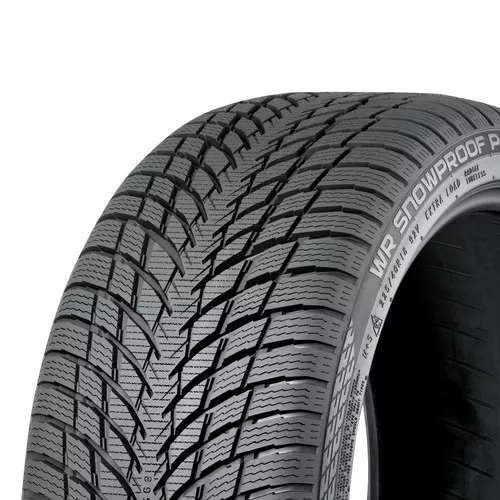
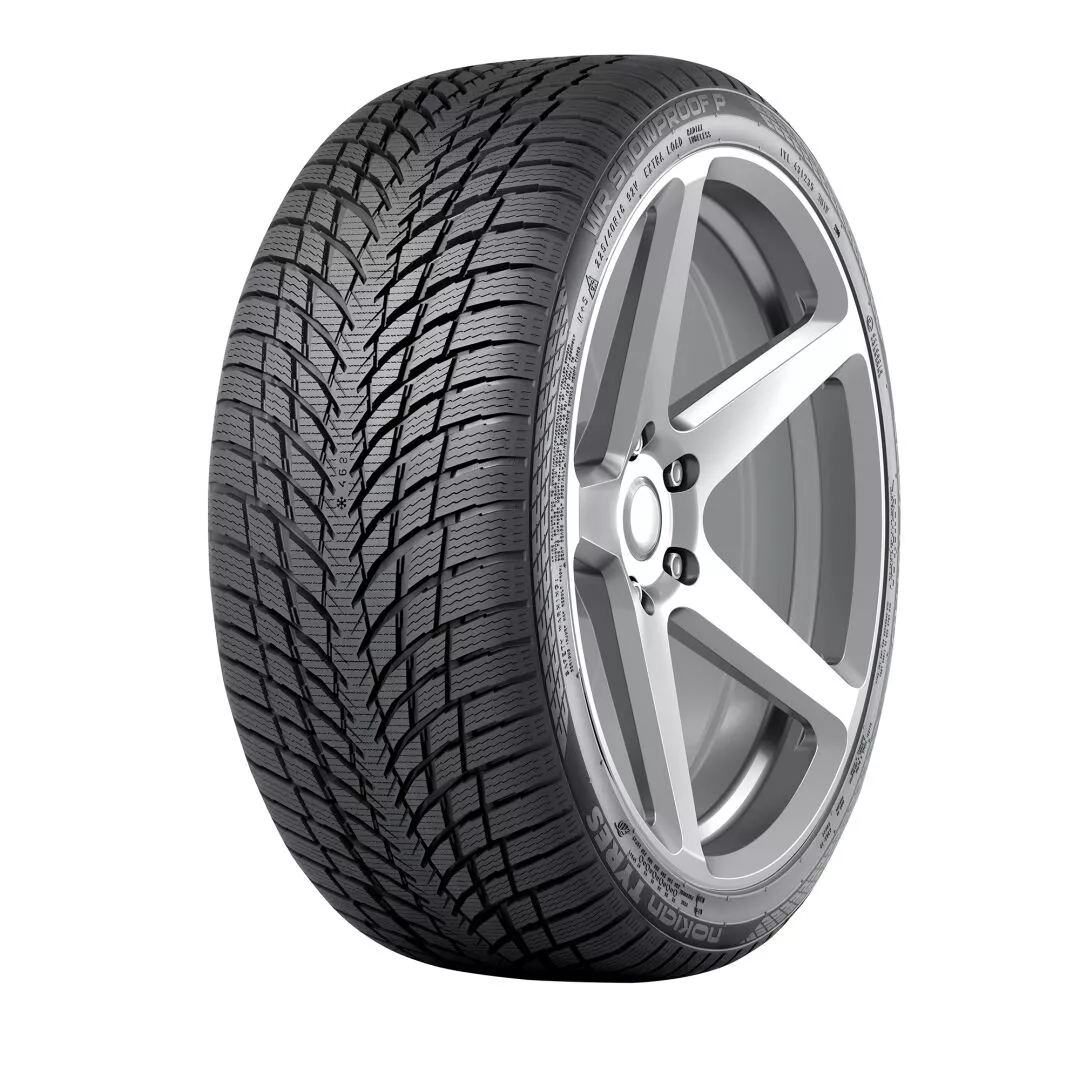
Dunlop covers every winter condition; the Nokian excels only when the road stays dry.
The Dunlop Winter Sport 5 and the Nokian WR Snowproof P are winter tyres with strikingly different personalities, and their five shared test appearances tell the same story every time: the Dunlop finishes ahead in all five. That consistency matters, but the reasons behind it are more interesting than the scoreline. Dunlop's offering is a genuinely balanced winter tyre — competent across every discipline, with particular strength in snow and respectable wet behaviour, and a loyal owner base built over years of real-world use. The Nokian WR Snowproof P takes a very different approach: it is a winter tyre designed around dry-road dynamics, rolling efficiency and low noise — almost summer-like in character — but that focus comes at a serious cost when the road gets wet or slushy.
Winter Sport 5
WR Snowproof P


Averaged from 2 tests
Dunlop Winter Sport 5
Nokian WR Snowproof P
Dunlop Winter Sport 5
Nokian WR Snowproof P
Dunlop Winter Sport 5
Nokian WR Snowproof P
Dunlop Winter Sport 5
Nokian WR Snowproof P
Dunlop Winter Sport 5
Nokian WR Snowproof PThis is where the two tyres diverge most dramatically, and where the Nokian's limitations become hard to overlook. In the Autobild 2022 215/55 R17 braking test, the gap was relatively modest — the Dunlop stopped in 35.3 m on wet roads versus 36.0 m for the Nokian — but measured braking is only part of the picture. Testers described the Nokian's wet handling as understeering and lacking in lateral grip, with genuinely low safety margins. Its aquaplaning resistance is a serious concern: across tests it scores at a level that places it well below the competitive field. That is a meaningful real-world risk, particularly in the mixed rain-and-cold conditions that define autumn and early spring driving in most of Europe. The Dunlop Winter Sport 5, by contrast, earns consistent praise for its wet behaviour — in one test it was described as performing on wet roads almost as well as a summer tyre, which is exceptional for a winter product. Owners with years of experience on the Winter Sport 5 specifically highlight its wet grip and confident feel in poor conditions as its defining strength.
Dunlop Winter Sport 5
Nokian WR Snowproof P
Dunlop Winter Sport 5
Nokian WR Snowproof POn dry winter roads the Nokian WR Snowproof P is genuinely impressive. Its dry braking distances are among the shortest measured in testing, and its dry handling is precise and confidence-inspiring — testers have highlighted its dynamic character, short stopping distances, and low rolling resistance on dry tarmac. If you drive primarily on cleared, dry winter roads, it handles those conditions with an assurance that goes beyond what most winter tyres offer. The Dunlop Winter Sport 5 is competent on dry roads but not a standout performer here — reviewers note some precision loss at the limit in dry conditions, and its dry braking is its weakest scoring discipline. For pure dry-road performance, the Nokian has the edge. But in a winter tyre, that is rarely the whole story.
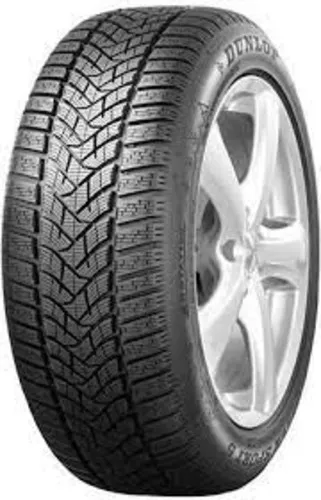
Dunlop Winter Sport 5
Nokian WR Snowproof P
Dunlop Winter Sport 5
Nokian WR Snowproof P
Dunlop Winter Sport 5
Nokian WR Snowproof P
Dunlop Winter Sport 5
Nokian WR Snowproof POn snow, the Dunlop Winter Sport 5 is the more complete performer. Its snow traction and handling scores are strong across multiple test seasons, and testers describe it as safe and precise on wintry surfaces. In the shared braking test on snow, the difference was negligible — 26.5 m for the Dunlop versus 26.2 m for the Nokian — suggesting both stop adequately on packed snow. However, the Nokian's snow handling and lateral grip on snow have been described as mediocre, with an understeering tendency that limits confidence in real winter conditions. For a Finnish brand with a heritage built on winter tyre development, this is a surprising outcome for the Snowproof P — it appears that the tyre's performance-oriented design philosophy has traded traditional Nokian winter capability for dry-road dynamics. The Dunlop's snow strength, combined with its wet competence, makes it the safer and more versatile choice across the full spectrum of winter conditions that most European drivers actually encounter.
Dunlop Winter Sport 5
Nokian WR Snowproof P
Dunlop Winter Sport 5
Nokian WR Snowproof PHere the Nokian genuinely shines. It is one of the quieter winter tyres in its class, with low exterior rolling noise and a rolling resistance score that is class-competitive — meaning real fuel savings over a winter season. The Dunlop Winter Sport 5 has a reputation for being on the noisier side, consistently flagged in testing for above-average rolling noise, though its fuel efficiency and tread life are both strong points that owners appreciate. The Winter Sport 5 covers 83 sizes from R14 to R21, making it broadly available across the market; the Nokian WR Snowproof P covers 47 sizes from R17 to R21, limiting it to larger, more performance-oriented fitments. Both tyres have good longevity credentials, but the Dunlop's owner base — over 200 user reviews with consistently high ratings — speaks to a tyre that holds up well over multiple seasons and across a wide range of driving styles.
Dunlop Winter Sport 5
Nokian WR Snowproof P
Dunlop Winter Sport 5
Nokian WR Snowproof PFor the vast majority of winter drivers, the Dunlop Winter Sport 5 is the clear recommendation. Its five-from-five record against the Nokian WR Snowproof P reflects a tyre that performs reliably in every condition winter throws at it — including the wet and slushy scenarios that define real-world winter driving. It succeeded the older Dunlop SP Winter Sport 3D and remains competitive despite its age, particularly in smaller dimensions where its balanced character stands out. The Nokian WR Snowproof P is a niche product for a specific driver: someone who primarily encounters dry, cold roads, values low rolling resistance and a quiet, dynamic feel, and rarely faces standing water or heavy slush. For that profile it has genuine appeal. But as a general winter tyre recommendation — especially for drivers who encounter mixed or unpredictable conditions — its aquaplaning weakness and poor wet handling are too significant to overlook.
Compare prices across all available dimensions for these tyres.
VS
VS
VS
VS
VS
VS
VS
VS
VS
VS