18 shops · 56 ·847+ products

Comparison: Nokian Seasonproof vs. Hankook Kinergy 4S2 H750 (2026)

3 mutual test(s) with detailed data

Hankook stops shorter on every wet road; Nokian rules every snowy one.

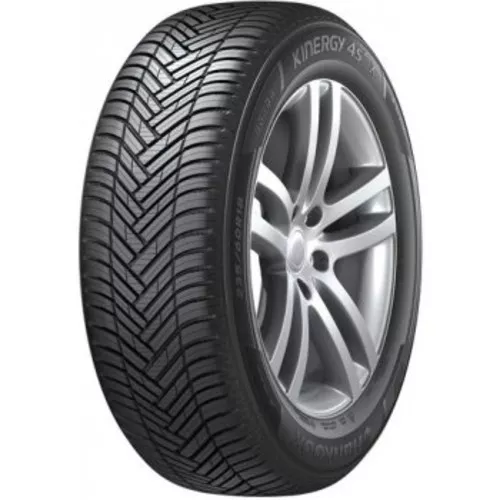
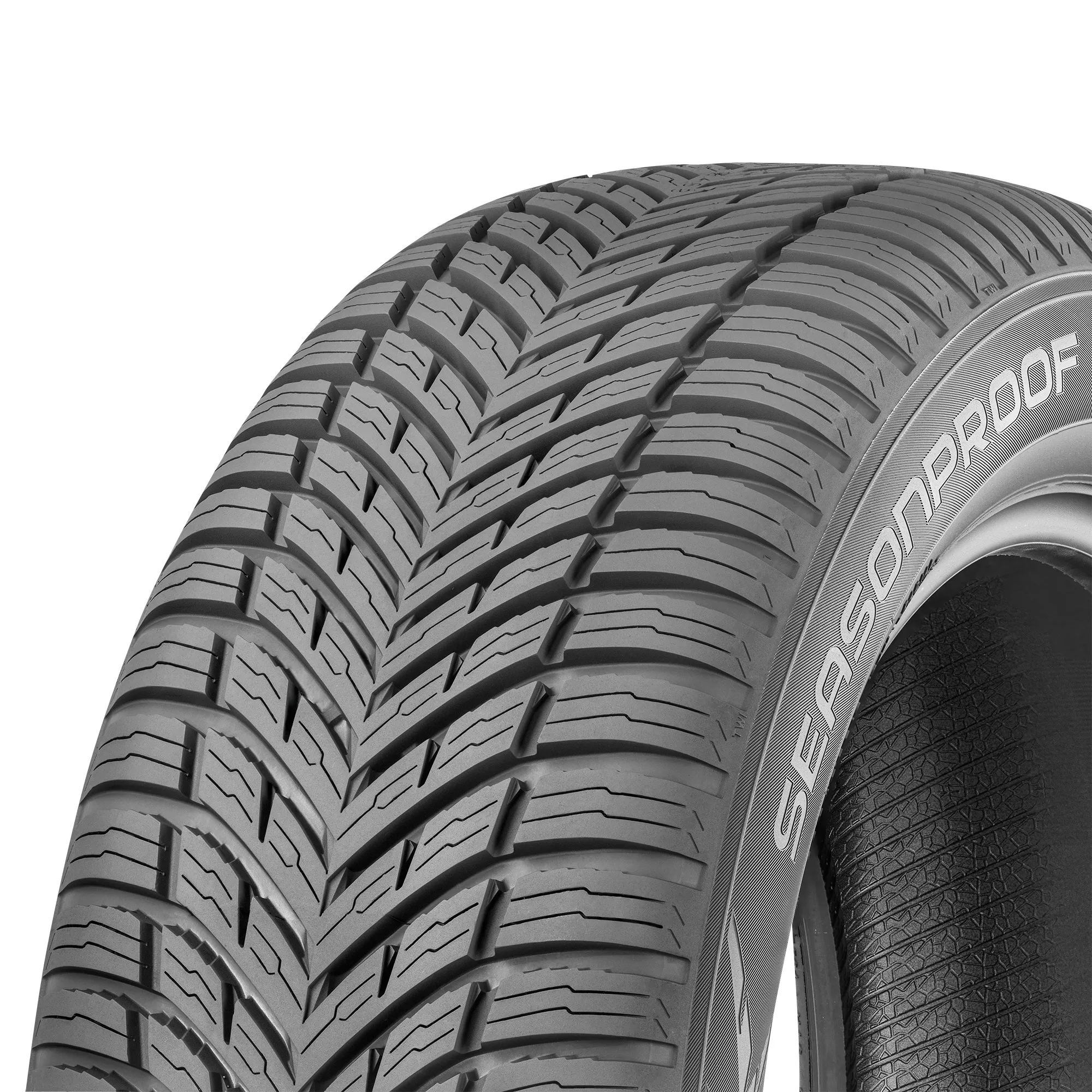
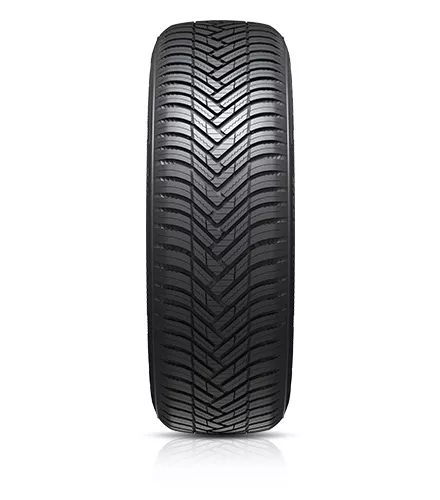
The allround all-season category is one of the most fiercely contested in European tyres, and these two competitors illustrate just how differently a manufacturer can interpret the same brief. The Nokian Seasonproof is a Finnish-engineered tyre with a clear northern bias — designed from the ground up to handle Scandinavian winters while remaining usable year-round. It has since been succeeded by the Nokian Seasonproof 1, which means the tyre reviewed here is a mature, well-tested product rather than the brand's current benchmark. Against it stands the Hankook Kinergy 4S2 H750, the second generation of Hankook's mainstream all-season line — evolved from the original Kinergy 4S and rated an impressive 87/100 in our overall assessment. Where the Nokian is a winter specialist wearing an all-season badge, the Hankook is a genuine year-round performer that takes dry and wet tarmac as seriously as it takes snow.

The Kinergy 4S2 H750 targets the upper-middle segment with a 108-size dimension range spanning R14 to R20, making it one of the most broadly available all-season tyres on the market. The Nokian Seasonproof, by contrast, covers 41 sizes from R14 to R19 — a meaningful difference in breadth that already hints at their different ambitions. Hankook positions the H750 as a rounded performer; Nokian's DNA, rooted in decades of arctic tyre development, tilts the Seasonproof unmistakably toward cold-weather confidence. The single biggest difference in character is this: when the temperature drops and the roads turn white, the Nokian is in its element; when the sun is out or the rain is falling on warm tarmac, the Hankook is clearly the superior tool.

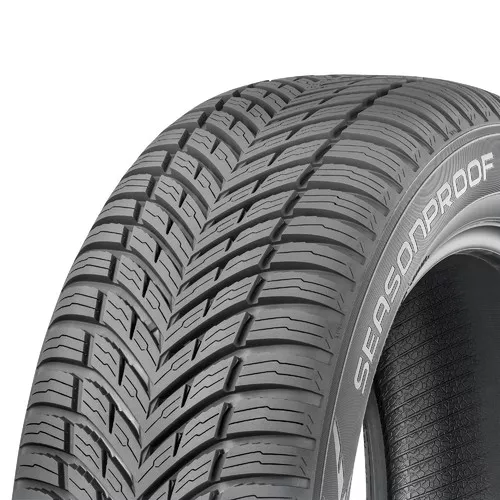
Nokian Seasonproof
Good for
Drivers in northern Europe facing real winters Noise-sensitive motorway commuters Drivers prioritising long tread life Budget-conscious all-season buyers
Not ideal for
Drivers prioritising wet and dry braking Performance-oriented dry-road drivers Those in mild winters needing wet grip
Hankook Kinergy 4S2 H750
Good for
Safety-first drivers in wet climates Spirited drivers valuing dry handling Year-round mixed-condition commuters Drivers needing wide size availability
Not ideal for
Drivers in heavy snow regions High-mileage drivers watching running costs Noise-sensitive refined-ride seekers

Test Profile

Nokian
Seasonproof
Hankook
Kinergy 4S2 H750
Number of tests
7
21
Best position
#3
#1
Average position
7.4
4.7
Latest test
2022
2026
Available sizes
57
175

Performance comparison

Averaged from 3 tests

Wet Performance
Confidence
Nokian Seasonproof
66%
Nokian
Seasonproof
Hankook Kinergy 4S2 H750
81%
Hankook
Kinergy 4S2 H750
Wet Braking
Nokian Seasonproof
55%
Hankook Kinergy 4S2 H750
89%
Wet Handling
Nokian Seasonproof
68%
Hankook Kinergy 4S2 H750
77%
Wet Circle Cornering
Nokian Seasonproof
63%
Hankook Kinergy 4S2 H750
88%
Aquaplaning Longitudinal
Nokian Seasonproof
72%
Hankook Kinergy 4S2 H750
72%
Aquaplaning Cross
Nokian Seasonproof
74%
Hankook Kinergy 4S2 H750
78%

Wet weather is where the Hankook consolidates its tarmac advantage, and where the Nokian's weakest scores are found. Across two head-to-head wet braking tests, the Nokian Seasonproof averaged 53.0 metres while the Hankook Kinergy 4S2 H750 averaged 50.2 metres — a 2.8-metre deficit for the Nokian over 2 tests. In the 2022 195/55 R16 test the gap opened to 4.4 metres (52.4m vs 48.0m), and in the 2021 225/50 R17 test it remained 1.2 metres (53.5m vs 52.3m). A 2.8-metre average gap in wet braking is significant: it represents an extra 0.1 seconds of stopping time from 80 km/h — enough, in a real emergency, to change outcomes. The Nokian's wet-braking performance score of 62.5 against the Hankook's 83.9 encapsulates a fundamental difference in how the two tyres manage a water film between rubber and road.

Aquaplaning resistance further separates the two. The Hankook scores 85.2 overall for aquaplaning versus the Nokian's 79.2, and the detail scores are revealing: Hankook averages 85.9 in cross-aquaplaning and 84.5 longitudinally — both impressive figures indicating effective water evacuation channels in both straight-line and cornering scenarios. The Nokian scores 81.8 in cross-aquaplaning but drops to 76.7 longitudinally, suggesting its drainage becomes less effective under straight-line aquaplaning loads. On wet motorways in heavy rain, this translates to a higher threshold before the steering goes light on the Hankook, and a slightly earlier onset of that unnerving floating sensation on the Nokian at high speed. That said, tester feedback for the Nokian has acknowledged gute Aquaplaning-Qualitäten — good aquaplaning resistance — so the difference, while real, should not be overstated at ordinary road speeds.

Wet handling and cornering confidence follow the same pattern. The Hankook's wet-circle cornering score of 84.4 and wet-handling score of 84.1 place it firmly in the upper tier of the all-season segment, and the tyre's feedback through the steering in wet corners is described as consistent and communicative. The Nokian, in contrast, has drawn repeated criticism for understeer in wet handling — the front end washes wide rather than hooking in — which erodes confidence in tight wet bends. Real owners back this up: while they praise the Nokian's wet grip for everyday driving in their reviews (seven separate mentions of excellent wet handling on Heureka), the more critical voices note that dry and wet braking distances fall behind major rivals. The Hankook is the better wet-weather tyre across all disciplines.

Dry Performance
Confidence
Nokian Seasonproof
60%
Nokian
Seasonproof
Hankook Kinergy 4S2 H750
86%
Hankook
Kinergy 4S2 H750
Dry Braking
Nokian Seasonproof
58%
Hankook Kinergy 4S2 H750
84%
Dry Handling
Nokian Seasonproof
62%
Hankook Kinergy 4S2 H750
88%

On dry tarmac, the Hankook Kinergy 4S2 H750 is the stronger tyre by a meaningful margin, and the braking data is unambiguous. Across the two measured dry braking tests in which both tyres were directly compared, the Nokian Seasonproof averaged 43.9 metres while the Hankook averaged 41.2 metres — a gap of 2.7 metres. To frame that in real terms: stopping from 100 km/h, the Nokian needs an additional distance of roughly 60% of a car length to come to rest. In the 2022 Autobild test on 195/55 R16 tyres, the difference was even starker — 46.3m versus 42.1m, a 4.2-metre gap — placing the Nokian 15th and the Hankook 5th in a 35-tyre braking shootout. That is not a marginal difference; it is a difference that in an emergency stop at urban speeds can mean the difference between a near-miss and an impact.

The deeper reason for this gap lies in compound and structural design priorities. The Nokian's performance scores tell the story plainly: a dry-braking score of 68.3 against the Hankook's 83.3, and an overall dry score of 73.2 against 85.6. Tester feedback adds texture: the Nokian has shown consistent understeer tendencies in dry handling — a tyre that pushes wide in fast corners rather than following the driver's line precisely. Its dry-handling objective score of 96.5 (measured circuit metrics) is actually high, suggesting the chassis geometry is sound, but the compound's thermal behaviour on warm, dry surfaces is the limiting factor. The Hankook, by contrast, earned the descriptor Trockendynamiker — a dry-weather performer — with a dry-handling objective average of 99 and a dry-handling subjective score of 84.6, both among the best in its segment. Testers consistently praised its precise, sharp turn-in, high-speed stability, and the confidence it inspires when pushed on a sweeping motorway on-ramp.

For the everyday driver, this manifests as a firmer, more planted feel from the Hankook when changing lanes quickly at motorway speeds, and a more alert steering response in town. The Nokian is not dangerous on dry roads — its dry-handling objective score is high and experienced drivers report stable, predictable behaviour — but it lacks the incisiveness and bite of the Hankook when the road is warm and grip is plentiful. Drivers who regularly push their cars on dry B-roads will find the Hankook the more rewarding partner.

Snow Performance
Confidence
Nokian Seasonproof
89%
Nokian
Seasonproof
Hankook Kinergy 4S2 H750
84%
Hankook
Kinergy 4S2 H750
Snow Braking
Nokian Seasonproof
92%
Hankook Kinergy 4S2 H750
88%
Snow Traction
Nokian Seasonproof
90%
Hankook Kinergy 4S2 H750
83%
Snow Handling
Nokian Seasonproof
89%
Hankook Kinergy 4S2 H750
89%
Snow Circle Cornering
Nokian Seasonproof
85%
Hankook Kinergy 4S2 H750
77%

Here, finally, the tables turn — and the Nokian Seasonproof reveals the expertise that Finnish engineering has accumulated over decades of arctic development. The Nokian scores 89.6 for snow performance overall, against the Hankook's 81.6 — an 8-point advantage that is reflected in granular test metrics. The Nokian's snow braking average of 93.0 is exceptional, as are its snow acceleration (91.5), snow handling (89.2), snow traction (87.2), and snow circle cornering (85.0). These are not marginal improvements; they represent a tyre that was fundamentally designed with winter credibility as a core pillar rather than a secondary consideration. Across AutoBild's 2021 test, the Nokian took its highest praise specifically for its snow qualities — described as the best in that field — while the Hankook won the overall test but ceded meaningful ground on snow surfaces.

The Hankook Kinergy 4S2 H750 is no slouch in snow conditions — its snow braking score of 85.2, snow handling of 85.0, and its 3PMSF certification confirm real winter usability. Testers noted verlässliche Fahreigenschaften auf Schnee und Eis — reliable behaviour on snow and ice — and in the 2023 AutoBild test it was praised as an all-season tyre with convincing snow and ice properties and a sharp turn-in response even on packed snow. But there is a ceiling to its winter capability that the Nokian simply does not share. On deep, fresh snow or in sub-zero conditions where the road surface is genuinely treacherous, the Nokian's softer, more aggressive tread structure and thermally adaptive compound maintain traction and control that the Hankook, with its more tarmac-optimised architecture, cannot fully match.

For drivers in central or northern Europe who face genuine winter conditions — regular snowfall, icy mornings, sub-zero temperatures for weeks at a time — the Nokian's snow advantage is the single most compelling argument in its favour. The Hankook covers moderate winter conditions capably, but the Nokian is the tyre you want when conditions are genuinely severe. Both carry the 3PMSF mountain-snowflake symbol, confirming certified severe-weather performance, but the Nokian backs that symbol up with scores that are among the best in the all-season category.

Comfort & Noise
Confidence
Nokian Seasonproof
79%
Nokian
Seasonproof
Hankook Kinergy 4S2 H750
79%
Hankook
Kinergy 4S2 H750
Noise Exterior
Nokian Seasonproof
89%
Hankook Kinergy 4S2 H750
82%
Ride Comfort
Nokian Seasonproof
68%
Hankook Kinergy 4S2 H750
76%

The Nokian Seasonproof is the clear winner in the comfort and refinement department, and it is not particularly close. Its comfort score of 94.6 is exceptional for an all-season tyre, and its noise score of 95.5 is one of the highest in the segment. Tester feedback from multiple AutoBild evaluations consistently highlighted low exterior pass-by noise and a pleasant, absorbent ride — angenehmer Komfort and leises Vorbeifahrgeräusch are recurring verdicts. Owner reviews echo this emphatically: low noise level was the single most frequently mentioned positive in Heureka customer feedback, cited eight times out of 34 reviews, earning the Nokian a remarkable 9.4/10 user rating. The Hankook scores 92.2 for noise and 87.5 for comfort — both respectable figures that place it comfortably above average, but a clear step behind the Nokian in day-to-day refinement. Drivers who spend long hours on motorways and value a hushed, relaxed cabin will find the Nokian's quieter character genuinely appreciable over thousands of kilometres.

On running costs and fuel economy, the picture is more nuanced. The Nokian holds a rolling resistance score of 75.5 with an EU fuel efficiency label of C, while the Hankook scores 79.7 — a small but real advantage in fuel economy that, over a tyre's lifetime, adds up to a few tanks of petrol. However, the mileage story cuts the other way in the data: the Nokian's mileage score of 74.5 actually edges the Hankook's 59.2, suggesting the Nokian compound wears more slowly despite its softer winter-oriented construction. This is corroborated by real-world owner experience — one Nokian reviewer on TyreReviews accumulated 20,000 miles across multiple vehicles while reporting sustained performance, and a Volvo V90 owner covered 40,000–45,000 miles over three years on a related Nokian all-season variant without complaint. By contrast, AutoBild has flagged the Hankook's mileage and economy as average weaknesses in multiple test years, and its mileage score of 59.2 sits noticeably below the competition.

On price, the Hankook Kinergy 4S2 H750 is positioned as an upper-middle premium product and typically commands a modest premium over the Nokian Seasonproof in most European markets. Given that the Hankook's mileage score is lower, that premium is harder to justify purely on running-cost grounds — the Nokian likely returns better value per kilometre despite its lower list price. Drivers who prioritise comfort, low cabin noise, and long tread life on a budget will find the Nokian an outstanding proposition in those specific dimensions. The Hankook earns its price with superior tarmac safety margins; the question is whether those margins are worth the trade-off in comfort and potentially shorter tread life for a given driver's priorities.

Economy
Confidence
Nokian Seasonproof
69%
Nokian
Seasonproof
Hankook Kinergy 4S2 H750
53%
Hankook
Kinergy 4S2 H750
Rolling Resistance
Nokian Seasonproof
63%
Mileage
Nokian Seasonproof
75%
Hankook Kinergy 4S2 H750
53%

Performance spider chart

Verdict

Five shared tests, five Hankook victories. That head-to-head record reflects a genuine performance hierarchy on dry and wet tarmac that no amount of qualification softens. If safety on paved roads in autumn rain, emergency braking response, and year-round dry handling confidence are your primary criteria — and for most drivers in western and central Europe, they should be — the Hankook Kinergy 4S2 H750 is the right choice. Its 41.2m average dry braking and 50.2m average wet braking distances are genuinely short for an all-season tyre, its aquaplaning resistance is class-leading, and its handling is sharp enough to satisfy drivers who enjoy their cars. The tyre's one notable Achilles heel — modest mileage — is worth factoring into the total cost of ownership, but it does not undo its safety case.

The Nokian Seasonproof belongs to a different driver. If you live where winter is a real season — where roads stay snow-covered for weeks, where temperatures regularly fall below -10°C, where an all-season tyre needs to genuinely substitute for winter rubber — then the Nokian's 89.6 snow score, exceptional snow braking of 93.0, and supremely low noise make it the more honest choice for your conditions. It is also the better tyre for drivers who are highly sensitive to cabin noise or who prioritise ride quality and long tread life above outright grip. The 9.4/10 Heureka user rating and repeated owner praise for low noise and comfortable ride are not coincidental — this is a tyre that genuinely excels in those dimensions.

A final caveat: the Nokian Seasonproof reviewed here has been superseded by the Nokian Seasonproof 1, and buyers should be aware they are purchasing a tyre from a previous generation. That successor may well close some of the dry and wet braking gap that defines this comparison. As it stands, however, the Hankook Kinergy 4S2 H750 is the more rounded, safer, and more confident tyre for the majority of European drivers — while the Nokian Seasonproof remains a compelling specialist for those whose winters are severe and whose ears are sensitive.

Tests used in comparison

OrganizationSeasonYearDimension
AutobildAutobild
All season
2022195/55 R16View
AutobildAutobild
All season
2021215/60 R16View
AutobildAutobild
All season
2021225/50 R17View

Dimensions and prices

Compare prices across all available dimensions for these tyres.

View general comparison

Add to comparison

Popular brands
New comparison

TheTyreLab.com

GET

TheTyreLab.com

Compare tyres, read test results and find the best prices — all in one app.