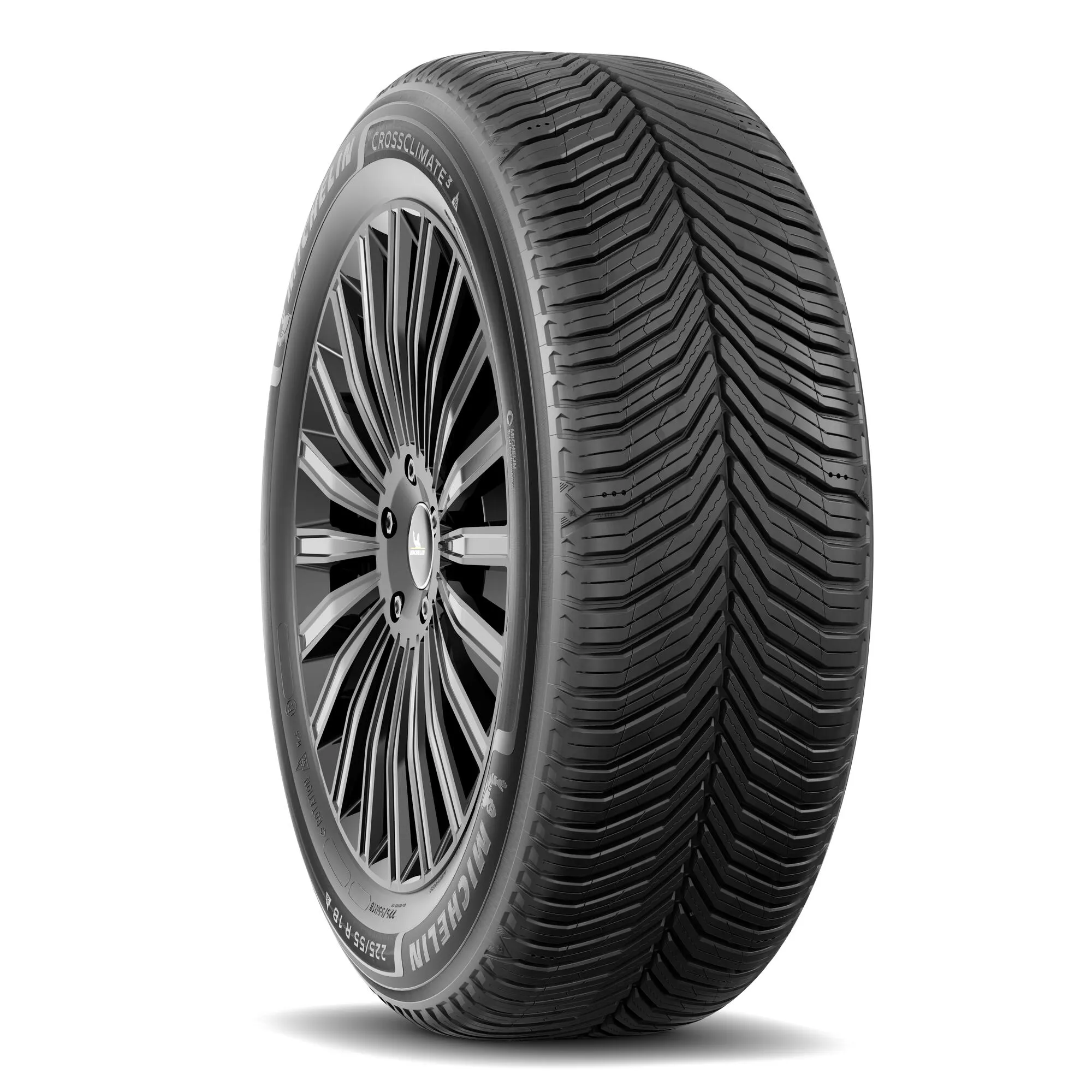
Michelin's all-weather mastery versus a budget tyre that only shines when the road is dry.
Put these two side by side and you get a study in contrasts rather than a close contest. The Michelin CrossClimate 3 is the flagship all-season tyre from a brand that essentially invented the modern all-season category, sitting at the premium end of Michelin's range and aimed at drivers who want one set of tyres to cover dry summer motorway runs and a surprise snowfall in the same winter. It carries 3PMSF certification, is built for 87 different size fitments across wheels from R16 to R22, and is positioned explicitly as an everyday, year-round confidence tyre rather than a specialist.
The Roadhog RGAS02 occupies the opposite end of the market entirely. It's a budget, lowcost-segment allround tyre from Roadhog, and everything about its scorecard — a 29/100 overall rating against the Michelin's 69/100 — reflects a tyre built to hit a low shelf price first and worry about all-round competence second. There's no EU wet grip or fuel label data published for it, no wheel-range detail, and none of the marketing depth Michelin puts behind the CrossClimate 3, which tells its own story about where each brand's priorities sit.
The single biggest difference in character is this: the CrossClimate 3 is engineered to be uniformly good across every season and every condition, while the RGAS02 is a tyre that can be genuinely competitive in the dry and falls apart everywhere else. That split — one tyre built for consistency, the other for a single strong data point on a spec sheet — defines almost everything that follows.
CrossClimate 3
RGAS02


Michelin CrossClimate 3
Roadhog RGAS02
Michelin CrossClimate 3
Roadhog RGAS02
Michelin CrossClimate 3
Roadhog RGAS02
Michelin CrossClimate 3
Roadhog RGAS02
Michelin CrossClimate 3
Roadhog RGAS02Wet weather is where the picture inverts sharply. Michelin's wet-braking score of 69 comfortably beats Roadhog's 46, and the overall wet performance gap is even starker — 67 versus 47.5. Michelin's own engineering claim, a V-shaped tread sculpture designed to improve wet braking distance by 4% through better water evacuation, is backed up by the independent scores rather than just marketing copy, and real owners echo it: one CrossClimate 3 buyer on a Ford Transit specifically praised feeling 'safer' because the tyre 'grips the road better in wet conditions.'
The Roadhog's problem in the wet isn't marginal — Autobild's testers stated plainly that in wet conditions it's 'nicht mehr empfehlenswert' (no longer recommendable), and its aquaplaning score of just 46 versus the Michelin's 69 confirms why. A lowcost tread compound and simpler water-channelling groove design mean the RGAS02 is far more prone to losing contact with standing water, and once that happens, wet cornering confidence evaporates with it.
For anyone who drives through genuine rain rather than just dry commutes with an occasional shower, this is the section that should decide the purchase. The CrossClimate 3 isn't class-leading in the wet by Michelin's own admission — its official summary flags wet performance as 'slightly behind the best in class' among premium all-seasons — but slightly behind the best premium tyre is still a different universe from a budget tyre testers actively warn against using in the wet.
Michelin CrossClimate 3
Roadhog RGAS02
Michelin CrossClimate 3
Roadhog RGAS02This is the one area where the underdog actually has a case. Michelin's dry-braking score sits at 73 versus Roadhog's surprisingly strong 91, and the broader dry performance scores follow the same pattern — 72 for the CrossClimate 3 against 77 for the RGAS02. Autobild's German testers even called the Roadhog a 'Preisknaller mit respektablen Leistungen im Trockenen' (a price-buster with respectable dry performance), and that's a fair reflection of the numbers: on a warm, dry test track, the budget tyre's stiffer, less compromised summer-biased compound and tread pattern genuinely bite hard.
But dry grip in isolation doesn't tell the whole story of dry handling. The CrossClimate 3's slightly lower outright braking number comes from a tyre that's had to compromise its tread compound to also work in snow and cold — Michelin's Thermal Adaptive Tread Compound is designed to flex across a temperature range most summer-optimised compounds don't have to handle, and Autobild's overall verdict still rated it 'good' and placed it 7th of 15 in a mixed test where the Roadhog finished dead last at 15th. That gap in the final placing, despite the Roadhog's raw dry-braking advantage, tells you the Michelin's steering response, high-speed stability and overall handling balance claw back what it concedes in a straight-line stop.
In practice, a driver pushing on will feel the Michelin resolve steering inputs more predictably and hold a confident line through faster direction changes, while the Roadhog's dry strength is really a one-dimensional party trick — good for stopping distances on a spec sheet, less convincing the moment the test moves into a handling course or an emergency lane change.
Michelin CrossClimate 3
Roadhog RGAS02
Michelin CrossClimate 3
Roadhog RGAS02
Michelin CrossClimate 3
Roadhog RGAS02
Michelin CrossClimate 3
Roadhog RGAS02Snow is where the Michelin doesn't just win, it embarrasses the category. A snow score of 93.3 is extraordinary for an all-season tyre, and Autobild's testers didn't mince words, calling the CrossClimate 3 a 'Schneekönig' — a snow king — capable of matching dedicated winter tyres. That's an unusual claim for testers to make about an all-season product, and it's the headline reason Michelin markets this tyre around year-round confidence rather than as a compromise product.
The Roadhog RGAS02, by comparison, scores just 50.5 on our aggregated snow metric and averages an even lower 32 across detailed test scoring. ADAC's 2026 testing flagged 'severe winter-road weaknesses,' and Autobild separately noted clear 'Schwächen im Schnee' (weaknesses in snow) alongside high wear. For a tyre sold into the same allround category as the CrossClimate 3, that's a serious gap — it suggests the RGAS02's tread design and compound simply aren't engineered with cold-weather flexibility or snow traction in mind, despite competing nominally in the same segment.
For any driver in a climate that sees real winter weather, even occasionally, this section alone should settle the comparison. The CrossClimate 3 offers winter-tyre-rivalling security without needing a seasonal swap; the RGAS02 offers a tyre that testers actively warn is unsafe once snow arrives.
Michelin CrossClimate 3
Roadhog RGAS02
Michelin CrossClimate 3
Roadhog RGAS02Comfort follows the same premium-versus-budget script: 75 for the Michelin against 59 for the Roadhog, with noise scores mirroring that gap exactly. Owner reviews back this up in their own words — one driver who swapped worn Goodyear summer tyres for the CrossClimate 3 specifically called out 'ride quality and handling' as noticeably improved, and another highlighted 'better fuel economy' in the same breath as comfort, which is a common pairing when a tyre's construction and compound are simply more refined.
That fuel economy point leads into the bigger financial story, and it's arguably where the Michelin justifies its price the most. Its rolling-resistance score of 84 and mileage score of 92 are outstanding — Michelin's own summary describes the CrossClimate 3 as delivering 'strong cost-effectiveness over the tyre lifecycle,' and Autobild's testers agreed, citing very high mileage as a reason it scores well in the cost chapter despite a higher upfront price. The EU label data backs this up too, with the tyre spread mostly across B-band fuel efficiency ratings.
The Roadhog tells the opposite cost story. A mileage score of just 42 (averaging 52.5 in detailed testing) combined with Autobild's explicit note of 'hoher Verschleiß' (high wear) means the RGAS02's low purchase price erodes fast — you'll likely be replacing it sooner, and a rolling-resistance score of 67 against the Michelin's 84 means it's burning more fuel in the meantime. The cheaper sticker price is real, but the total cost of ownership picture favours the Michelin far more than the raw numbers on the box would suggest.
Michelin CrossClimate 3
Roadhog RGAS02
Michelin CrossClimate 3
Roadhog RGAS02
Michelin CrossClimate 3
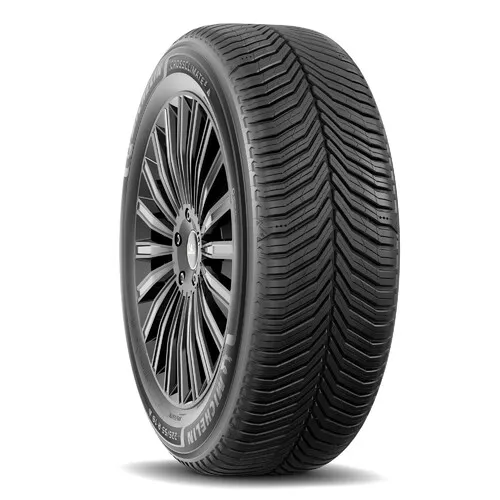
Roadhog RGAS02The head-to-head record is short but telling: in the one direct mutual test, Autobild 2025's 15-tyre comparison, the CrossClimate 3 finished 7th and was rated 'good,' while the Roadhog RGAS02 finished dead last at 15th. That single result crystallises everything the broader data shows — the Michelin is a rounded, dependable performer across every condition, while the Roadhog is a tyre whose only real strength, dry braking, isn't enough to rescue an otherwise weak overall showing.
Buy the Michelin CrossClimate 3 if you want a genuine four-seasons tyre: drivers in climates with real winters but who don't want dedicated winter tyres, high-mileage drivers who'll recoup the higher purchase price through fuel savings and longevity, and anyone who's had a wet-weather scare and wants tested aquaplaning and wet-braking security. It isn't the last word in outright dry grip or the cheapest wet-weather all-season on the market, but nothing here comes close to its snow capability at this price point.
The Roadhog RGAS02 only really makes sense for a narrow buyer: someone with a very tight budget, driving mostly in dry, mild climates, replacing tyres on a low-value vehicle where outright longevity and all-weather safety margins matter less. Anyone who drives through rain regularly, sees snow even occasionally, or wants a tyre that will still be safe and legal well into its second year should treat the Roadhog's low price as a false economy and look at the Michelin — or at least a more balanced budget alternative — instead.
| Organization | Season | Year | Dimension | |
|---|---|---|---|---|
Autobild | All season | 2025 | 225/40 R18 | View |
Compare prices across all available dimensions for these tyres.
VS
VS
VS
VS
VS
VS
VS
VS
VS
VS
Michelin CrossClimate 3 vs GoodYear Vector 4Seasons Gen-3
Michelin CrossClimate 3 vs Continental AllSeasonContact 2
Michelin CrossClimate 3 vs Michelin CrossClimate 2
Michelin CrossClimate 3 vs Pirelli Cinturato All Season SF3
Roadhog RGAS02 vs Ceat 4 SeasonDrive X5
Roadhog RGAS02 vs Pirelli Cinturato All Season SF3
Roadhog RGAS02 vs Continental AllSeasonContact 2
Roadhog RGAS02 vs Michelin CrossClimate 3 Sport