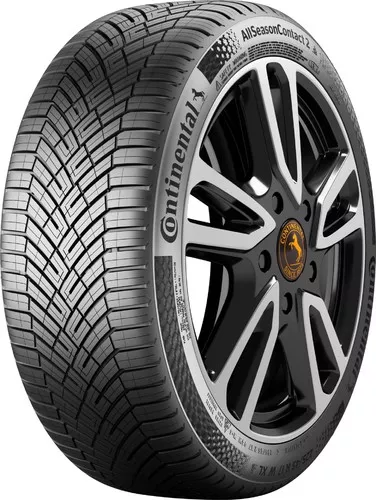
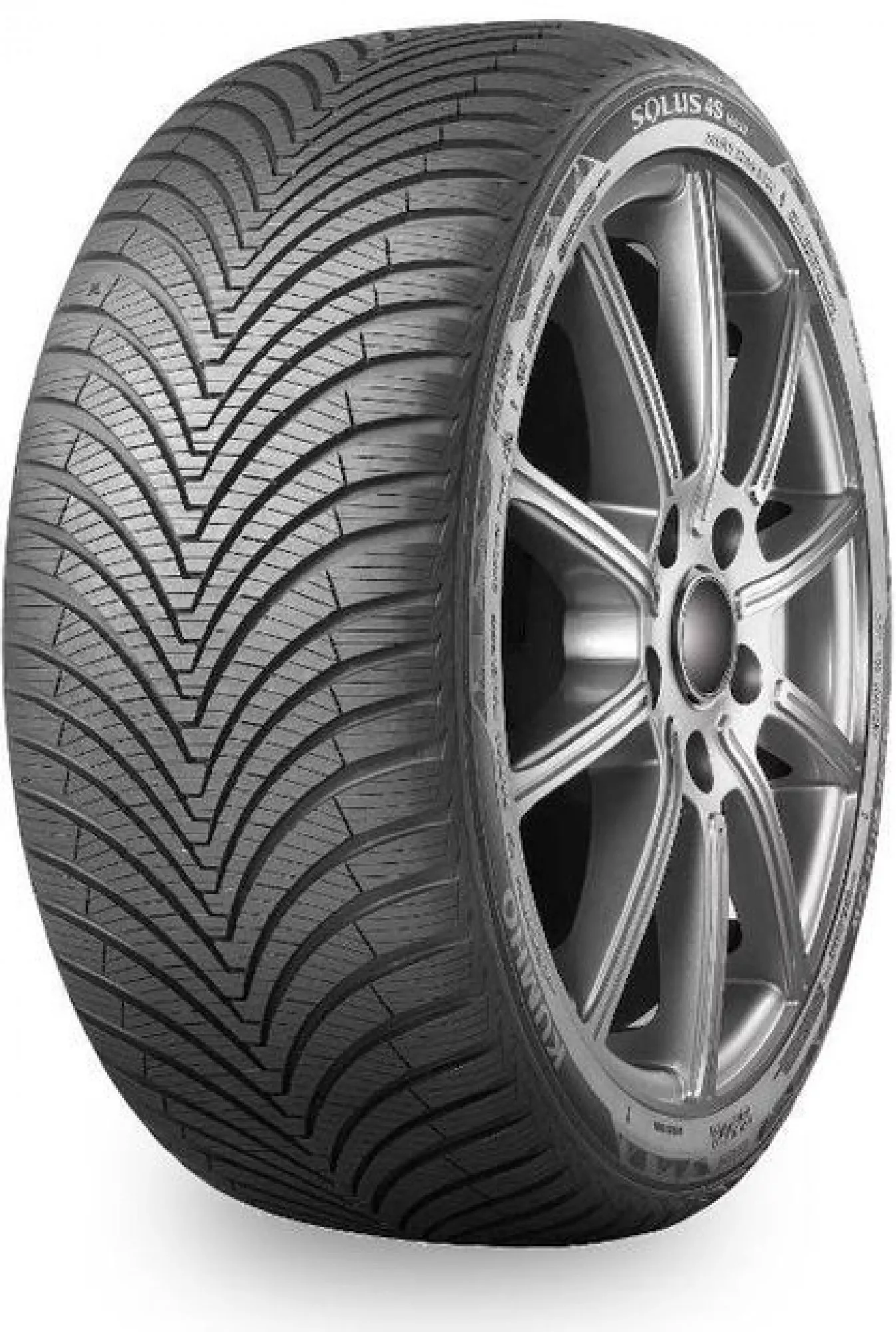
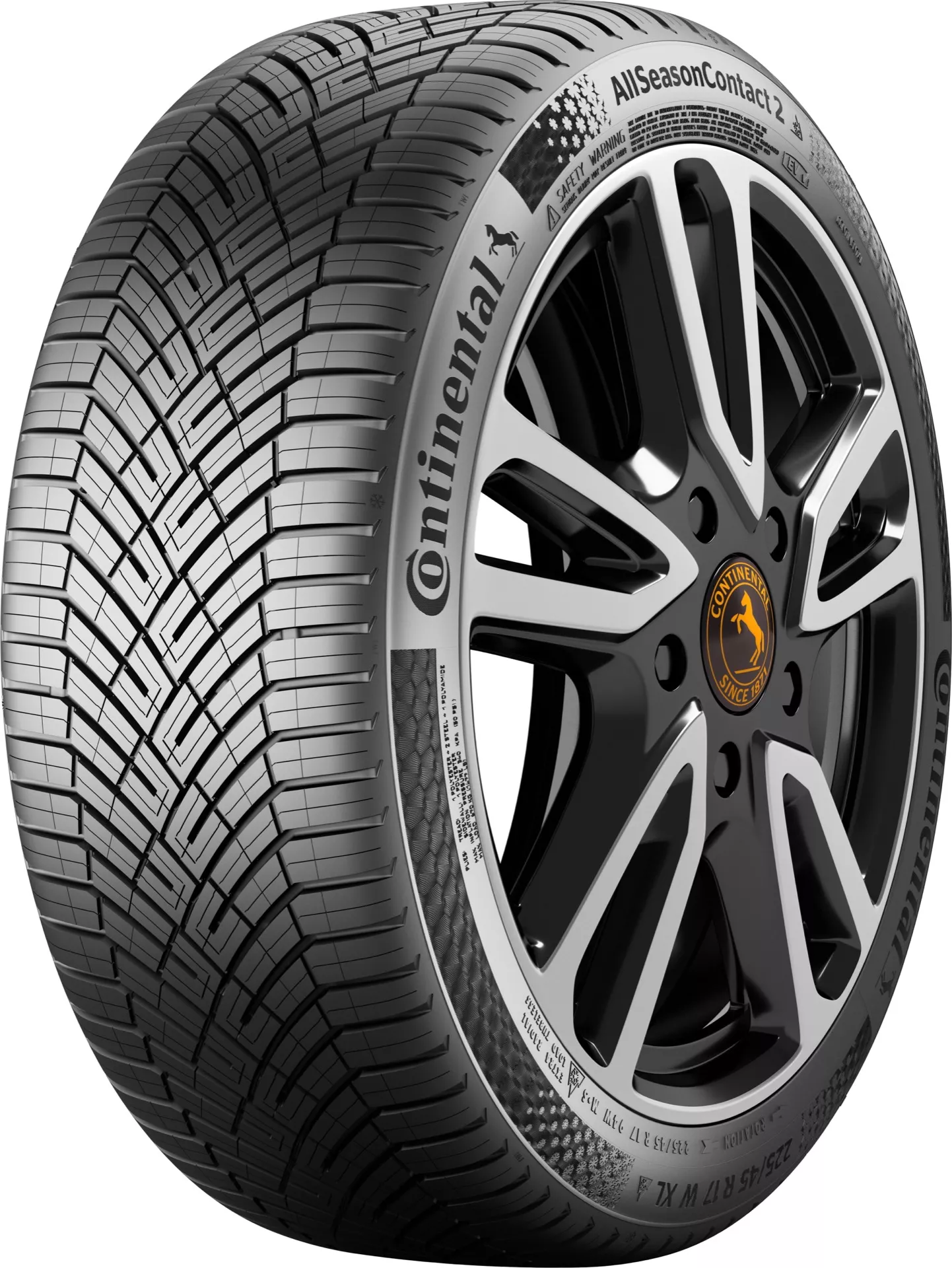
Continental beats Kumho decisively everywhere that matters — braking, comfort, snow and long-term value.
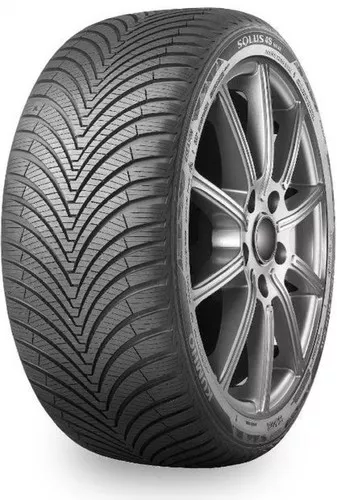
These two allround tyres sit at opposite ends of the same segment, and the gap between them tells you a lot about what "all-season" actually costs to do well. The Kumho HA32 Solus 4S is a budget-focused all-season option from the Korean maker, built in China and positioned in the upper-middle segment — it's not trying to be a class leader, it's trying to be safe, competent and cheap enough that nobody feels ripped off. The Continental AllSeasonContact 2, made in the Czech Republic and sold at the premium end, is the second generation of a tyre that replaced the original Continental AllSeasonContact with a formula built around Continental's Chili Blend Compound and an adaptive C-shaped block tread design — explicitly engineered so drivers never have to swap tyres seasonally without sacrificing performance.
The character difference shows up everywhere you look. Kumho scores 60/100 overall in our rating against Continental's 90/100, and the underlying numbers explain why: this isn't a tyre that's bad at any one thing, it's a tyre that's merely adequate at everything, while the AllSeasonContact 2 is close to class-leading in nearly every discipline — comfort and noise both hit a maximum 100, dry-handling-objective reaches 98.5, and snow-handling-objective is 96. Kumho's own expert summary is honest about this: it "doesn't particularly excel in any discipline" but is "considered safe by all the tests it was in," with mileage that's "not that bad" for a low-cost tyre. That's a fair description of a budget tyre doing its job; it's just a very different job than the one the Continental is doing.
The two have actually met head-to-head twice, in the same Autobild 2023 225/45 R17 test, and Continental won both times — finishing 2nd overall (rated "exemplary") against Kumho's 10th place ("satisfactory"), and 5th in the dedicated braking-distance test against Kumho's 15th. That's a clean sweep, and the underlying numbers back it up in every direction you look.
HA32 Solus 4S
AllSeasonContact 2


Kumho HA32 Solus 4S
Continental AllSeasonContact 2
Kumho HA32 Solus 4S
Continental AllSeasonContact 2
Kumho HA32 Solus 4S
Continental AllSeasonContact 2
Kumho HA32 Solus 4S
Continental AllSeasonContact 2
Kumho HA32 Solus 4S
Continental AllSeasonContact 2The wet-weather gap is where the two tyres diverge most dramatically. In the shared Autobild test, Kumho averaged 49.8m in wet braking against Continental's 45.4m — a 4.4-metre difference that, from 100km/h, is the length of roughly a car and then some, and matters enormously in a genuine emergency stop on a soaked road. That single data point is consistent with the broader scores: Kumho's wet-braking score is 60.8, while Continental's is 88.5 — one of the largest gaps between the two tyres in the entire comparison. Tyre Reviews 2024 called the AllSeasonContact 2 simply "best in wet handling with short wet braking" in its test field, and aftonbladet 2025 specifically credited it with the "best braking grip on cold, wet asphalt."
Kumho's wet performance isn't disastrous — Autobild has repeatedly noted "sicheres Nass... Handling" (safe wet handling) as a positive, and its wet-circle-cornering score of 71.4 is respectable for the price bracket — but its test negatives consistently mention "mäßige Aquaplaningreserven" (moderate aquaplaning reserves) and, in one year, "leicht untersteuerndes Nasshandling" (slightly understeering wet handling). Its aquaplaning score of 65.3 confirms this is a genuine limitation rather than a one-off comment.
The Continental isn't flawless in the wet either — Autobild and Tyre Reviews both flag average-to-low aquaplaning resistance as its one real weak spot, and aftonbladet bluntly said it "aquaplanes easily." But its aquaplaning score of 80 is still noticeably higher than Kumho's, and its wet-handling-objective figure of 87 and wet-circle-cornering of 88 show it corners with real composure once past that limitation. Real owners back this up: a Hyundai Ioniq owner switching from Continental's own EcoContact 6 summer tyre said wet-weather driving was "the biggest improvement," calling the AllSeasonContact 2 "far superior" in the wet. That's the difference between a tyre that's merely safe in the rain and one that inspires genuine confidence in it.
Kumho HA32 Solus 4S
Continental AllSeasonContact 2
Kumho HA32 Solus 4S
Continental AllSeasonContact 2In that shared Autobild braking test, the Kumho averaged 41.4m and the Continental 40.4m in the dry — a modest 1-metre gap on its own, but it's part of a much bigger pattern once you look at the full performance data. Kumho's dry-braking score sits at 62.8 against Continental's 76.5, and dry-handling comes in at 67.9 versus 84.9. Autobild's own test notes for the Kumho across multiple years describe "stabiles Trockenhandling" (stable dry handling) as a consistent positive, but also flag "leicht verlängerte Trockenbremswege" (slightly extended dry braking distances) as a recurring weakness — the tyre holds a line fine, it just doesn't stop or turn in with any real urgency.
The Continental's dry story is more nuanced than a simple win. Testers do note it has its own soft spot here — Tyre Reviews 2024 flagged "extended dry braking" and AUTOBILD 2025 called out a "sehr hohes Preisniveau" alongside otherwise strong dry marks, and its measured dry-braking score of 76.5 is actually its weakest metric relative to its other scores. But its dry-handling-objective figure of 98.5 is exceptional, and AUTOBILD 2025 specifically praised "direktes Lenkverhalten" (direct steering response) and "gute Sicherheitsreserven im Trockenen" (good safety reserves in the dry). So while the Continental may give up a little in outright stopping distance relative to its own benchmark, it corners with far more precision and confidence than the Kumho ever manages — Tyre Reviews rated it "very good in dry handling" outright.
In practice this means a driver pushing either tyre through a series of bends will feel the difference immediately: the Continental's C-shaped tread blocks give it real structural stiffness for cornering loads, while the Kumho's compound and construction are tuned more for predictability at moderate pace than outright grip. Neither tyre is a sports tyre, but only one of them rewards a spirited drive on a dry road.
Kumho HA32 Solus 4S
Continental AllSeasonContact 2
Kumho HA32 Solus 4S
Continental AllSeasonContact 2
Kumho HA32 Solus 4S
Continental AllSeasonContact 2
Kumho HA32 Solus 4S
Continental AllSeasonContact 2Snow is the one area where the gap narrows, at least on paper — Kumho scores 70.8 for snow overall against Continental's 85.1, and Kumho's snow-braking detail score of 80.6 and snow-traction of 72 are both genuinely solid results for a budget tyre. Autobild has repeatedly praised the Kumho's winter manners: "gute Schneetraktion" (good snow traction) and "gute Traktion und kurze Bremswege auf Schnee" (good traction and short braking distances on snow) appear across multiple test years, making this arguably the Solus 4S's strongest discipline relative to its price point.
The Continental, though, is operating on another level entirely here. Its snow-handling-objective score of 96 and snow-circle-cornering of 91.7 are both outstanding, and Tyre Reviews 2024 called it flatly "best snow traction" and "best in ice overall" in its test field — a striking claim for a tyre that isn't a dedicated winter product. Continental's own marketing leans into this too, citing "consistent strengths" in winter performance, and AUTOBILD 2024 specifically praised its "starkem Auftritt bei Schnee und Eis" (strong showing in snow and ice). Both tyres carry 3PMSF certification, so neither is making an empty winter claim, but the Continental's cornering stability on snow and ice is genuinely one of the standout figures in this whole comparison — this is where its adaptive tread design earns its keep.
Kumho HA32 Solus 4S
Continental AllSeasonContact 2Comfort is another area where Continental simply outclasses its rival: its comfort score of 100 and noise score of 100 are both maximum figures, backed by an interior noise detail score of 97, and AUTOBILD 2025 specifically praised its "leises Abrollgeräusch" (quiet rolling noise). An Audi A3 plug-in hybrid owner described it as "incredibly quiet," noting the car became "basically silent" in electric mode, while a Volkswagen Passat owner switching from Hankook Ventus Prime 4 tyres noted the Continental "feels significantly softer." Kumho's comfort score of 75.5 is genuinely decent for a budget tyre — Autobild has noted "leises Abrollgeräusch" for it too in places — but it's a clear step behind, and its ride-comfort detail score of 68 confirms it trades some plushness for cost.
Running costs are where the Kumho's real argument lives. Its price-value-ratio detail score of 82.5 is actually its single strongest metric, and Autobild has repeatedly cited "niedriger Preis" (low price) and "hohe Laufleistung" (high mileage) among its genuine positives, alongside "gute Wirtschaftlichkeit" (good economy). Its rolling-resistance score of 58.7 is weak, though, and multiple Autobild tests flag "erhöhter Rollwiderstand" (increased rolling resistance) as a persistent negative — so fuel economy doesn't quite match the up-front price advantage. Its EU fuel label skews mostly C and D grade rather than A or B.
The Continental costs considerably more up front — AUTOBILD 2025 called it out for a "sehr hohes Preisniveau" (very high price level), the priciest in its test field — but its mileage score of 86.3 is backed by concrete evidence: Tyre Reviews 2024 named it the "lowest wear on test" and "best value tyre on test" despite the sticker price, and its EU fuel label leans predominantly B-grade against Kumho's C/D-heavy spread. Its rolling-resistance score of 85.5 is also dramatically better than Kumho's. Over a full tread life, the Continental's combination of genuinely low wear, better fuel economy and class-leading comfort makes a real case for paying more upfront — it's a tyre built to reward ownership over years, not just to look cheap on day one.
Kumho HA32 Solus 4S
Continental AllSeasonContact 2
Kumho HA32 Solus 4S
Continental AllSeasonContact 2This isn't a close call. Across every performance metric and both shared tests, the Continental AllSeasonContact 2 beats the Kumho HA32 Solus 4S, and it does so by wide margins in the disciplines that matter most for safety — wet braking averages 45.4m versus 49.8m, dry braking 40.4m versus 41.4m, and the scores across dry, wet, snow, comfort and running costs all favour Continental decisively. If your budget genuinely stretches to a premium all-season tyre, the AllSeasonContact 2 is simply the better, safer, more comfortable, and ultimately more economical choice over its lifespan, despite its higher sticker price.
The Kumho still has a place, though, and it's an honest one: for a driver who needs all-season security on a tight budget — an older second car, a low-mileage runabout, someone who simply can't justify Continental money — the Solus 4S is a genuinely safe, unremarkable tyre that won't embarrass itself in snow, rain or on dry roads. Its price-value-ratio score of 82.5 and decent mileage make it a defensible budget pick, provided the buyer understands they're trading braking distance and cornering precision for a lower purchase price.
Buy the Continental if you want a tyre that performs like a genuine all-rounder without seasonal swaps, rewards you with lower running costs over time, and keeps you safer in an emergency stop in the wet. Buy the Kumho only if the budget genuinely won't allow for anything more — just go in with realistic expectations about the compromises in wet braking and outright grip.
| Organization | Season | Year | Dimension | |
|---|---|---|---|---|
Autobild | All season | 2023 | 225/45 R17 | View |
Compare prices across all available dimensions for these tyres.
VS
VS
VS
VS
VS
VS
VS
VS
VS
VS
Kumho HA32 Solus 4S vs Falken EuroALL Season AS210
Kumho HA32 Solus 4S vs Firestone Multiseason 2
Kumho HA32 Solus 4S vs Dunlop All Season 2
Kumho HA32 Solus 4S vs Nokian Seasonproof 2
Continental AllSeasonContact 2 vs Bridgestone Turanza All Season 6
Continental AllSeasonContact 2 vs Pirelli Cinturato All Season SF3
Continental AllSeasonContact 2 vs Goodyear Vector 4Seasons Gen-3
Continental AllSeasonContact 2 vs Vredestein Quatrac