Comparison: Kormoran All Season vs. Falken EuroALL Season AS210 (2026)
Also compare with
Kormoran stops shorter in the dry; Falken's much stronger wet braking makes it the more convincing everyday choice.
The Kormoran All Season and Falken EuroALL Season AS210 offer two different approaches to year-round motoring. Polish brand Kormoran, part of the Michelin group, competes in the low-cost segment, with affordability central to its appeal. Japanese brand Falken positions the AS210 in the upper-middle segment, although the supplied feedback repeatedly highlights competitive pricing. Their listed ranges cover 47 dimensions from R13–R19 and 91 dimensions from R13–R20 respectively, giving the Falken broader fitment coverage.
The biggest demonstrated difference is how they divide their braking strengths: the Kormoran stops shorter on dry asphalt, while the Falken has a much larger advantage in the wet. That matters more than a simple budget-versus-upper-middle distinction. The supplied overall ratings favour Falken by 66/100 to 31/100, and it wins their sole shared test, but Kormoran has genuine attractions in dry stopping performance and owner-reported quietness. Neither has a supplied manufacturer description or predecessor comparison, so their intended character is best judged through positioning and measured behaviour.
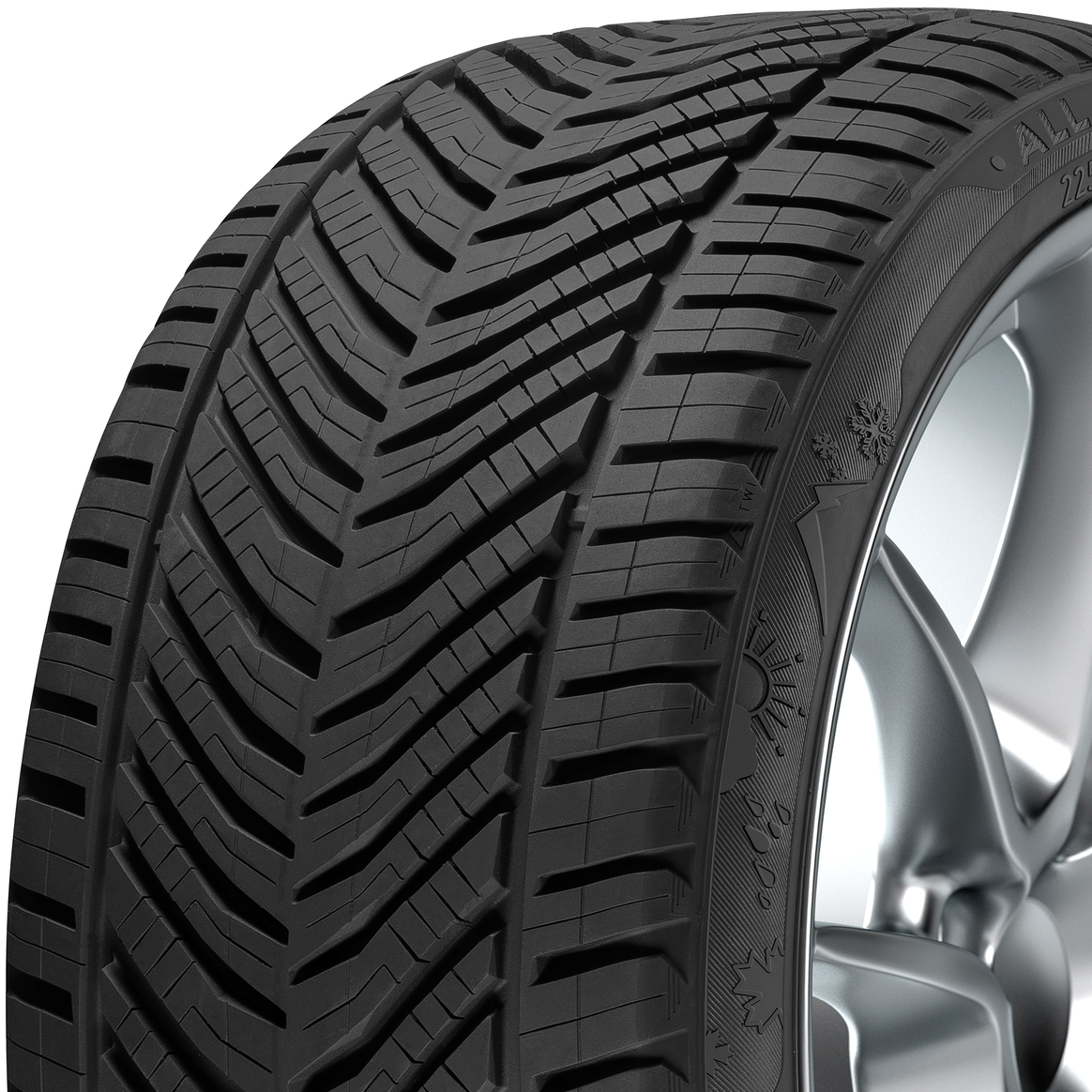
 All Season
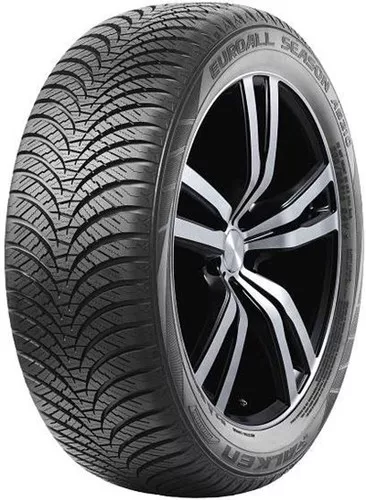
 EuroALL Season AS210


These tyres were not tested together. The comparison below is inferred from separate tests by normalizing both tyres against 5 shared benchmark tyres, so treat it as an estimate.
 Kormoran All SeasonFalken EuroALL Season AS210Kormoran All SeasonFalken EuroALL Season AS210Kormoran All SeasonFalken EuroALL Season AS210
Across one measured shared dry-braking test, Kormoran averages 42.4m and Falken 44.4m. No separate average-braking dataset is supplied, so these are single-test averages from the 2022 comparison in 195/55 R16. Kormoran's 2.0m advantage represents a 4.5% shorter stopping distance relative to Falken: a useful margin when space suddenly disappears. The starting speed is not provided, so these figures cannot responsibly be described as stops from 100km/h. They establish a clear result for that comparison, rather than a universal advantage across sizes and temperatures.
The distinction between braking and handling explains Falken's mixed dry-road character. Feedback credits good handling, yet repeatedly identifies extended dry braking, average dry grip or mild dry-road weaknesses. Its dry-handling detail score of 73.6 therefore sits alongside a less convincing overall dry score of 58.5; Kormoran scores 75 overall and 86 for dry braking, against Falken's 70.1 braking score. Reported Falken understeer means the front tyres can run out of cornering grip before the driver would like. However, there is insufficient Kormoran handling feedback to infer sharper steering or better high-speed stability. Its stronger stopping result does not establish it as the sportier tyre, and no construction evidence explains the underlying difference.
Kormoran All SeasonFalken EuroALL Season AS210Kormoran All SeasonFalken EuroALL Season AS210Kormoran All SeasonFalken EuroALL Season AS210Kormoran All SeasonFalken EuroALL Season AS210Kormoran All SeasonFalken EuroALL Season AS210Kormoran All SeasonFalken EuroALL Season AS210Across one measured shared wet-braking test, Falken averages 51.6m against Kormoran's 61.0m. That 9.4m difference is approximately two ordinary passenger-car lengths, or a 15.4% reduction relative to Kormoran's stopping distance. Again, the supplied data does not specify the starting speed. This is the comparison's most consequential measured gap: Falken's advantage on wet asphalt is substantially larger than its dry-braking deficit. It also puts their shared-test finishing positions—11th for Falken and 24th for Kormoran among 35 tyres—into useful perspective.
Falken's wet character nevertheless requires qualification. Several evaluations describe short braking distances, effective wet handling and precise lateral guidance, suggesting useful control through damp bends. Others identify understeer, and the 2026 feedback reports long wet braking and weak wet grip. Aquaplaning assessments are similarly inconsistent: some praise resistance, while several flag it as a weakness. Although Falken's aquaplaning score of 74 exceeds Kormoran's 46, it should not be treated as uniformly strong in deep water. Braking grip and water evacuation are different abilities; a tyre can perform well on wet asphalt yet struggle when standing water separates it from the road. Their almost identical overall wet scores, 66.6 and 66.5, obscure the substantial measured braking difference.
Kormoran All SeasonFalken EuroALL Season AS210Kormoran All SeasonFalken EuroALL Season AS210Kormoran All SeasonFalken EuroALL Season AS210Kormoran All SeasonFalken EuroALL Season AS210Kormoran leads the supplied snow scores, 86.6 to Falken's 66.8, but there are no snow stopping distances to compare. That gives Kormoran a promising winter-performance signal without establishing a quantified advantage on packed snow or during emergency braking. Crucially, its data lacks the detailed winter feedback available for Falken. It would therefore be an overreach to turn that score into claims of stronger hill-start traction, more progressive cornering behaviour or superior ice grip. None of those advantages is demonstrated directly here.
Falken's fuller record describes a usable but limited winter performer. Positive assessments identify good snow traction, short snow braking and, in 2026, secure and controllable behaviour. Other feedback highlights average grip, winter-road weaknesses and understeer. Its snow-braking detail score of 77.5 and snow-handling score of 71.2 are consistent with worthwhile capabilities that do not translate into outstanding performance everywhere. One owner likewise describes reduced but predictable snow grip. For occasional snow, that predictability is encouraging; for demanding winter use, the evidence is less persuasive. Neither tyre's 3PMSF certification is supplied, and there are no ice measurements, so severe-weather approval and ice suitability cannot be confirmed from this dataset.
Kormoran All SeasonFalken EuroALL Season AS210Kormoran All SeasonFalken EuroALL Season AS210Kormoran All SeasonFalken EuroALL Season AS210Kormoran has the stronger refinement signal, with supplied comfort and noise scores both at 99, compared with Falken's 65.2 and 73.9. Those are scores, not measured decibel levels or percentages. Its seven Heureka reviews average 10/10, with quietness, value and wet/dry stability each mentioned twice. Falken also satisfies many owners: 24 Heureka reviews average 9.6/10, with low noise mentioned four times, while 30 Tyre Reviews submissions average 86/100. Yet its test feedback ranges from the lowest internal noise in one comparison to audible cabin noise and below-average ride comfort in 2026. Quietness is a credible attraction for both, but Falken's refinement clearly varies between evaluations.
Running costs are less settled than the headline scores suggest. Kormoran's rolling-resistance score is 99 against Falken's 57.8, but no comparable resistance measurements or fuel-consumption figures accompany them. Falken attracts repeated criticism for high rolling resistance, including the highest in one test, although another evaluation praises low fuel consumption. That disagreement prevents a reliable fuel-bill calculation. EU wet-grip and fuel-efficiency label grades are missing for both tyres, so there is no supplied label evidence to resolve the issue or support a specific annual saving.
Falken has considerably better documented longevity: its mileage score is 85.3, with feedback praising high mileage and low abrasion, although another assessment notes mild projected-mileage weaknesses. One owner reports 50,000 miles with twice-yearly rotation and just under 3mm remaining across all four tyres—valuable experience, not a guaranteed lifespan. Another reports paying €380 fitted for four 205/55 R16 tyres, a historical purchase rather than a current quotation. Price and value detail scores of 90.5 and 88 reinforce its affordability credentials. Kormoran offers a low-cost entry point, but without mileage data its lifetime cost advantage remains unproven.
Kormoran All SeasonFalken EuroALL Season AS210Kormoran All SeasonFalken EuroALL Season AS210Falken is the stronger recommendation for everyday drivers facing frequent rain. Its 9.4m wet-braking advantage in the shared comparison is compelling, supported by a broader record of capable wet handling and credible longevity. It suits family-car owners seeking an affordable all-season tyre with evidence of useful service life. The trade-offs are real: dry braking was 2.0m longer, rolling resistance attracts recurring criticism, and heavy-rain aquaplaning protection is inconsistent. Choose it for the balance demonstrated here, while recognising that it does not excel in every condition.
Kormoran makes its strongest case for price-sensitive drivers who value quiet running and whose driving is predominantly on dry roads. Its shorter measured dry stop deserves credit, as do enthusiastic owners and its strong snow score. However, the much longer wet stop makes it difficult to recommend for regular rainy commuting, and the limited winter and wear evidence restricts broader claims. For drivers facing sustained snow or ice, neither dataset establishes a decisive choice. Between these two, Falken earns the overall recommendation; Kormoran's appeal rests on purchase price and selected strengths rather than equally convincing performance across conditions.
Compare prices across all available dimensions for these tyres.
| Organization | Season | Year | Dimension | |
|---|---|---|---|---|
 Autobild Autobild | All season | 2022 | 195/55 R16 | View |
 VS
VS
 VSVSVS
 VSVS
VSVS VSVS
VSVS VSVSKormoran All Season vs Michelin CrossClimate+Kormoran All Season vs GoodYear Vector 4Seasons Gen-2
 Kormoran All Season vs BFGoodrich G-Grip All Season 2
 Kormoran All Season vs Nokian SeasonproofFalken EuroALL Season AS210 vs Continental AllSeasonContactFalken EuroALL Season AS210 vs Hankook Kinergy 4S2 H750
 Falken EuroALL Season AS210 vs Maxxis Premitra AS AP3Falken EuroALL Season AS210 vs Bridgestone Weather Control A005 EVO





