Comparison: Hankook Kinergy 4S2 H750 vs. Nankang CROSS SEASONS AW-6 (2026)
Also compare with
A refined all-season all-rounder against a budget tyre that struggles in every condition tested.
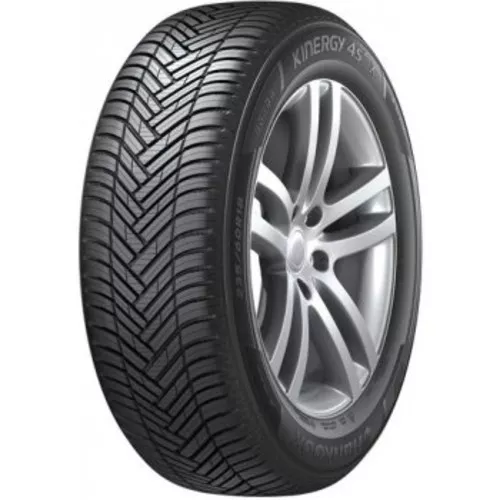
Line these two up and it barely counts as a contest on paper, but the story of why matters more than the scoreline. The Hankook Kinergy 4S2 H750 sits in the upper-middle segment of Hankook's range, a premium all-season design built around Hankook's 3D GripKontrol siping and a Two-Step Aqua Slant tread pattern that's explicitly engineered to accelerate water drainage while keeping snow and ice traction intact. It replaces the well-regarded Hankook Kinergy 4S, and the newer H750 pushes further into year-round security rather than settling for competence in any single condition. Certified to both M+S and 3PMSF standards, it's a tyre pitched at drivers who want one set of rubber to handle everything from a wet motorway commute to a genuine snowfall, without the compromises budget all-season tyres usually demand.
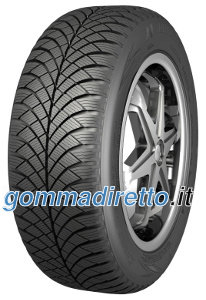
The Nankang CROSS SEASONS AW-6 occupies the opposite end of the spectrum entirely. It's a lowcost-segment allround tyre from Taiwan's Nankang, with no predecessor listed and no EU label data published for wet grip or fuel efficiency — itself a telling omission next to Hankook's fully disclosed B-grade wet-grip rating. Nankang doesn't compete on refinement or outright capability; it competes on shelf price, and everything about its test record reflects a tyre engineered to be affordable first and capable second.
The single biggest difference in character here isn't subtle: the Kinergy 4S2 H750 is a genuinely well-rounded all-season tyre that scores strongly across dry, wet and snow performance alike (85.6, 80.2 and 81.6 out of 100 respectively), while the CROSS SEASONS AW-6 struggles broadly across all three, with German testers flagging it as weak on dry tarmac, wet tarmac and winter roads in the same breath. This isn't a tyre with one redeeming strength to counterbalance its price — it's uniformly behind, and the five mutual tests in this comparison confirm it decisively, with Hankook winning all five head-to-head.
 Kinergy 4S2 H750
 CROSS SEASONS AW-6


These tyres were not tested together in the same test. The scores below are aggregated from different independent tests, so direct comparison should be taken with caution.
 Hankook Kinergy 4S2 H750Nankang CROSS SEASONS AW-6Hankook Kinergy 4S2 H750Nankang CROSS SEASONS AW-6Hankook Kinergy 4S2 H750Nankang CROSS SEASONS AW-6
Across the three tests with directly comparable braking data, the Kinergy 4S2 H750 averages 41.7m to a stop versus the CROSS SEASONS AW-6's 45.5m — a 3.8-metre gap that, from 100km/h, is roughly the length of a small hatchback. That's not a marginal difference you'd only notice on a track day; it's the sort of gap that decides whether you clip the car in front or stop short of it. Hankook's own dry-braking score of 83.3 and dry-handling score of 85.6 reflect a tyre with genuinely confident behaviour under hard use, and Tyre Reviews specifically flagged it for best-in-test dry handling and short dry braking distances in their 2023 evaluation — high praise for a tyre that also has to carry snow and wet credentials.
The reason for that gap comes down to compound and construction priorities. Nankang's budget-focused design has to spread its tread compound thin across dry, wet and winter duty without the layered engineering Hankook uses to keep each discipline separate; ADAC's 2024 test explicitly called the AW-6 'schwach auf trockener Fahrbahn' (weak on dry tarmac), and Autobild's German testers found untersteuerndes (understeering) handling on both wet and dry surfaces along with delayed steering response — the kind of vague, imprecise feel that erodes driver confidence well before the tyre reaches its actual grip limit.
Hankook's dry-handling objective score of 99 out of 100 in detailed testing tells you this isn't just about straight-line braking — the H750 holds a line through direction changes with the kind of precision Autobild called 'knackiges Einlenkverhalten' (crisp turn-in), and its 2025 test summary described it outright as a 'Trockendynamiker' — a dry-weather dynamist. The AW-6, by contrast, simply doesn't have the sidewall stiffness or compound sharpness to back up quick inputs, leaving a driver pushing on with a tyre that responds late and washes wide rather than tracking the intended line.
Hankook Kinergy 4S2 H750Nankang CROSS SEASONS AW-6Hankook Kinergy 4S2 H750Nankang CROSS SEASONS AW-6Hankook Kinergy 4S2 H750Nankang CROSS SEASONS AW-6Hankook Kinergy 4S2 H750Nankang CROSS SEASONS AW-6Hankook Kinergy 4S2 H750Nankang CROSS SEASONS AW-6The wet-weather gap is even more pronounced. Across three measured tests, the Kinergy 4S2 H750 averages 48.7m to stop from wet-braking runs, while the CROSS SEASONS AW-6 averages 56.9m — an 8.2-metre difference, or nearly two car lengths from 100km/h. In the 2020 Autobild test alone the gap was 10.9m (47.2m versus 58.1m), and Autobild's own testers didn't mince words about the Nankang, describing 'gefährlich verlängerte Nassbremswege' — dangerously extended wet braking distances. That's language German testers reserve for genuine safety concerns, not just a tyre being merely mediocre.
Hankook's wet performance is backed by real engineering rather than a lucky test result: the Two-Step Aqua Slant tread and wide lateral grooves are designed specifically to accelerate water evacuation, and the tyre's aquaplaning score of 85.2 (with a longitudinal aquaplaning detail score of 84.5 and cross aquaplaning of 85.9) shows that design intent translating into measured results. Tyre Reviews' 2023 test even found the Kinergy 4S2 H750 posted the shortest wet braking distances in their entire field — a claim that's consistent with its 83.9 wet-braking score and 84.1 wet-handling score in our aggregated data. That said, Hankook's own weak point in this section is aquaplaning resistance specifically flagged by Tyre Reviews as 'poor,' and Autobild's 2025 test noted the tyre being 'etwas schwächer bei Nässe' overall — so while it dominates the Nankang comparison, it isn't flawless.
The AW-6's wet weaknesses aren't limited to straight-line braking either. Autobild's testers described 'eingeschränkter Grip auf nasser Strecke' (limited grip on wet surfaces) combined with delayed steering response, meaning cornering confidence in the wet is compromised well before the front tyres actually let go. For anyone driving through real rain rather than the occasional shower, that combination of long braking distances and vague, understeering wet handling is a genuine safety liability, not just a comfort inconvenience.
Hankook Kinergy 4S2 H750Nankang CROSS SEASONS AW-6Hankook Kinergy 4S2 H750Nankang CROSS SEASONS AW-6Hankook Kinergy 4S2 H750Nankang CROSS SEASONS AW-6Hankook Kinergy 4S2 H750Nankang CROSS SEASONS AW-6Hankook Kinergy 4S2 H750Nankang CROSS SEASONS AW-6Snow is where Hankook stakes its clearest claim to being a true all-season tyre rather than a wet-weather specialist with a winter badge stapled on. A snow score of 81.6, snow-braking detail score of 85.2 and snow-handling score of 85 are strong numbers for a tyre that also has to compete on dry tarmac, and Autobild's 2025 verdict specifically praised it as putting in an 'äußerst souveräne Figur' (an extremely assured performance) on snow even while being characterised primarily as a dry-weather tyre. The 3D GripKontrol Sipe system and zigzag block design Hankook describes in its marketing are doing real work here — the three-dimensional block edges bite into snow and slush in a way flat, two-dimensional tread blocks simply can't, and Autobild's 2022 test called it a 'Winterprofi' (winter professional) with genuinely convincing snow and ice behaviour.
Nankang's snow performance, by contrast, is another weak point on an already thin résumé. ADAC's 2024 test flagged 'Schwächen auf winterlicher Fahrbahn' (weaknesses on winter roads) alongside its dry and wet shortcomings, painting a picture of a tyre that doesn't have a genuine strong suit in any condition — even though Autobild's older 2021 test did note 'sehr gute Winter-eigenschaften' (very good winter properties) at a favourable price, suggesting the AW-6's winter behaviour may be its relative high point even if it's mediocre everywhere else.
For drivers in climates with real winter weather, this section alone should settle most of the decision. The Kinergy 4S2 H750 carries genuine 3PMSF certification backed by test data that supports it, meaning it's a legitimate substitute for dedicated winter rubber in regions with moderate snowfall. The AW-6 technically qualifies as an all-season tyre too, but its own test record undercuts the confidence a driver would need to actually rely on it once the roads turn white.
Hankook Kinergy 4S2 H750Nankang CROSS SEASONS AW-6Hankook Kinergy 4S2 H750Nankang CROSS SEASONS AW-6Hankook Kinergy 4S2 H750Nankang CROSS SEASONS AW-6Hankook's comfort score of 87.5 and class-leading noise score of 92.2 point to a genuinely refined ride — the expert summary specifically calls the H750 'very quiet,' and that's echoed by Heureka owner reviews averaging an exceptional 9.8/10 across four ratings. Autobild's 2022 test described the tyre's comfort as 'ausgewogen' (balanced), and combined with its precise, confident handling character, the overall picture is of a tyre that doesn't force a trade-off between composure and comfort — it does both at once. Nankang's comfort characteristics aren't directly scored in the available data, but the understeering, imprecise handling reported by testers rarely comes paired with a refined ride, and the absence of published EU noise or comfort figures is itself a signal of where Nankang's engineering priorities sit.
On running costs, the picture is more nuanced than the outright rating gap suggests. Hankook's rolling-resistance score of 79.7 is solid but not exceptional, and its mileage score of 59.2 is explicitly flagged as a weakness — Hankook's own marketing claims up to 70,000 miles under its warranty and highlights double-wide steel belt layers for longevity, but ADAC's 2024 test data shows only average wear and fuel economy in practice, a fair trade Hankook makes in exchange for its wet and snow strengths. Nankang, interestingly, shows a genuine bright spot here: ADAC 2024 noted 'noch geringer Abrieb, niedriger Kraftstoffverbrauch' (still lower abrasion, low fuel consumption), and its low weight likely helps rolling resistance despite the tyre's other shortcomings.
Even so, that efficiency advantage doesn't translate into better value over the tyre's life. A tyre that stops 8.2m later in the wet and posts 'dangerous' braking distances by testers' own description isn't cheaper in any way that matters once you account for accident risk, and Nankang's own Heureka rating of 7.6/10 — respectable for a budget tyre, but well below Hankook's 9.8/10 — suggests owners themselves rate the ownership experience as merely adequate rather than genuinely good. Hankook's higher upfront price buys measurably shorter stopping distances, a quieter cabin and a tyre that performs credibly in snow, which for most drivers outweighs a modest fuel-economy edge on the Nankang's side.
The head-to-head record settles any ambiguity: Hankook won all five mutual tests against the Nankang, and the margins weren't close — third place versus tenth in ADAC's 16-tyre 2024 test, first versus dead last in Autobild's 2021 comparison. This isn't a case of one tyre nudging ahead on a few metrics; it's a comprehensive gap across dry braking, wet braking, handling precision and snow performance, with Nankang's own test record using words like 'dangerous' and 'weak' across nearly every category tested.
Buy the Hankook Kinergy 4S2 H750 if you want a genuine year-round tyre that doesn't force compromises: drivers in climates with real winters who don't want a dedicated winter set, anyone who drives regularly in rain and wants demonstrably shorter wet braking distances, and drivers who value a quiet, refined cabin alongside precise dry handling. Its own weak points — aquaplaning resistance flagged by Tyre Reviews, and average mileage/fuel economy — are real but minor next to its broader strengths, and its 87/100 overall rating reflects a tyre that's earned strong results across six years of independent tests.
The Nankang CROSS SEASONS AW-6 only makes sense for a narrow buyer: someone with a genuinely tight budget, running a low-value vehicle in a dry, mild climate, who accepts the trade-off of longer stopping distances in exchange for a lower purchase price and slightly better fuel economy. Anyone who drives through real rain, sees meaningful snowfall, or simply values arriving safely over saving on the sticker price should treat the AW-6's price advantage as a false economy — the 8.2-metre average wet-braking deficit alone is reason enough to spend the extra on the Hankook.
Compare prices across all available dimensions for these tyres.
 VS
VS
 VSVSVS
 VSVS
VSVS VSVSVSVS
 Hankook Kinergy 4S2 H750 vs Continental AllSeasonContact 2Hankook Kinergy 4S2 H750 vs Bridgestone Turanza All Season 6Hankook Kinergy 4S2 H750 vs Michelin CrossClimate 2Hankook Kinergy 4S2 H750 vs GoodYear Vector 4Seasons Gen-3
 Nankang CROSS SEASONS AW-6 vs Vredestein QuatracNankang CROSS SEASONS AW-6 vs Bridgestone Weather Control A005 EVONankang CROSS SEASONS AW-6 vs GoodYear Vector 4Seasons Gen-3