Comparison: Continental AllSeasonContact 2 vs. Michelin CrossClimate 3 (2026)
Also compare with
These two sit at the top of their respective makers' all-season ranges, but they arrive there from very different directions. The Continental AllSeasonContact 2 is the successor to the original Continental AllSeasonContact, and it reads like a tyre engineered by committee to have no weaknesses — Continental's own marketing leans on Chili Blend compound and an adaptive C-block tread to chase balance across dry, wet and snow simultaneously, and the test results largely back that up with a 90/100 rating and a string of outright test wins. The Michelin CrossClimate 3, from Michelin, takes a more specialised stance: it leans hard into snow capability and longevity via its Thermal Adaptive Tread Compound, positioning itself as the tyre that shrugs off a proper winter without ever becoming a winter tyre, at the cost of a noticeably softer showing everywhere else.
The single biggest character difference is that the AllSeasonContact 2 is trying to be excellent at everything, while the CrossClimate 3 is trying to be exceptional at one thing — snow — while remaining merely competent elsewhere. That shows up starkly in the overall scores: 90/100 for the Continental against 69/100 for the Michelin, and in the two tests where the pair have actually shared a track, the Continental has won both, finishing 2nd of 15 overall against the Michelin's 7th of 15.
Both are premium-segment tyres aimed at drivers who want to avoid a seasonal swap, but the AllSeasonContact 2 is the one built for a driver who still wants sporty, communicative behaviour in every condition, while the CrossClimate 3 suits someone whose priority is simply never being caught out by snow, with everything else a secondary consideration.
","dry":"In their one shared dry-braking test, the AllSeasonContact 2 stopped in 41.5m against the CrossClimate 3's 40.4m — a narrow 1.1m edge to the Michelin, meaning from the same speed the Continental needs roughly a quarter of a car length more tarmac to stop. That's a genuine but small gap, and it's consistent with Continental's own listed weakness of \"slightly extended dry braking distances\" — the AllSeasonContact 2's dry-braking performance score of 76.5 is its lowest individual metric, dragged down by a compound tuned to also excel on snow and in the wet.
Where the Continental claws the advantage back is in dry handling rather than straight-line braking: its dry-handling objective score of 98.5 is exceptional, and testers consistently describe direct, communicative steering with good safety margins on the limit, even if it shows some understeer tendency when really pushed. The Michelin's dry score of 72 versus the Continental's 84.9 points to a wider gap in cornering composure and steering precision than the braking numbers alone suggest — the CrossClimate 3 is competent in a straight line but less confidence-inspiring when you start loading up the front axle.
Put together, this is a case where the headline stopping distance slightly favours the Michelin, but the broader dry-driving experience — turn-in sharpness, mid-corner stability, how the tyre telegraphs grip as you approach the limit — favours the Continental. For most drivers doing ordinary commuting and occasional spirited work, that broader competence matters more than a one-metre braking difference.
","wet":"Wet is where the story flips decisively. In the same shared test, the AllSeasonContact 2 braked in 44.9m against the CrossClimate 3's 49m — a substantial 4.1m gap, or nearly a full car length, purely down to wet braking from a single test. That aligns with the wider scoring picture: Continental's wet-braking performance score of 88.5 versus Michelin's 69 is one of the largest gaps between the two tyres anywhere in the data, and testers have specifically called out the AllSeasonContact 2 for the best braking grip on cold, wet asphalt and the shortest wet braking distances in group tests.
The Michelin's own material admits as much — Michelin cites a 4% wet-braking improvement over its own predecessor tyre, but that's a comparison against an older Michelin, not against this Continental, and the CrossClimate 3's own test negatives flag it as \"etwas schwächer bei Nässe\" (somewhat weaker in wet conditions). Aquaplaning tells a similar story on paper — Continental scores 80 against Michelin's 69 — though it's worth noting Continental's own testers flagged aquaplaning, particularly cornering aquaplaning, as its relative weak point too, so neither tyre is untouchable here; the Continental is simply better than the Michelin at a weakness they both share to some degree.
Wet handling scores (91.6 objective for the Continental) and real owner feedback reinforce this: a Hyundai Ioniq owner switching to the AllSeasonContact 2 specifically called out wet-condition performance as "far superior" to their previous rubber. For anyone driving through genuinely wet climates rather than just occasional snow, this is the section that should carry the most weight — a nearly one-car-length difference in wet stopping distance is not a rounding error, it's the margin between avoiding a hazard and not.
","snow":"Snow is the CrossClimate 3's reason for existing, and the data supports the marketing here more than almost anywhere else. Its snow score of 93.3 edges out the Continental's already strong 85.1, and Autobild's testers went so far as to call it a "Schneekönig" capable of matching dedicated winter tyres — a genuinely rare claim for an all-season product. Michelin's Thermal Adaptive Tread Compound is doing real work in this metric, softening at low temperatures to maintain block flexibility and biting edges on packed snow.
That said, the Continental isn't far behind, and in several respects it's arguably the more rounded snow performer: its snow-handling objective score of 96 actually beats what we can infer for the Michelin's raw handling, and testers have named the AllSeasonContact 2 best-in-test for snow traction and best overall on ice, with strong snow-circle cornering (91.7) to match. So while Michelin wins the outright snow score, Continental backs it up with class-leading ice behaviour and traction, areas where the CrossClimate 3's data is comparatively thin.
In practice, both carry 3PMSF certification and both are legitimate choices for drivers who see real winter weather without wanting a dedicated winter set. If your conditions are dominated by deep, consistent snowfall, the Michelin's specialist tuning gives it a slight edge; if your winters mix snow with ice and slush, the Continental's more rounded cold-weather package — traction, cornering and ice grip together — is arguably the safer all-round bet.
","comfort":"Continental sweeps the comfort and refinement picture almost completely — a perfect 100/100 on both comfort and noise scores, with testers praising a quiet, direct-feeling ride and an interior-noise detail score of 97. Real owners back this up vividly: one driver of a plug-in hybrid Audi A3 described the AllSeasonContact 2 as "incredibly quiet," to the point the car felt "basically silent" in EV mode, while another owner coming off Hankook summer tyres noted the Continental feels "significantly softer" even at higher inflation pressure. The Michelin, by comparison, scores 75 on both comfort and noise — respectable, but a clear tier below.
Running costs flip the comparison somewhat. Michelin's mileage score of 92 comfortably beats Continental's 86.3, and Autobild's testing specifically praised the CrossClimate 3's high mileage as "stark im Kostenkapitel" — strong in the cost chapter — thanks to excellent longevity and fuel efficiency (rolling-resistance score 84). Continental counters with its own strong rolling-resistance figure (85.5) and, per Tyre Reviews, the lowest wear on test alongside being named best value tyre — a claim that sits oddly next to Autobild's separate note that the AllSeasonContact 2 is actually the most expensive candidate in its test group.
So the real-world cost equation is nuanced: Michelin's tyre is cheaper to run mile-for-mile thanks to superior tread life and fuel economy, but Continental's purchase price is offset by class-leading grip, comfort and safety performance that could matter far more over the tyre's life than a few percentage points of fuel saving. EU labels support both stories — Continental sits mostly in wet-grip class B with fuel efficiency split across B and C, while Michelin achieves a clean B for wet grip and a slightly better fuel spread (61% B-class vs Continental's 73%, though Michelin also carries more C-class sizes) — the two are closer on paper than the marketing suggests.
","verdict":"This isn't a close call on outright ability. The Continental AllSeasonContact 2 won both recorded head-to-head tests, brakes shorter in the wet by nearly a car length, matches or beats the Michelin's snow traction and ice grip, and delivers a noticeably quieter, more comfortable ride, all backed by a 90/100 rating, multiple outright test wins, and glowing real-owner feedback on refinement. For the overwhelming majority of drivers who want one tyre to handle a genuinely mixed climate — wet motorways, occasional snow, everyday sharp handling — this is the more complete, more capable tyre.
The Michelin CrossClimate 3 isn't without merit, though. Its snow performance genuinely rivals dedicated winter rubber, a claim few all-season tyres can make, and its superior mileage and fuel efficiency mean it costs less to run over its lifetime even if it costs more to grip with in the wet. For someone in a region with heavy, consistent snowfall but relatively dry summers, who drives high annual mileage and wants to stretch tyre life as far as possible, the CrossClimate 3's specialisation makes sense.
For everyone else — and that's most buyers, given wet-weather safety affects far more journeys than deep snow does — the AllSeasonContact 2 is the clear, well-earned recommendation. It costs more upfront, but it's engineered to a broader standard that the CrossClimate 3 simply doesn't match outside of snow. Choose the Michelin only if snow specifically, not winter driving generally, is your dominant concern.
","claim":"Continental wins on wet safety, comfort and roundedness; Michelin wins only on snow and mileage.","good_for":{"Continental AllSeasonContact 2":["Drivers prioritizing wet-weather safety","Those wanting a quiet, refined ride","Mixed-climate drivers facing snow and rain","EV and hybrid owners wanting low noise"],"Michelin CrossClimate 3":["Drivers in regions with heavy, consistent snowfall","High-mileage drivers wanting long tread life","Buyers prioritizing fuel efficiency","Those wanting winter-tyre-rivalling snow grip"]},"not_for":{"Continental AllSeasonContact 2":["Buyers focused purely on purchase price","Those wanting the shortest possible dry braking"],"Michelin CrossClimate 3":["Drivers who prioritize wet-road safety","Spirited drivers wanting sharp dry handling","Buyers wanting the quietest possible ride"]}}

These tyres were not tested together in the same test. The scores below are aggregated from different independent tests, so direct comparison should be taken with caution.
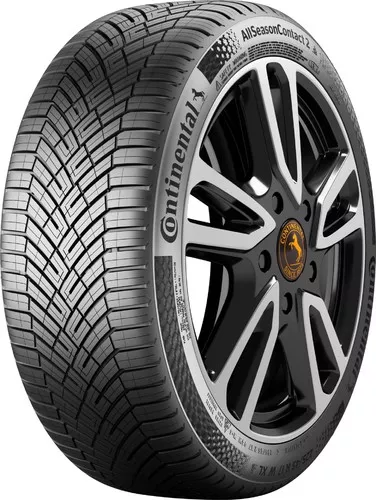
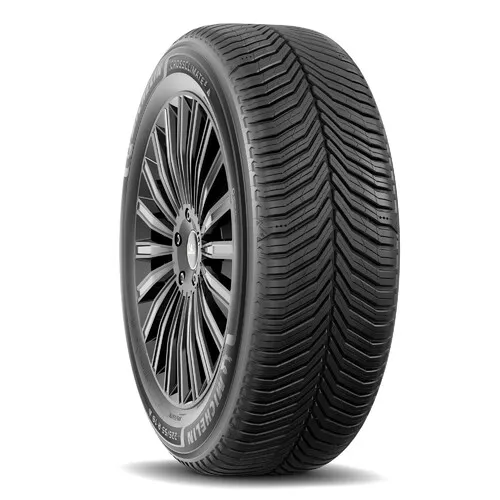 Continental AllSeasonContact 2Michelin CrossClimate 3Continental AllSeasonContact 2Michelin CrossClimate 3Continental AllSeasonContact 2Michelin CrossClimate 3Continental AllSeasonContact 2Michelin CrossClimate 3Continental AllSeasonContact 2Michelin CrossClimate 3Continental AllSeasonContact 2Michelin CrossClimate 3Continental AllSeasonContact 2Michelin CrossClimate 3Continental AllSeasonContact 2Michelin CrossClimate 3Continental AllSeasonContact 2Michelin CrossClimate 3Continental AllSeasonContact 2Michelin CrossClimate 3Continental AllSeasonContact 2Michelin CrossClimate 3Continental AllSeasonContact 2Michelin CrossClimate 3Continental AllSeasonContact 2Michelin CrossClimate 3Continental AllSeasonContact 2Michelin CrossClimate 3Continental AllSeasonContact 2Michelin CrossClimate 3Continental AllSeasonContact 2Michelin CrossClimate 3Continental AllSeasonContact 2Michelin CrossClimate 3Continental AllSeasonContact 2Michelin CrossClimate 3Continental AllSeasonContact 2Michelin CrossClimate 3Continental AllSeasonContact 2Michelin CrossClimate 3Continental AllSeasonContact 2Michelin CrossClimate 3Continental AllSeasonContact 2Michelin CrossClimate 3
Compare prices across all available dimensions for these tyres.
VS VSVSVS
 VSVS
VSVS VSVS
VSVS VSVSContinental AllSeasonContact 2 vs Bridgestone Turanza All Season 6Continental AllSeasonContact 2 vs Pirelli Cinturato All Season SF3Continental AllSeasonContact 2 vs Goodyear Vector 4Seasons Gen-3
 Continental AllSeasonContact 2 vs Vredestein QuatracMichelin CrossClimate 3 vs GoodYear Vector 4Seasons Gen-3Michelin CrossClimate 3 vs Michelin CrossClimate 2Michelin CrossClimate 3 vs Pirelli Cinturato All Season SF3