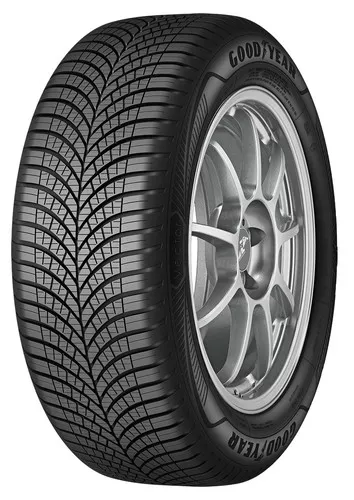
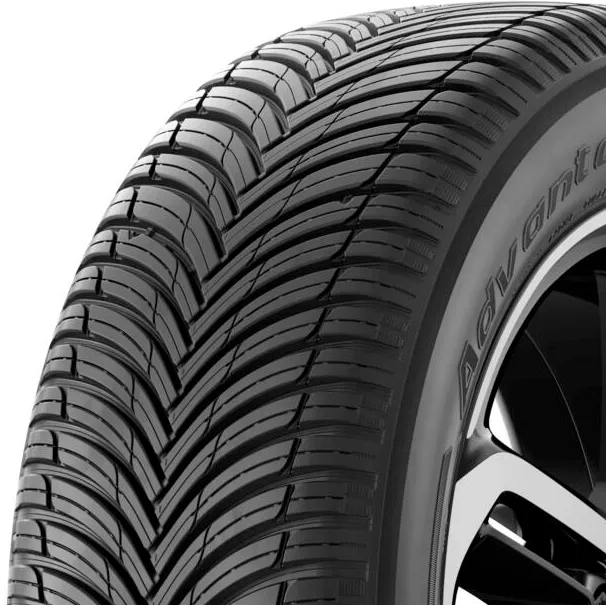
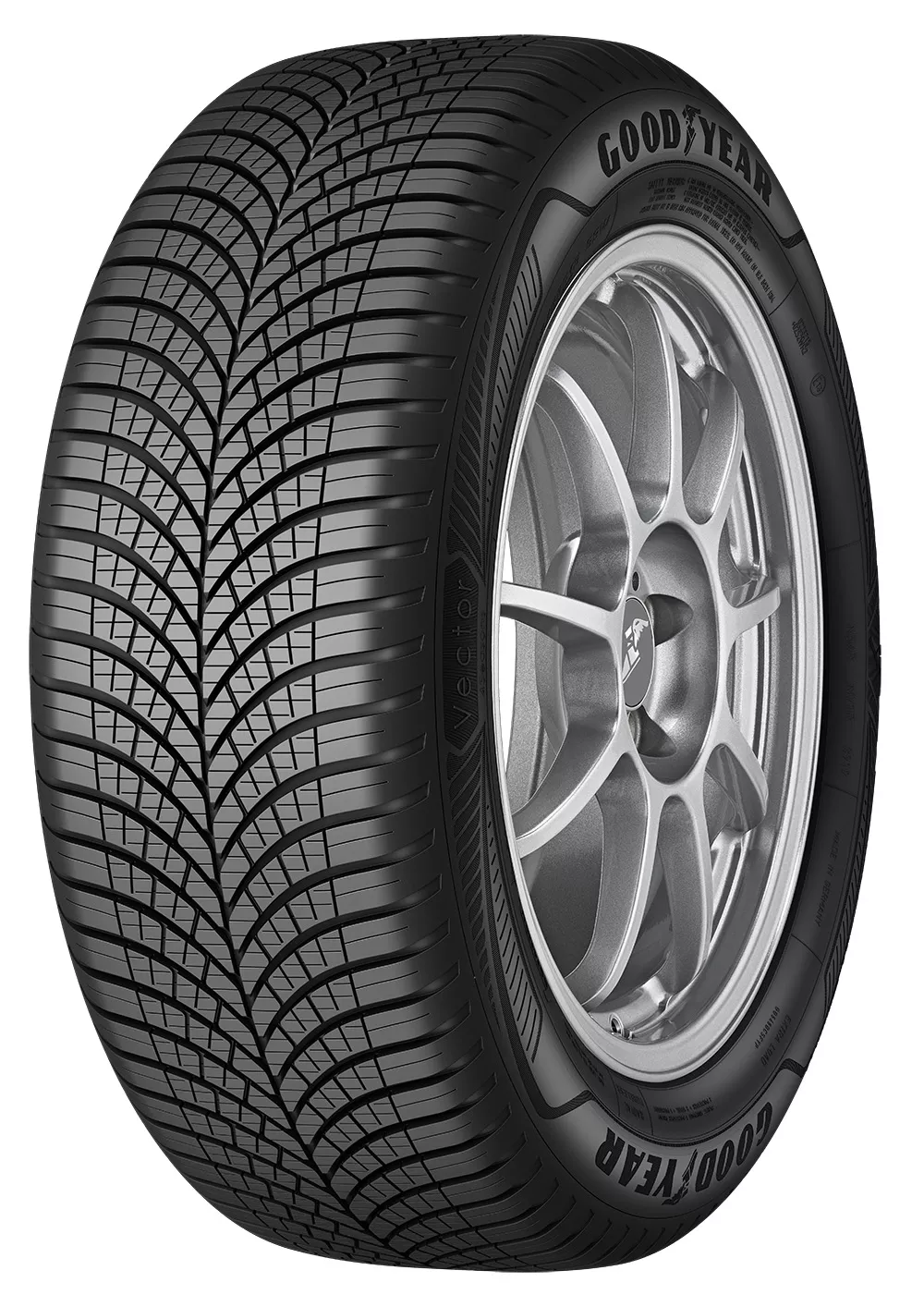
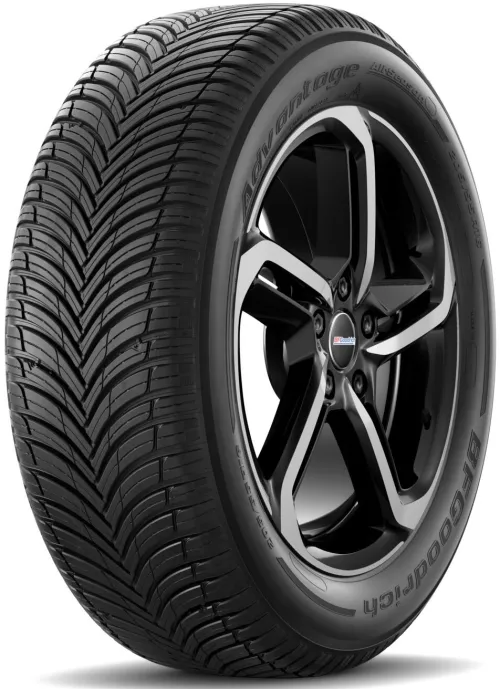
BFGoodrich brakes shorter on dry roads; Goodyear wins comfort, wet grip and mileage decisively.
Both of these sit in the crowded all-season middle ground, but they come from very different corners of the tyre world. The BFGoodrich Advantage All Season is a Michelin-group product built to a value-conscious upper-middle price point, with no direct predecessor listed — it's effectively BFGoodrich's fresh attempt at cracking the year-round segment. The GoodYear Vector 4Seasons Gen-3, by contrast, is the third generation of an already well-regarded lineage, following the Vector 4Seasons Gen-2 and already superseded by the newer Vector All Season 4 — a sign of just how much Goodyear keeps iterating in this space.
The scores tell you plenty before you even look at test data: our own rating puts the Vector 4Seasons Gen-3 at 81/100 against the Advantage All Season's 67/100, and Goodyear prices it in the premium segment while BFGoodrich sits in upper-middle. That gap isn't just marketing positioning — it plays out in the performance numbers, where the Advantage leads on dry grip and the Vector dominates almost everything else, particularly wet handling, comfort and mileage.
The single biggest character difference is which conditions each tyre was tuned to prioritise. The Advantage All Season is the sharper, more dry-biased of the two, with a 78.5 dry score against the Vector's 72.6. The Vector 4Seasons Gen-3 flips that around everywhere else, posting an 82.2 wet score, 81.8 comfort score and 80.7 mileage score that leave the BFGoodrich trailing badly, particularly on the 59 mileage figure that testers repeatedly flag as a weak point.
Advantage All Season
Vector 4Seasons Gen-3


BFGoodrich Advantage All Season
GoodYear Vector 4Seasons Gen-3
BFGoodrich Advantage All Season
GoodYear Vector 4Seasons Gen-3
BFGoodrich Advantage All Season
GoodYear Vector 4Seasons Gen-3
BFGoodrich Advantage All Season
GoodYear Vector 4Seasons Gen-3
BFGoodrich Advantage All Season
GoodYear Vector 4Seasons Gen-3In the same shared braking test, the gap narrows considerably: the Advantage All Season averaged 47.4m on wet tarmac against the Vector 4Seasons Gen-3's 48.3m, a difference of less than a metre across this single measured comparison. That's a near wash in isolation, but it's misleading when you step back and look at the broader wet performance picture, where the Vector's overall wet score of 82.2 clearly outpaces the Advantage's 72.7, and Goodyear's wet-braking score of 81.1 versus BFGoodrich's 75 tells a more consistent story across a wider dataset.
Tyre Reviews rated the Vector 4Seasons Gen-3 as having the best wet handling in its 2025 test, and ADAC's 2024 assessment specifically praised its safe characteristics on wet roads — a pattern that shows up again in Autobild's description of it as a snow specialist that also delivers a high performance level in the wet. The Advantage isn't weak here either; Autobild's 2023 test noted secure aquaplaning qualities, but its own test negatives flag understeering behaviour in wet conditions, a trait that undermines driver confidence exactly when grip margins are already thinner.
Where the two genuinely diverge is aquaplaning resistance and cornering feel once the road is properly wet rather than just damp. BFGoodrich's aquaplaning score of 84 actually beats Goodyear's 80.5 on paper, yet Tyre Reviews flagged reduced aquaplaning resistance for the Vector and aftonbladet's 2025 test noted it aquaplanes easily and brakes poorly on dry roads — a reminder that lab scores and real-world track testing don't always agree. Owners reinforce the Vector's wet reputation regardless: Heureka reviewers cite superb wet grip five times among their pros, a real-world vote of confidence that the Advantage, with no comparable review base yet, simply can't match.
BFGoodrich Advantage All Season
GoodYear Vector 4Seasons Gen-3
BFGoodrich Advantage All Season
GoodYear Vector 4Seasons Gen-3Braking data from the one shared dry-braking test shows the Advantage All Season stopping in an average of 38.9m against the Vector 4Seasons Gen-3's 41.8m — a 2.9m gap, more than half a car length, in a single measured event. At motorway-adjacent speeds that difference is the sort of margin that separates a clean stop from a nudge into whatever's ahead, and it lines up with the wider performance-score picture: BFGoodrich's dry-braking score of 84 comfortably beats Goodyear's 69.4, and the overall dry score gap (78.5 vs 72.6) tells the same story.
Testers back this up directly. Autobild's 2023 test praised the Advantage for short dry braking distances, while its notes on the Vector 4Seasons Gen-3 in 2025 specifically flag that extended dry braking distances stop it from scoring even better overall — language that matches the Vector's own listed weakness of "average dry braking and rolling resistance." Interestingly, Goodyear's average dry-handling-objective score of 98.5 across tests is excellent, suggesting the Vector still corners confidently on dry tarmac; the shortfall is specifically in stopping distance, not cornering composure.
So the practical read is nuanced: the Advantage All Season is the harder-braking, more dry-focused tyre of the two, rewarding drivers who want maximum confidence hauling the car down from speed on a dry road. The Vector 4Seasons Gen-3 isn't a dry-handling disaster — its objective handling scores are genuinely strong — but its braking distances are where Goodyear has clearly traded away some outright stopping power in favour of the all-round balance it's chasing elsewhere.
BFGoodrich Advantage All Season
GoodYear Vector 4Seasons Gen-3
BFGoodrich Advantage All Season
GoodYear Vector 4Seasons Gen-3
BFGoodrich Advantage All Season
GoodYear Vector 4Seasons Gen-3
BFGoodrich Advantage All Season
GoodYear Vector 4Seasons Gen-3Snow is close on paper but tells a more interesting story underneath. The Advantage All Season actually posts the higher raw snow score at 80.7 versus the Vector 4Seasons Gen-3's 79.4, and Autobild's 2023 test specifically praised its good traction and short braking distances on snow. That's a genuinely strong showing for a tyre that otherwise reads as dry-focused, and it suggests BFGoodrich hasn't sacrificed cold-weather security to chase dry-road sharpness.
But the Vector's snow credentials run deeper than the headline number implies. Autobild 2025 outright calls it a snow specialist, ADAC's 2024 test cites safe characteristics on wintry roads, and the average snow-handling-objective score of 87.3 alongside a snow-braking average of 84 across multiple tests points to consistency rather than a single strong result. Heureka owners echo this, with excellent performance on snow and ice mentioned five times among customer pros — real drivers relying on it through actual winters, not just a single test day.
The practical takeaway is that both are credible all-season performers in snow, but for genuinely different reasons: the Advantage looks strong in isolated test snapshots, while the Vector's strength is backed by a broader, more consistent body of testing and ownership evidence across multiple years and markets. For drivers who see real winter weather regularly rather than the occasional flurry, that consistency matters more than a single higher score.
BFGoodrich Advantage All Season
GoodYear Vector 4Seasons Gen-3Comfort is not close. The Vector 4Seasons Gen-3 scores 81.8 for comfort against the Advantage All Season's 74.5, and Tyre Reviews' 2025 test went as far as calling it the best in its group for both noise and comfort levels — a claim backed by Heureka data showing low noise level cited ten times and great handling and cornering stability mentioned seven times among owner pros. That's an unusually consistent chorus of praise across both professional testing and real ownership.
The Advantage's comfort score of 74.5 and noise score of 78 aren't bad in absolute terms, but they simply sit behind the Vector's figures, and with only a single, unrated placeholder review on file, there's no meaningful owner voice yet to counterbalance the test data. What we do have from testers points to a tyre tuned more for outright dry grip than cabin hush, which tracks with its stronger dry-braking numbers but leaves comfort as a secondary consideration.
Running costs are where the picture becomes genuinely one-sided. Goodyear's mileage score of 80.7 dwarfs BFGoodrich's 59, and Autobild's 2025 test specifically credits the Vector's low rolling resistance with high fuel-saving potential — reflected in its EU fuel label spread, which is dominated by C and B grades with some A-rated sizes, versus the Advantage's flat C-100 rating across the board. BFGoodrich's own expert summary is blunt about this: only average mileage, and not as affordable as expected given the segment it's pitched at. Combine a below-premium price with mediocre treadwear, and the Advantage's real cost-per-kilometre proposition looks weaker than its upper-middle segment positioning suggests — while the Vector, despite sitting in the premium bracket, claws much of that price gap back through longevity and efficiency over the tyre's life.
BFGoodrich Advantage All Season
GoodYear Vector 4Seasons Gen-3
BFGoodrich Advantage All Season
GoodYear Vector 4Seasons Gen-3The head-to-head record between these two is literally split — one win apiece across two mutual tests — and that tie reflects a real divide in what each tyre is actually good at. If your priority is the shortest possible stopping distance on a dry road and a tyre that reacts sharply to inputs, the Advantage All Season has the numbers to back that up: a stronger dry score, a nearly 3m braking advantage in the shared test, and genuinely competitive snow traction to go with it.
For nearly everyone else, though, the Vector 4Seasons Gen-3 is the smarter buy. It wins comfort and noise convincingly, backed by a strong Heureka rating of 9.3/10 from 37 reviews, it has a real edge in wet handling and aquaplaning-adjacent scenarios where testers rate it among the best in class, and its mileage score more than doubles the margin you'd expect given the price difference — meaning the premium price tag partly pays for itself over the tyre's life. Its snow credentials are backed by consistent multi-year testing rather than a single standout figure, which matters if you actually drive through real winters rather than the occasional cold snap.
Both trade-offs are honest ones. Choose the BFGoodrich Advantage All Season if dry-road stopping power and outright grip matter more to you than comfort, quiet running or long-term value, and you're comfortable with its underdeveloped review history. Choose the Goodyear Vector 4Seasons Gen-3 if you want a genuinely rounded year-round tyre backed by strong owner testimony, better wet security, a quieter cabin and meaningfully lower running costs — which, for the vast majority of drivers cross-shopping this segment, makes it the safer default despite the higher upfront price.
| Organization | Season | Year | Dimension | |
|---|---|---|---|---|
Autobild | All season | 2023 | 225/45 R17 | View |
Compare prices across all available dimensions for these tyres.
VS
VS
VS
VS
VS
VS
VS
VS
VS
VS
BFGoodrich Advantage All Season vs Falken EuroALL Season AS220 Pro
BFGoodrich Advantage All Season vs Toyo Celsius AS2
BFGoodrich Advantage All Season vs Firestone Multiseason 2
BFGoodrich Advantage All Season vs Kumho HA32 Solus 4S
GoodYear Vector 4Seasons Gen-3 vs Michelin CrossClimate 2
GoodYear Vector 4Seasons Gen-3 vs Bridgestone Turanza All Season 6
GoodYear Vector 4Seasons Gen-3 vs Continental AllSeasonContact
GoodYear Vector 4Seasons Gen-3 vs Hankook Kinergy 4S2 H750