18 shops · 56 ·847+ products

Comparison: Nokian Seasonproof vs. Michelin CrossClimate 2 (2026)

3 mutual test(s) with detailed data

Michelin stops over a car length shorter on dry; Nokian rides dramatically quieter and costs less.

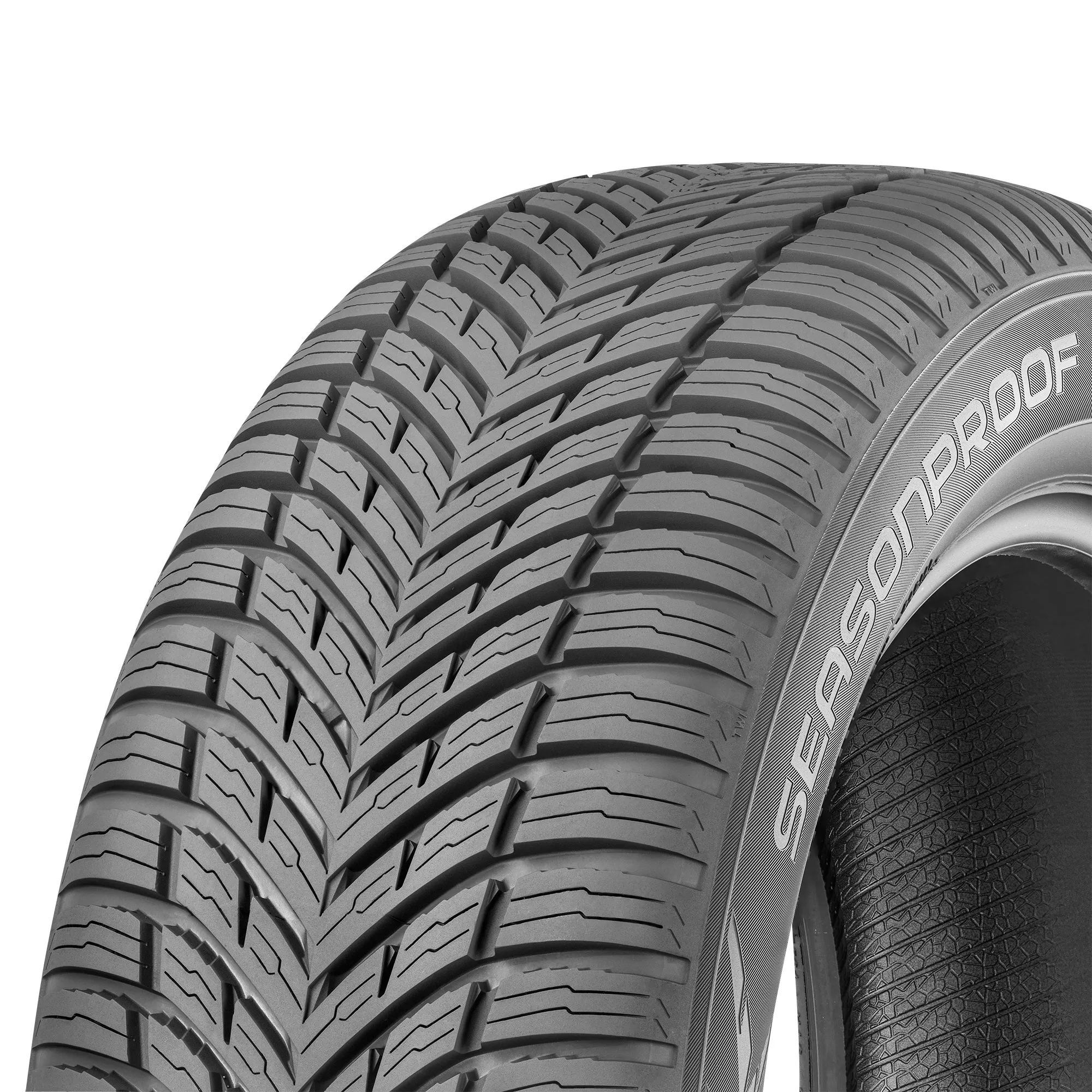
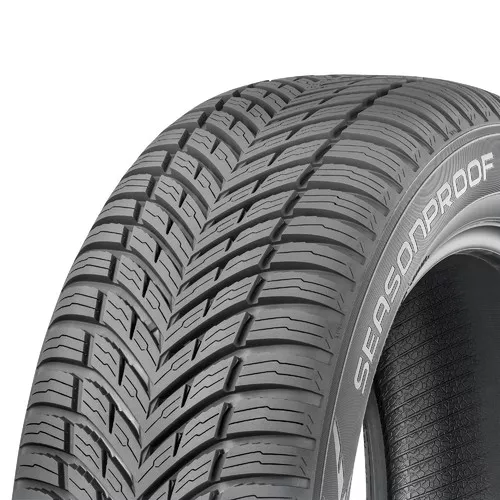
The Nokian Seasonproof arrives from Finland carrying a pedigree rooted in Scandinavian winter expertise — this is a brand that invented the dedicated winter tyre, and it brings that cold-climate DNA to its all-season range. Available in 41 sizes spanning R14 to R19, the Seasonproof targets everyday drivers in cooler, wetter climates who want genuine winter capability without the hassle of seasonal swaps. It has since been superseded by the Nokian Seasonproof 1, making this original model primarily a value proposition for cost-conscious buyers who can still find it available. Its character is deliberately comfort-first: soft, refined, exceptionally quiet, with winter traction that punches above its all-season weight class.

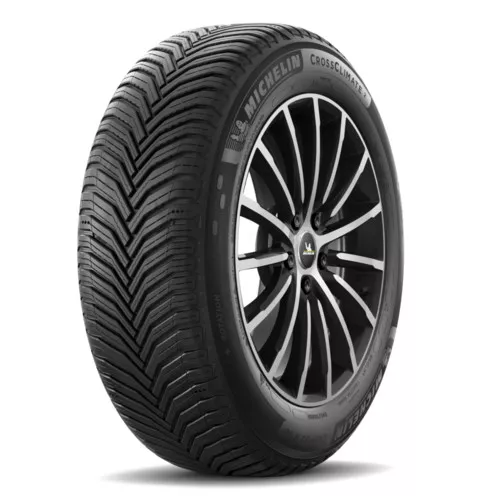
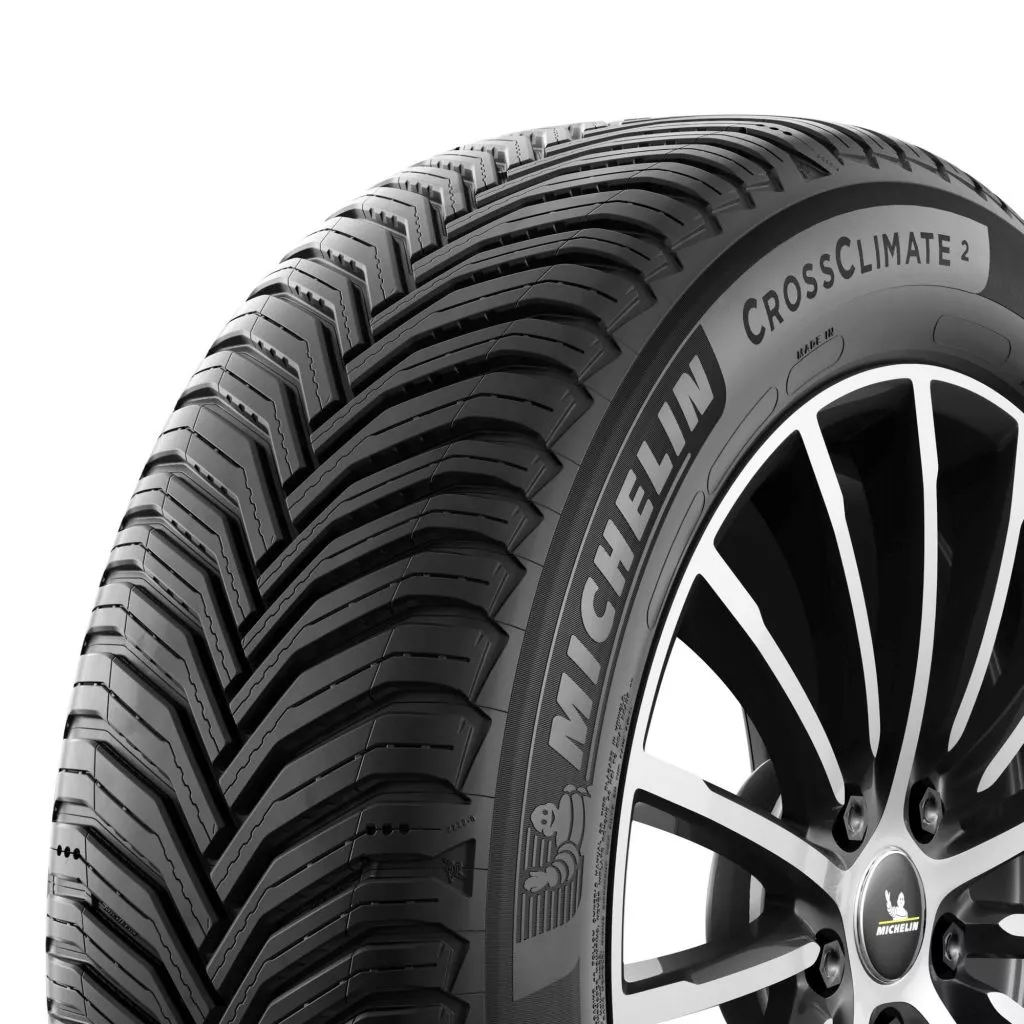
The Michelin CrossClimate 2 operates in an altogether different register. As the direct successor to the original Michelin CrossClimate — the tyre that effectively established the premium European all-season segment — it has accumulated a formidable test record since launch. Rated 92/100 by our experts and available in 95 sizes stretching to R21, it is aimed squarely at drivers who refuse to compromise on safety or efficiency regardless of season. Michelin markets it under the banner of "everyday confidence" and "higher safety levels in all seasons", underpinned by a Thermal Adaptive Tread Compound and V-Ramp tread block geometry. For once, the test data largely confirms the marketing claims.

The single biggest difference between these two tyres is one of fundamental character: the Nokian is a comfort-oriented, winter-biased all-season that prioritises refinement and cold-weather traction at the expense of outright dry grip; the Michelin is a dynamically capable, fuel-efficient all-rounder that prioritises short stopping distances and confident dry-road behaviour. Both carry the 3PMSF severe-weather certification, but how they earn it — and what each sacrifices in the process — separates them decisively across almost every performance dimension.

Nokian Seasonproof
Good for
Comfort-first drivers on long motorway commutes Budget-conscious all-season buyers Cold-climate drivers prioritising winter traction Drivers who value a hushed, refined cabin above all
Not ideal for
Drivers who prioritise dry braking safety margins High-mileage users where rolling resistance matters Sporty or dynamically focused drivers
Michelin CrossClimate 2
Good for
Safety-focused drivers needing short stopping distances Highway commuters prioritising fuel efficiency Drivers in mixed climates needing dynamic confidence Premium car owners wanting consistent year-round performance
Not ideal for
Noise-sensitive or comfort-first drivers Budget-conscious buyers watching cost per kilometre Drivers mainly on low-speed city routes

Test Profile

Nokian
Seasonproof
Michelin
CrossClimate 2
Number of tests
7
25
Best position
#3
#1
Average position
7.4
2.7
Latest test
2022
2026
Available sizes
57
157

Performance comparison

Averaged from 3 tests

Wet Performance
Confidence
Nokian Seasonproof
71%
Nokian
Seasonproof
Michelin CrossClimate 2
75%
Michelin
CrossClimate 2
Wet Braking
Nokian Seasonproof
64%
Michelin CrossClimate 2
72%
Wet Handling
Nokian Seasonproof
54%
Michelin CrossClimate 2
75%
Wet Circle Cornering
Nokian Seasonproof
79%
Michelin CrossClimate 2
74%
Aquaplaning Longitudinal
Nokian Seasonproof
77%
Michelin CrossClimate 2
84%
Aquaplaning Cross
Nokian Seasonproof
79%
Michelin CrossClimate 2
72%

On wet asphalt, the picture becomes considerably more nuanced and, for Nokian, more flattering. Across two measured wet braking tests, the Michelin CrossClimate 2 averaged 51.6 metres against the Nokian Seasonproof's 53.0 metres — a gap of just 1.4 metres, a fraction of the dry-braking difference. The head-to-head results are strikingly inconsistent: in the 2022 Autobild 195/55 R16 braking evaluation, Michelin held a 3.2-metre edge (49.2m vs 52.4m); but in the 2021 Autobild 225/50 R17 braking test, the roles reversed, with the Nokian stopping in 53.5m against Michelin's 53.9m. Neither tyre dominates the wet reliably, and both carry wet-braking scores — Nokian 62.5, Michelin 75.3 — that are notably lower than their respective dry-braking figures, which is the expected all-season compromise.

Where the Nokian holds a genuine edge is in aquaplaning resistance: it scores 79.2 versus Michelin's 76.7, suggesting its tread design evacuates standing water more effectively at high speed. In practice, this gives Nokian drivers marginally more reassurance on flooded motorway lanes where the tyre must channel substantial water volumes. Michelin counters with a wet-handling-objective score of 92.5 — exceptional for an all-season — indicating that once water is present but not pooled deeply, the CrossClimate 2 maintains superior cornering composure and lateral grip balance. Test feedback noted that both tyres exhibit understeer tendencies in wet handling, a known characteristic of all-season compound tuning, but the Michelin manages the transition more predictably.

The wet verdict is therefore genuinely close, and which tyre leads depends on the specific scenario. Nokian edges ahead in deep-water aquaplaning situations; Michelin edges ahead in wet cornering and — on balance across tests — wet braking. Drivers regularly encountering heavy rainfall and standing water may find the Nokian's aquaplaning advantage meaningful, while those who prioritise wet-road handling confidence will prefer the Michelin's composure. Neither represents a serious safety compromise in realistic wet-road driving, but the overall wet-braking score differential still favours Michelin.

Dry Performance
Confidence
Nokian Seasonproof
70%
Nokian
Seasonproof
Michelin CrossClimate 2
92%
Michelin
CrossClimate 2
Dry Braking
Nokian Seasonproof
66%
Michelin CrossClimate 2
97%
Dry Handling
Nokian Seasonproof
73%
Michelin CrossClimate 2
86%

Dry braking is where the gap between these two tyres is most stark and most consequential for everyday safety. Across two measured braking tests, the Michelin CrossClimate 2 averaged 38.8 metres to a standstill while the Nokian Seasonproof averaged 43.9 metres — a deficit of 5.1 metres. A typical family saloon measures around 4.5 metres in length, meaning the Nokian requires just over one additional car length to stop in an identical emergency. In the most directly comparable evaluation — the Autobild 2022 braking test on 195/55 R16 rubber — the chasm widened to 6.4 metres (Michelin 39.9m, Nokian 46.3m), placing the Nokian 15th among 35 tyres while the Michelin ranked 3rd. This is the Nokian's single most significant weakness, and it is not a marginal one.

The underlying cause lies in compound construction and tread architecture. Michelin's V-Ramp tread blocks are engineered to maximise rubber-to-road contact under hard braking loads — a priority reflected in the CrossClimate 2's dry braking performance score of 91.6 versus the Nokian's 68.3, a 23-point gap. The Nokian's dry-handling-objective score of 96.5 actually fractionally exceeds Michelin's 96.3, confirming genuine steering precision and chassis composure at moderate cornering loads. But outright braking grip is measured at the absolute adhesion limit, and that is precisely where the Nokian's softer, comfort-tuned compound concedes ground. Testers consistently flagged understeer in dry handling conditions, reinforcing the picture of a tyre tuned for everyday refinement rather than dynamic confidence.

One nuance worth noting: in the Autobild 2022 overall all-season ranking (as opposed to the dedicated braking shootout), the Nokian placed 6th among 15 tyres while the CrossClimate 2 came 9th — proof that when handling agility, comfort and other criteria balance out the braking penalty, the Nokian is not outclassed overall. Similarly, the Autobild 2021 225/50 R17 overall test saw Nokian finish 6th and Michelin 7th. But for a safety-conscious driver whose priority is minimising stopping distances on the roads where they spend most of their time, the Michelin's dry-braking advantage is simply too large to ignore.

Snow Performance
Confidence
Nokian Seasonproof
90%
Nokian
Seasonproof
Michelin CrossClimate 2
91%
Michelin
CrossClimate 2
Snow Braking
Nokian Seasonproof
93%
Michelin CrossClimate 2
90%
Snow Traction
Nokian Seasonproof
91%
Michelin CrossClimate 2
97%
Snow Handling
Nokian Seasonproof
93%
Michelin CrossClimate 2
87%
Snow Circle Cornering
Nokian Seasonproof
84%
Michelin CrossClimate 2
91%

Snow performance is where both tyres earn their all-season credentials most convincingly, and both are genuinely impressive — but they excel in different aspects of winter driving. Michelin scores 92.3 overall on snow against Nokian's 89.6, and its snow-handling data is remarkable: a snow-handling-objective score of 98.5 — the highest figure in our entire dataset — backed by a measured score of 95.0 and 92.8 in the circle cornering test. Multiple test panels reported the CrossClimate 2 outscoring a dedicated winter tyre in snow evaluations, a feat that reflects Michelin's Thermal Adaptive Compound maintaining rubber pliability as temperatures fall towards freezing. For a driver navigating winding snow-covered roads, the CrossClimate 2's handling composure and lateral grip are class-leading among all-season tyres.

Nokian's Scandinavian winter heritage tells a different story in the braking and traction metrics. Its average snow-braking test score of 93.0 actually exceeds Michelin's 89.5, and it records 91.5 for snow acceleration and 87.2 for snow traction — figures that reflect the brand's core competency. Nokian celebrated the 40th anniversary of its Ivalo, Finland winter test facility in early 2026, and that depth of cold-climate development shows in the Seasonproof's tenacity at getting underway from standstill on slippery surfaces. Testers praised it for "best snow qualities" in the 2021 evaluation, and owners back this up: one reviewer who had tested "all major brands" across multiple fleet vehicles singled out Nokian's winter grip as the decisive differentiator.

In summary: the CrossClimate 2 handles and corners better on snow, delivering more confident directional stability and lateral control; the Nokian Seasonproof stops shorter on snow and accelerates away more effectively. Drivers tackling twisty mountain passes will prefer the Michelin's composure; those launching from standstill on icy inclines will value the Nokian's traction. Both carry 3PMSF severe-weather certification and will serve dramatically better than any summer tyre in genuine winter conditions — the choice between them hinges on which aspect of winter performance matters most for your specific route profile.

Comfort & Noise
Confidence
Nokian Seasonproof
82%
Nokian
Seasonproof
Michelin CrossClimate 2
84%
Michelin
CrossClimate 2
Noise Exterior
Nokian Seasonproof
89%
Michelin CrossClimate 2
87%
Ride Comfort
Nokian Seasonproof
75%
Michelin CrossClimate 2
80%

Comfort and refinement is the domain where the Nokian Seasonproof not only leads — it dominates by margins that are immediately perceptible behind the wheel. The Nokian scores 94.6 for ride comfort and 95.5 for noise; the Michelin CrossClimate 2 scores 73.0 and 69.4 respectively — gaps of 21.6 and 26.1 points. These are not subtle statistical distinctions; they represent a fundamentally different cabin experience on every road surface, at every speed. Nokian owners consistently highlight the hushed, cushioned character as a standout quality: across 34 verified Heureka reviews averaging 9.4/10, low noise was mentioned eight times and great value mentioned with equal frequency. On Tyre Reviews the Nokian averages 82/100 from 11 reviewers, with one Volvo V90 D4 owner who covered 40,000–45,000 miles across UK and European roads describing the consistent refinement as a key reason for their high rating. The stiffer carcass construction that enables the CrossClimate 2's dry grip advantage inevitably amplifies road noise and transmits more surface texture into the cabin — acknowledged even by satisfied CrossClimate 2 owners who note a slightly firmer character over rougher surfaces.

Rolling resistance and running economy swing decisively back towards Michelin. Its rolling resistance score of 87.2 compares to Nokian's 75.5 — an 11.7-point gap validated by substantive real-world testing. ADAC 2024 recorded the CrossClimate 2 as achieving the lowest wear and lowest rolling resistance of any tyre in that test field, and multiple Autobild evaluations highlighted its fuel-saving potential as a distinguishing strength. Michelin's EU label spans A through D ratings depending on size, with a meaningful proportion of B-rated variants and even some A-rated sizes, while the Nokian's entire 41-size range sits at C. For a driver covering 20,000 kilometres per year, Michelin's rolling resistance edge translates to a noticeable annual fuel saving — partially offsetting its higher purchase premium.

That price premium is real and was flagged by multiple independent test panels. Tyre Reviews specifically noted the CrossClimate 2 delivers only average tread life for its cost, making the per-kilometre running expense high — the highest in some comparisons. The Nokian brand's value positioning is more straightforward: lower upfront cost, a measurably quieter and more comfortable ride, and owner reports suggesting solid longevity. One buyer reported 20,000 miles on a Skoda with continued satisfaction. Worth emphasising again: the Nokian Seasonproof has been superseded by the Nokian Seasonproof 1, and buyers considering the original should verify whether the updated generation has addressed the braking shortfalls before committing to either version of the tyre.

Economy
Confidence
Nokian Seasonproof
71%
Nokian
Seasonproof
Michelin CrossClimate 2
70%
Michelin
CrossClimate 2
Rolling Resistance
Nokian Seasonproof
66%
Michelin CrossClimate 2
84%
Mileage
Nokian Seasonproof
75%
Michelin CrossClimate 2
56%

Performance spider chart

Verdict

The Michelin CrossClimate 2 is the more capable, more complete all-season tyre for the majority of drivers, and the data makes a compelling case. Its 5.1-metre average dry braking advantage across two tests is not a figure to bracket away as a testing quirk — in genuine emergency stops on dry roads, that gap is the difference that matters most. A dry-braking score of 91.6 versus the Nokian's 68.3 reflects a fundamentally superior safety envelope on the surface where most kilometres are driven. Add best-in-class snow handling, stronger rolling efficiency, more consistent wet-road composure, a massive range of 95 sizes, and a 92/100 expert rating, and the Michelin earns its premium positioning decisively. Its 4-from-6 head-to-head wins over the Nokian across mutual tests confirm this is not a close contest on performance grounds.

The Nokian Seasonproof makes a compelling case for a specific and underserved buyer profile. If your daily reality involves long motorway hours, you prize a hushed cabin, and you operate primarily in colder, wetter climates, the 26-point noise and 21-point comfort advantages are not abstract benchmark numbers — they are tangible, mile-after-mile quality differences. Its aquaplaning resistance edge and superior snow-braking scores are genuine strengths, and at a meaningfully lower purchase price it represents honest value for drivers who moderate their pace on dry roads. Note, however, that this original Seasonproof has been replaced by the Nokian Seasonproof 1 — prospective buyers should investigate that successor before defaulting to the outgoing model.

The buying decision ultimately comes down to priorities. Choose the Michelin CrossClimate 2 if dry-road safety margins, fuel efficiency, dynamic confidence in all conditions, or snow-handling reassurance are your primary concerns — it is among the best all-season tyres available at any price point, and drivers in central European climates with mixed winters will find it consistently reassuring. Choose the Nokian Seasonproof if cabin refinement, a quiet ride, genuine winter traction on ice and packed snow, and a lower purchase price define your priorities — and you are prepared to accept that shorter dry stopping distances will require a more measured, anticipatory driving style.

Tests used in comparison

OrganizationSeasonYearDimension
AutobildAutobild
All season
2022195/55 R16View
Autoklub ČRAutoklub ČR
All season
2022205/55 R16View
AutobildAutobild
All season
2021225/50 R17View

Dimensions and prices

Compare prices across all available dimensions for these tyres.

View general comparison

Add to comparison

Popular brands
New comparison

TheTyreLab.com

GET

TheTyreLab.com

Compare tyres, read test results and find the best prices — all in one app.