Comparison: Berlin Tires All Season 1 vs. Michelin CrossClimate 2 (2026)
Also compare with
Michelin out-brakes Berlin by nearly 5m dry and 8m wet, with snow grip that beats some winter tyres outright.
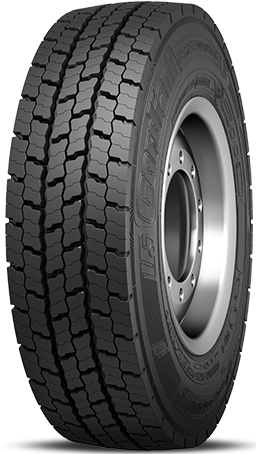
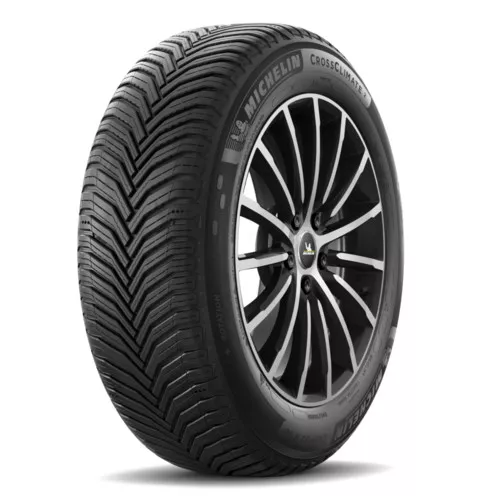
This comparison pits two tyres from opposite ends of the all-season market. The Michelin CrossClimate 2, successor to the original CrossClimate that effectively invented the modern premium all-season category, is Michelin's flagship do-it-all tyre — engineered with a Thermal Adaptive Tread Compound, V-Ramp tread blocks, and 3PMSF certification to deliver winter-tyre-rivalling snow performance without sacrificing dry composure. It sits at the very top of the premium segment, built in Italy and Spain and sold in a vast 58-size range. The Berlin Tires All Season 1, from budget manufacturer Berlin, occupies the opposite end of the market entirely — a lowcost all-season option aimed squarely at drivers whose primary concern is upfront price rather than outright performance.
The gulf between them is not subtle. Our own rating places the CrossClimate 2 at 92/100 against a 0/100 for the All Season 1, and the two tyres have met head-to-head in testing twice — with Michelin winning both times, decisively. In the ARBÖ 2022 test at 205/55 R17, the Berlin finished 7th of 9 tyres against the Michelin's outright win in 1st; in the larger 32-tyre Autobild 2021 field at 225/50 R17, the Berlin finished dead last in 31st while the Michelin again topped the chart. This isn't a stylistic contrast between two well-matched but differently-tuned tyres — it's a case of a genuine performance flagship against a tyre built to hit a low price point first and everything else second.
The single biggest difference in character is one of engineering intent. The CrossClimate 2 is designed to make you forget you're not on a winter tyre when the temperature drops, while still braking short and holding a line on dry tarmac. The Berlin All Season 1 has no such ambition — its scores suggest a tyre engineered to be merely adequate across the board rather than excellent anywhere, which is a common and often reasonable trade-off for cost-conscious buyers, but one that shows up starkly whenever the two are tested side by side.
 Tires All Season 1
 CrossClimate 2


These tyres were not tested together in the same test. The scores below are aggregated from different independent tests, so direct comparison should be taken with caution.
 Berlin Tires All Season 1Michelin CrossClimate 2Berlin Tires All Season 1Michelin CrossClimate 2Berlin Tires All Season 1Michelin CrossClimate 2Berlin Tires All Season 1Michelin CrossClimate 2
The only test in this comparison with hard braking figures — Autobild's 2021 225/50 R17 evaluation — puts the gap in stark numbers: the Michelin stopped from its test speed in 37.6m on dry tarmac against the Berlin's 42.4m, a difference of 4.8m. At motorway approach speeds that's the better part of a car length of extra runway the Michelin driver has that the Berlin driver doesn't, and it lines up with the wider performance-score gap between the two — 87.2 for the CrossClimate 2's dry score against 55.3 for the All Season 1, with dry-braking specifically scored at 91.6 versus 63.
Beyond straight-line stopping, the CrossClimate 2's dry-handling-objective average of 96.3 signals genuinely sharp, confidence-inspiring behaviour turning into corners and holding a line at speed — testers have repeatedly praised its 'sichere und präzise Eigenschaften im Grenzbereich auf trockener Fahrbahn' (safe and precise characteristics at the limit on dry roads), and one owner switching from a standard all-season tyre onto a Ford Focus described 'sharp response for quick manoeuvres' alongside a confident dry-road feel. Michelin's own marketing leans on V-Ramp tread blocks specifically engineered to maximise ground contact under braking, and the independent test data backs that claim up rather than merely repeating it.
The Berlin's dry score of 55.3 suggests adequate but unremarkable behaviour — enough to get a car stopped and turned, but with none of the precision or short stopping distances that define the class leaders. There's no test commentary available to explain the specific mechanism behind the shortfall, but a 4.8m longer dry stopping distance from the same speed, combined with a last-place finish in a 32-tyre field, points to a compound and tread design tuned more for manufacturing cost than for outright grip.
Berlin Tires All Season 1Michelin CrossClimate 2Berlin Tires All Season 1Michelin CrossClimate 2Berlin Tires All Season 1Michelin CrossClimate 2Berlin Tires All Season 1Michelin CrossClimate 2Berlin Tires All Season 1Michelin CrossClimate 2Berlin Tires All Season 1Michelin CrossClimate 2The wet-weather gap is even larger in absolute terms. In the same Autobild 2021 test, the Michelin stopped in 53.9m on a wet surface against the Berlin's 62.3m — an 8.4m difference, which at typical wet-braking test speeds is a genuinely dangerous margin in a real emergency stop. That single data point is consistent with the broader performance scores: the CrossClimate 2 posts a wet-braking score of 75.3 against the Berlin's 48, and an overall wet score of 71.8 against just 46.
The Michelin isn't flawless on wet roads — its own test record flags 'leichte Schwächen auf nasser Fahrbahn' (slight weaknesses on wet roads) and Tyre Reviews specifically called out long wet braking as a genuine weak point relative to the rest of its scorecard, with understeer and longer wet-braking distances listed among its key weaknesses. But 'weak' here is relative to a very high bar — its aquaplaning score of 76.7 and wet-handling-objective average of 92.5 still put it comfortably ahead of most rivals, and real owners consistently back this up: one Kia Sorento driver called the wet grip 'good' after a full winter of use, and a Volvo XC60 owner specifically praised its traction and handling in wet and snowy conditions.
The Berlin, by contrast, has no comparable body of praise to draw on. An aquaplaning score of 51.5 and a wet score of 46 point to a tyre that struggles with water displacement and grip generation once the road is soaked, and the ARBÖ 2022 finish of 7th out of 9 tyres — well behind the Michelin's 1st — reinforces that this isn't a one-off result but a consistent pattern across independent testing.
Berlin Tires All Season 1Michelin CrossClimate 2Berlin Tires All Season 1Michelin CrossClimate 2Berlin Tires All Season 1Michelin CrossClimate 2Berlin Tires All Season 1Michelin CrossClimate 2Berlin Tires All Season 1Michelin CrossClimate 2Snow is where the CrossClimate 2 makes its strongest case, and the numbers are emphatic: a snow score of 92.3, a snow-handling-objective average of 98.5, and Autobild's own verdict that it 'schneidet als bester Kandidat im Schnee besser ab als der mitgetestete Winterreifen' — performs better in snow than the winter tyre it was tested alongside. That's an extraordinary claim for an all-season tyre to earn, and it's corroborated by multiple independent test cycles praising its 'außergewöhnlich gute Performance auf Eis und Schnee' and calling it a genuine 'Winterprofi' with textbook snow and ice driving characteristics. Real-world testimony matches the lab data closely — one Kia Sorento owner who drove a full Salt Lake City winter on the CrossClimate 2 reported it was 'exceptional' in snow and that they 'couldn't get stuck even in deep snow', while a Ford Focus owner switching from a conventional all-season tyre called the difference in slush and snow 'night and day'.
The Berlin All Season 1's snow score of 65.1 is actually its relative high point — the strongest of its individual performance categories — suggesting the tread pattern does at least prioritise winter traction over some other areas. But 65.1 remains a long way behind the Michelin's 92.3, and with no independent test commentary or detailed snow-handling breakdown available for the Berlin, there's little evidence to suggest it approaches genuine winter-tyre-like security. Both tyres are positioned as all-season options suitable for winter use, but only one of them has been independently shown to match or beat a dedicated winter tyre in cold-weather testing.
Berlin Tires All Season 1Michelin CrossClimate 2Berlin Tires All Season 1Michelin CrossClimate 2Comfort follows the same pattern as everything else in this comparison. The CrossClimate 2 scores 73 for comfort and 69.4 for noise, and Michelin's own heureka.cz customer base — 66 reviews averaging 9.7/10 — cites low cabin noise as the single most frequently mentioned strength, referenced twelve times, ahead of wet grip, dry grip, and ride comfort. Owner reviews consistently describe it as quiet and comfortable even in demanding use; one Infiniti Q60 owner specifically sought it out for comfort and long tread life as a genuine all-season alternative to running dedicated summer and winter sets. The Berlin's comfort score of 42 and noise score of 42 sit at the opposite end of the scale, consistent with a budget tyre built to a price rather than to a refinement target — though without independent tester commentary to draw on, the exact character of that harshness (impact harshness, road roar, or both) isn't specified in the available data.
On running costs, the Michelin's rolling-resistance score of 87.2 is genuinely strong for a tyre that also delivers class-leading snow and dry grip — Autobild's testers have repeatedly flagged its 'niedriger Rollwiderstand' as a standout trait, and its EU fuel label is dominated by C and B ratings, reflecting real efficiency rather than marketing spin. Its mileage score of 77.4 is solid rather than exceptional, and this is genuinely the CrossClimate 2's one acknowledged soft spot: Tyre Reviews specifically noted that its 'high purchase price with average wear means expensive per km', and Autobild's testers have flagged its high price across multiple years. Despite that, the tyre's EU Wet Grip B rating and broad 58-size range help justify the premium for most buyers, and the sheer volume of positive owner sentiment — 9,957 manufacturer-collected reviews averaging 4.7/5 — suggests most owners feel the price is earned.
The Berlin's rolling-resistance score of 55 is mediocre, and with no EU label data, mileage figures, or owner review base available, there's genuinely less to go on for long-term value — but the tyre's core appeal was never going to be running costs or longevity; it's the lower purchase price itself. Buyers choosing it are trading measurable performance and refinement for a smaller initial outlay, and the test results suggest that trade is a steep one.
Berlin Tires All Season 1Michelin CrossClimate 2Berlin Tires All Season 1Michelin CrossClimate 2This is about as clear-cut as a tyre comparison gets. The Michelin CrossClimate 2 is the tyre to buy for almost every driver who can afford it: it out-brakes the Berlin by nearly 5m on dry roads and over 8m on wet roads in matched testing, delivers snow performance that independent testers have rated above a genuine winter tyre, and backs all of that up with low rolling resistance, a quiet cabin, and an overwhelmingly positive owner base across thousands of reviews. Its only real compromise is running cost — average tread wear against a premium price tag means a higher cost per kilometre than some rivals, and a touch of understeer plus longer wet-braking distances relative to its own otherwise excellent scorecard.
The Berlin Tires All Season 1 exists for a narrower audience: drivers for whom the purchase price is the dominant factor, doing low-mileage or low-stakes driving where the performance gap is less likely to be tested to its limit — a second car, a short-distance commuter runabout, or a stopgap before a planned upgrade. It is not a tyre to choose for anyone who drives regularly in wet conditions, covers real winter mileage, or values dry-road composure and braking margin, since the head-to-head data shows it finishing last or near-last against the Michelin in every mutual test recorded.
For most drivers, the honest recommendation is simple: pay more for the CrossClimate 2. The braking-distance gap alone — nearly 5m dry, over 8m wet — is the kind of margin that matters in a genuine emergency, and the Michelin's snow credentials mean many drivers in moderate winter climates could reasonably skip a dedicated winter set altogether. The Berlin only makes sense when budget is the overriding constraint and the car's usage profile keeps it away from demanding wet, snowy, or high-speed situations.
Compare prices across all available dimensions for these tyres.
 VSVS
VSVS VSVS
VSVS VS
VS VSVS
VSVS VS
VS VSVS
VSVS